Culture Ark · D-1705 · Holidays and traditions · Browse the gallery · The full 2,000-pick list
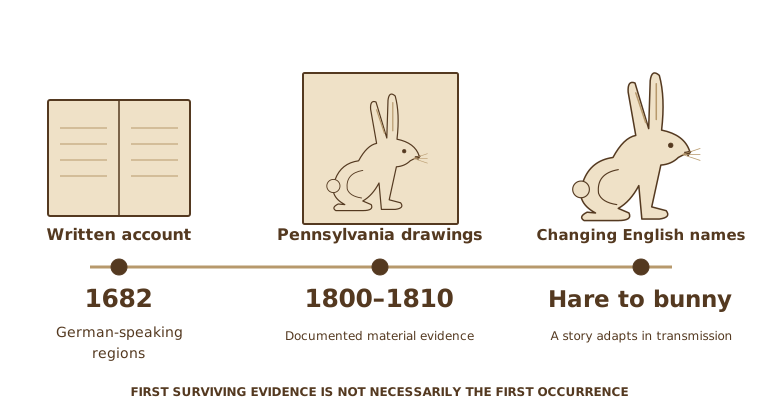
Original educational diagram, not a photograph. The book and framed hare are original symbols, not facsimiles of historic pages or drawings. The final label shows a change in vocabulary, not a precisely dated invention.
Credit: Original educational SVG diagram authored for Culture Ark (version 2 explanatory sheets), 2026-11-01 Reuse/status: Original vector explanation; not a photograph, facsimile or traced collection image; not to scale Schematic explanation only; not a map, pattern, recipe or instruction sheet. Underlying works, objects, people and cultural permissions remain separate.
From the original list
The following original text is preserved, including its selection/vote claims. Preservation is not independent verification of every assertion.
Why: A rabbit that lays eggs: a perfect example of folk logic.
What to preserve: origins, chocolate bunny sales
Year and origin: 17th century · Germany
Vote: 4/9 (historian 1 · future kid 2 · curator 1)
Learn more: Easter Bunny on Wikipedia
Explanatory sheets
2 original explanatory sheets prepared for this pick, each with its own diagram. Codes in square brackets such as [B1] point to the numbered sources at the end of the page.
A documented hare is more reliable than an invented origin
What the evidence establishes. Library of Congress folklorist Stephen Winick identifies a clear 1682 account of an Easter hare hiding eggs in German-speaking regions. He also discusses Pennsylvania drawings attributed to Johann Conrad Gilbert, including one dated 1800–1810. These are points of evidence, not proof of the first time anyone told the story. An exact arrival date in America remains uncertain. [B1]
Names and origin stories need different treatment. Osterhase means Easter hare; English-language traditions later often call the figure a rabbit or bunny. Claims of a continuous ancient hare cult are much less secure than the documented seasonal story. Winick distinguishes later speculation about a goddess and her hare from evidence of an actual inherited custom. The recognizable animal can change its name while the egg-giving narrative persists. [B1]
The animal is a folklore figure. Real hares and rabbits are mammals and do not lay eggs.
A story can organize a surprise and shape a sweet
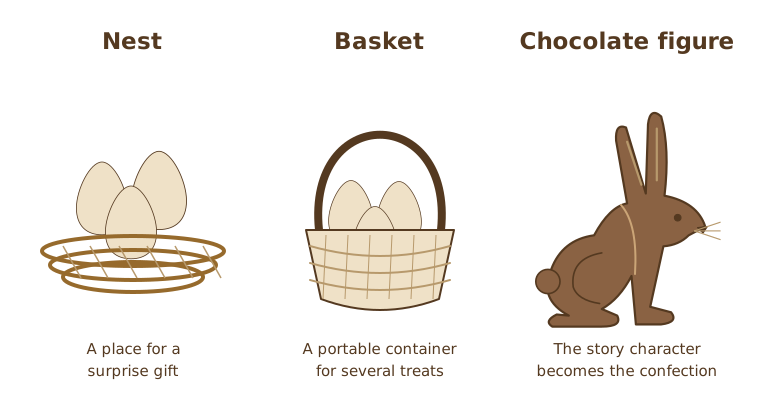
These are alternative material expressions. The arrows of a required family sequence are deliberately absent: not every household uses a nest, basket or chocolate figure.
From a hiding place to a gift container. The Hershey Story describes nineteenth-century Pennsylvania German children making nests for the Easter hare’s eggs. It compares that custom with later filled baskets. A container gives the story a location: a child can discover something left by an unseen seasonal visitor. The objects can change while preserving the anticipation and surprise. [E2]
The character becomes a manufactured shape. The same museum documents early twentieth-century metal molds for chocolate rabbits, eggs and chicks, including a rabbit-and-egg mold from about 1930. A reproducible figure allows the tale to appear as a confection as well as a spoken story. This is one commercial expression of the custom, not the whole of Easter or a requirement for Christian observance. [E2]
Families and communities may tell different versions, use different gifts or omit the Easter Bunny entirely.
Where to learn more
- https://apiarybee.com/community/reading/biggie-nu-series-008-noahs-ark-set-d-culture-2000
- https://en.wikipedia.org/wiki/Easter_Bunny
Sources and rights
- B1 · Library of Congress — On the Bunny Trail — Stephen Winick’s evidence-based account: 1682 text, early Pennsylvania drawings, names and uncertain origins.
- E2 · The Hershey Story — From Osterhase to Chocolate Eggs — Museum collection history of nests, gifts and chocolate molds. Its fifteenth-century hare claim is not adopted.
Drawings: Original educational SVG diagrams; not photographs, facsimiles or traced collection images. Sources consulted 2026-11-01. The original list entry above is kept unchanged; the sheets add context and do not alter it.
Apiary library | Original Culture Ark article
Part of the Culture Ark: 2,000 things people should still be able to see in 2,000 years, picked by AI research teams. This page keeps the original list entry for D-1705 word for word and adds context. Browse the gallery. The Culture Ark is an Artificial Mind Hive (AMH) project. AMH is owned by Austin Little.

Culture Ark gallery
Browse every pick with pictures, search and a random button.
Open the gallery →