Culture Ark · Gallery: browse all picks · All 60 illustrated picks on Apiary
The Culture Ark asks what people opening a vault in 4026 should find. This page takes ten works of visual art from the collection and shows each one twice. First comes our interpretation: an AI-generated image, clearly labelled, that suggests the feeling of the work in an imagined setting. Then comes the documented reference: a photograph of the real object or painting from the museum that holds it, with its credit and licence. The two do different jobs. The interpretation is a way in; the reference is the evidence. Nothing in a generated image should be used to settle what the real object looks like, how it was made or how it was used.
Each entry then gives the history behind the work, what a future reader could learn from it, the limits and cultural context that stop it being misread, and the sources to check. The works span a Chola-period bronze from Tamil Nadu, an Egyptian sphinx, a Van Gogh wheat field, Moche and Nasca-adjacent Andean ceramics, a Vermeer, a Duccio Madonna, a Unicorn Tapestry, a Benin pendant mask and Central African and Akan-region sculpture.
The ten works
- Shiva as Lord of Dance in a Chola-period bronze (CA0321)
- Sphinx of Hatshepsut (CA0322)
- Wheat Field with Cypresses (CA0323)
- Moche stirrup-spout bottle with seated figure (CA0324)
- Young Woman with a Water Pitcher (CA0325)
- Duccio’s Madonna and Child for private devotion (CA0326)
- The Unicorn Rests in a Garden (CA0327)
- Pendant mask of Ìyọ́bà Idià (CA0352)
- Aowin memorial head (CA0353)
- Mangaaka Power Figure, Met 2008.30 (CA0354)
CA0321: Shiva as Lord of Dance in a Chola-period bronze
CA0321 · visual art
Creator/community: Unrecorded Tamil sculptor and Chola-period Hindu devotional communities Place/era: Tamil Nadu, India; approximately late eleventh century
Generated interpretation
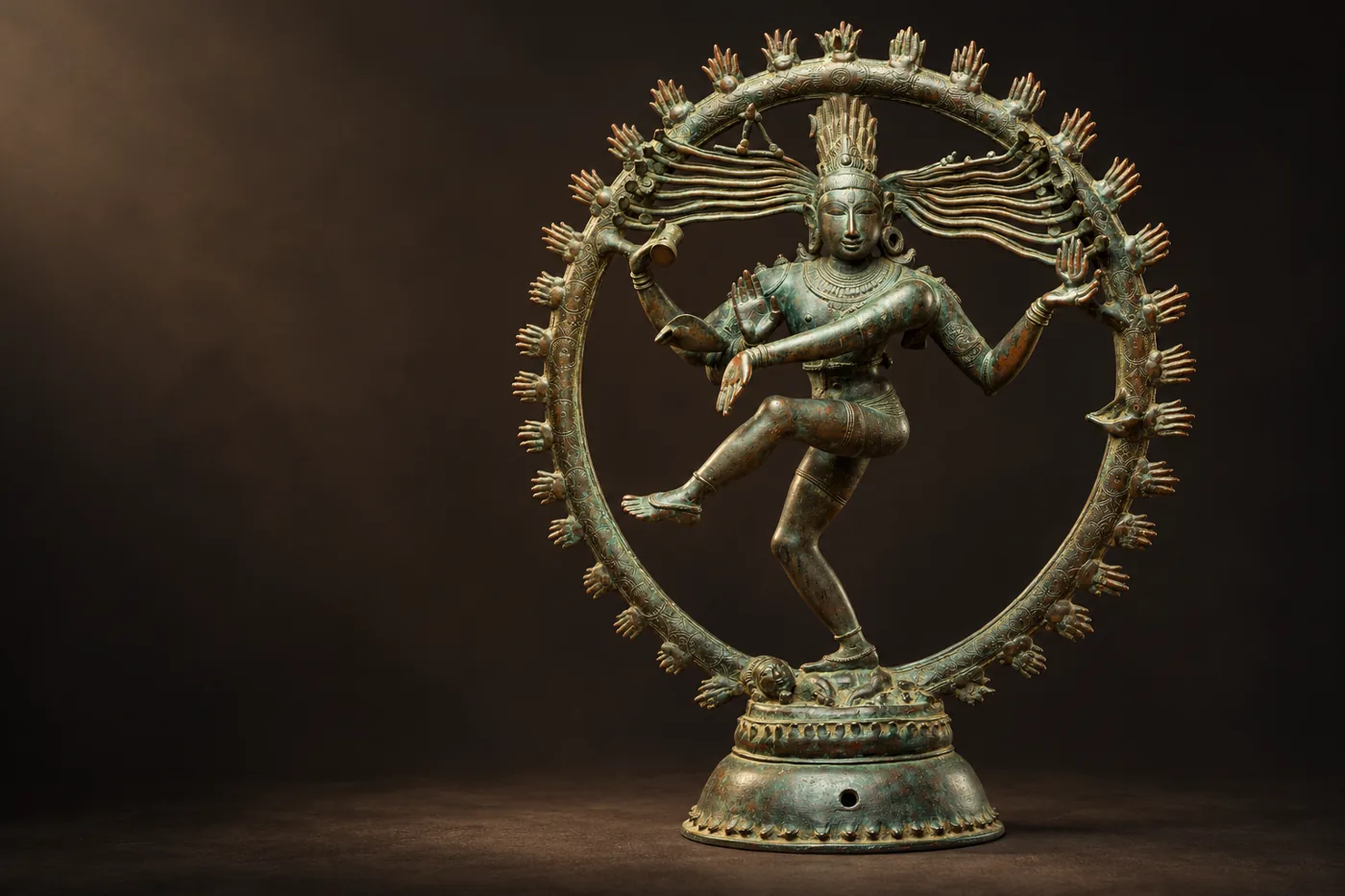
AI-generated interpretive study of the selected Shiva Nataraja bronze in an imagined neutral studio; not a documentary photograph or a reconstruction of worship. Credit: AI-generated for Culture Ark using OpenAI image_gen, 2026-11-01. Rights: AI-generated output; no exclusive ownership or guaranteed copyrightability claimed. Changes: Resized within1400px and converted to WebP; no crop or substantive alteration.
The lighting, surface rendering and setting are generated. Consult the institutional reference for the actual object; do not use this illustration to establish exact details, condition or ritual practice.
Documented reference / existing artwork
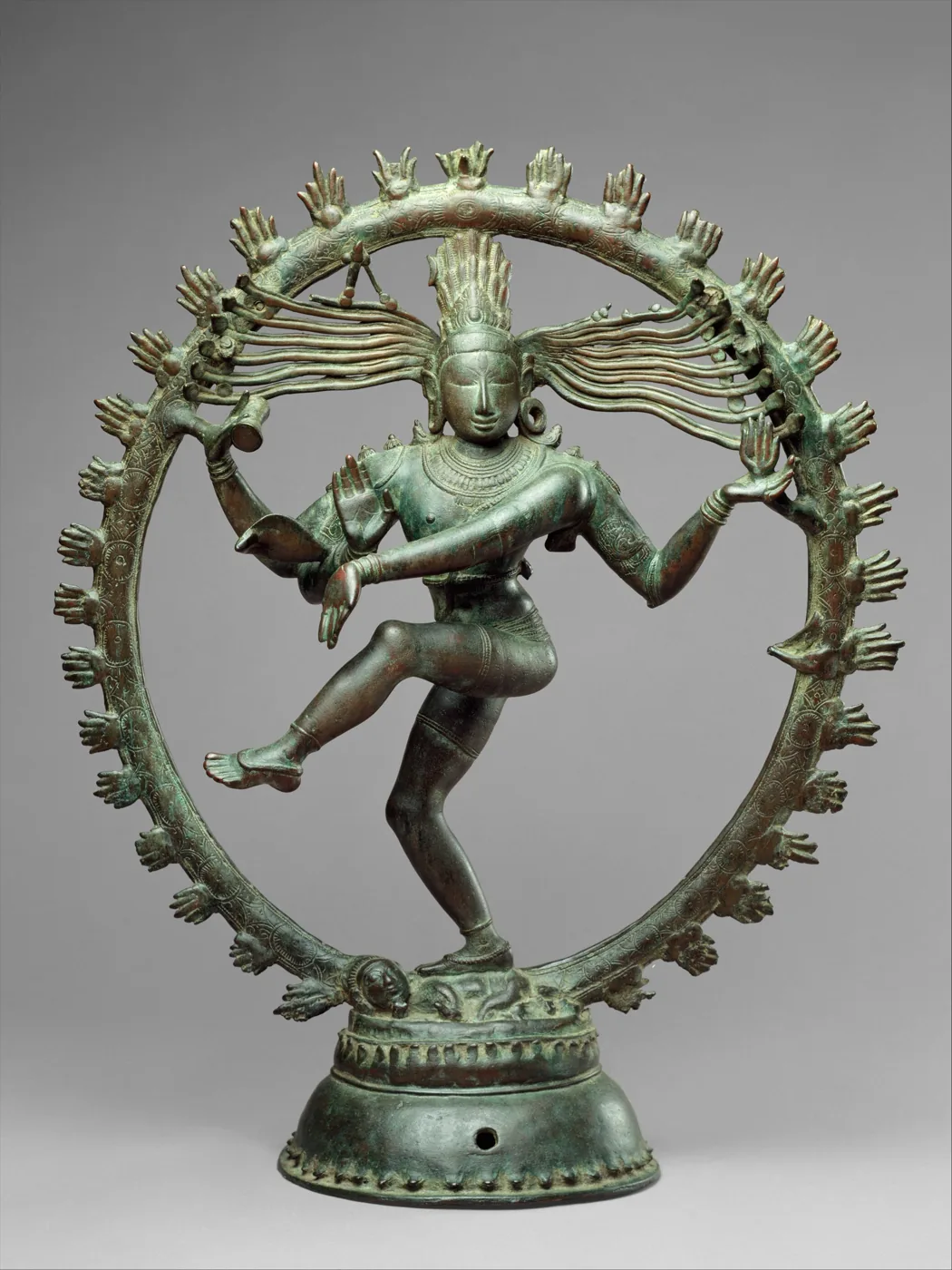
Shiva as Lord of Dance (Nataraja). ca. late 11th century. The Metropolitan Museum of Art, 1987.80.1. Credit: Indian (Tamil Nadu) / The Metropolitan Museum of Art. Gift of R. H. Ellsworth Ltd., in honor of Susan Dillon, 1987. Rights: Public domain; Met Open Access. Changes: Resized within1400px and converted to WebP; no crop or substantive alteration. Image source Image licence
Met API explicitly marks isPublicDomain=true. Image reuse permission does not transfer ownership of the object or resolve cultural permissions, sacred significance, provenance or restitution questions. Retain the catalog context.
History and context
This copper-alloy sculpture presents Shiva dancing within a ring of flame. Its gestures are not arbitrary decoration: the drum, fire, raised foot and reassuring hand form a visual account of creation, destruction and refuge. The Metropolitan Museum identifies the work as Chola-period sculpture from Tamil Nadu and explains the image through Hindu ideas about recurring cosmic time. A future reader can study how a still object makes movement visible, while learning why a religious image cannot be understood only as a pleasing arrangement of shapes. The museum's accession 1987.80.1 identifies this particular sculpture; it is one example of a much wider devotional and artistic tradition.
What future readers can learn
Curatorial interpretation: it connects sculptural balance and bodily gesture to religious ideas about time. The entry can teach readers to ask what an image does for worshippers, not merely what it resembles.
Limits and cultural context
The date concerns this object, not the beginning of Shiva worship. Hindu traditions differ, and a museum explanation is not every devotee's account. Do not present sacred imagery as an interchangeable decorative motif.
Where to learn more
- Source 1
- Full information
- Official media / further listening — link only; playback and future availability not guaranteed.
See Shiva as Lord of Dance in a Chola-period bronze in the Culture Ark gallery
CA0322: Sphinx of Hatshepsut
CA0322 · visual art
Creator/community: Unrecorded Egyptian royal sculptors working for the pharaoh Hatshepsut Place/era: Deir el-Bahri, Egypt; approximately 1473–1458 BCE, Dynasty 18
Generated interpretation
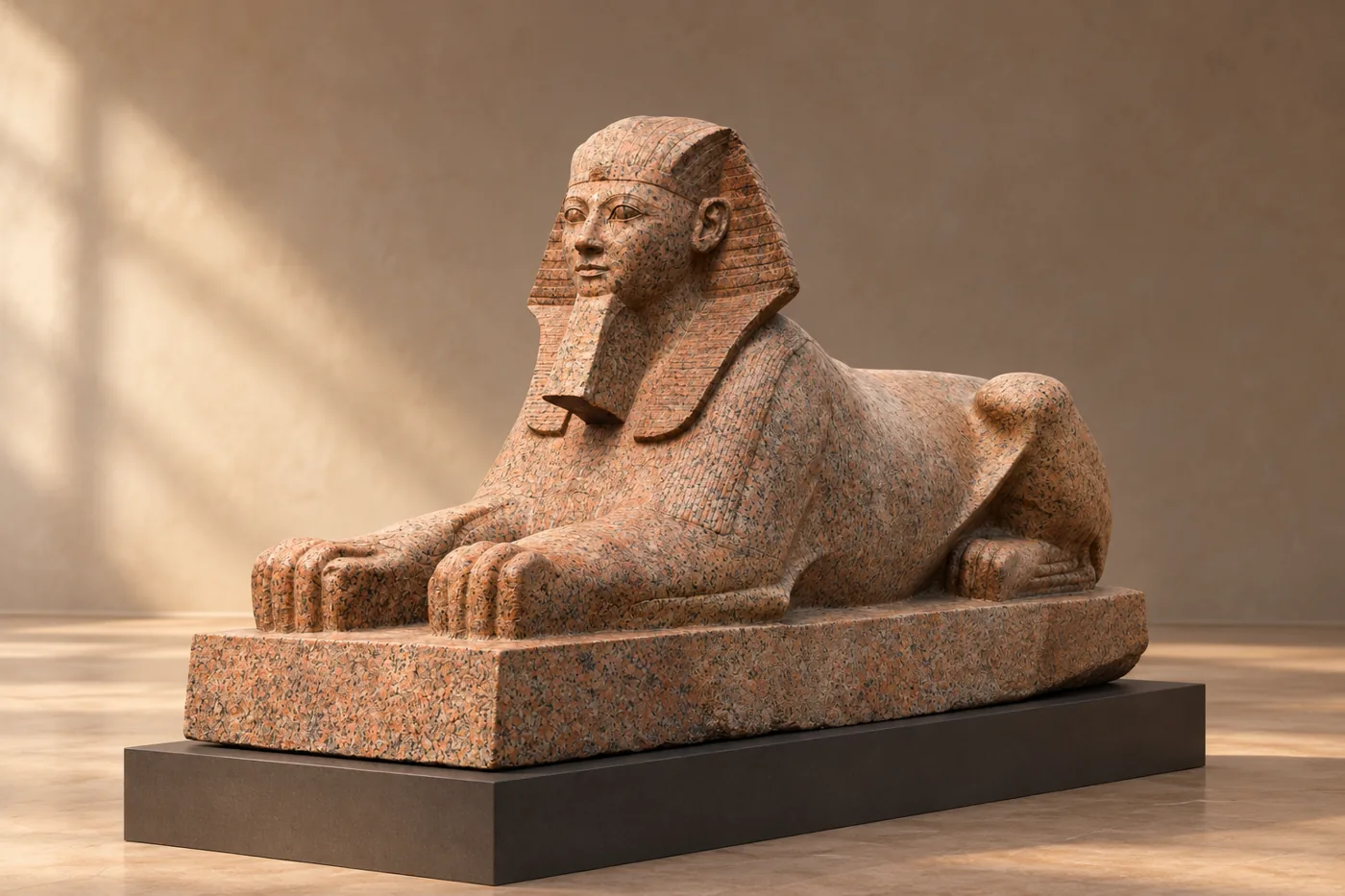
AI-generated interpretive study of the selected reconstructed sphinx in an imagined display setting; not a photograph of the museum installation or Hatshepsut’s temple. Credit: AI-generated for Culture Ark using OpenAI image_gen, 2026-11-01. Rights: AI-generated output; no exclusive ownership or guaranteed copyrightability claimed. Changes: Resized within1400px and converted to WebP; no crop or substantive alteration.
The generated texture and lighting cannot identify ancient fragments, modern fills or the precise present condition. The plinth and room are imagined.
Documented reference / existing artwork
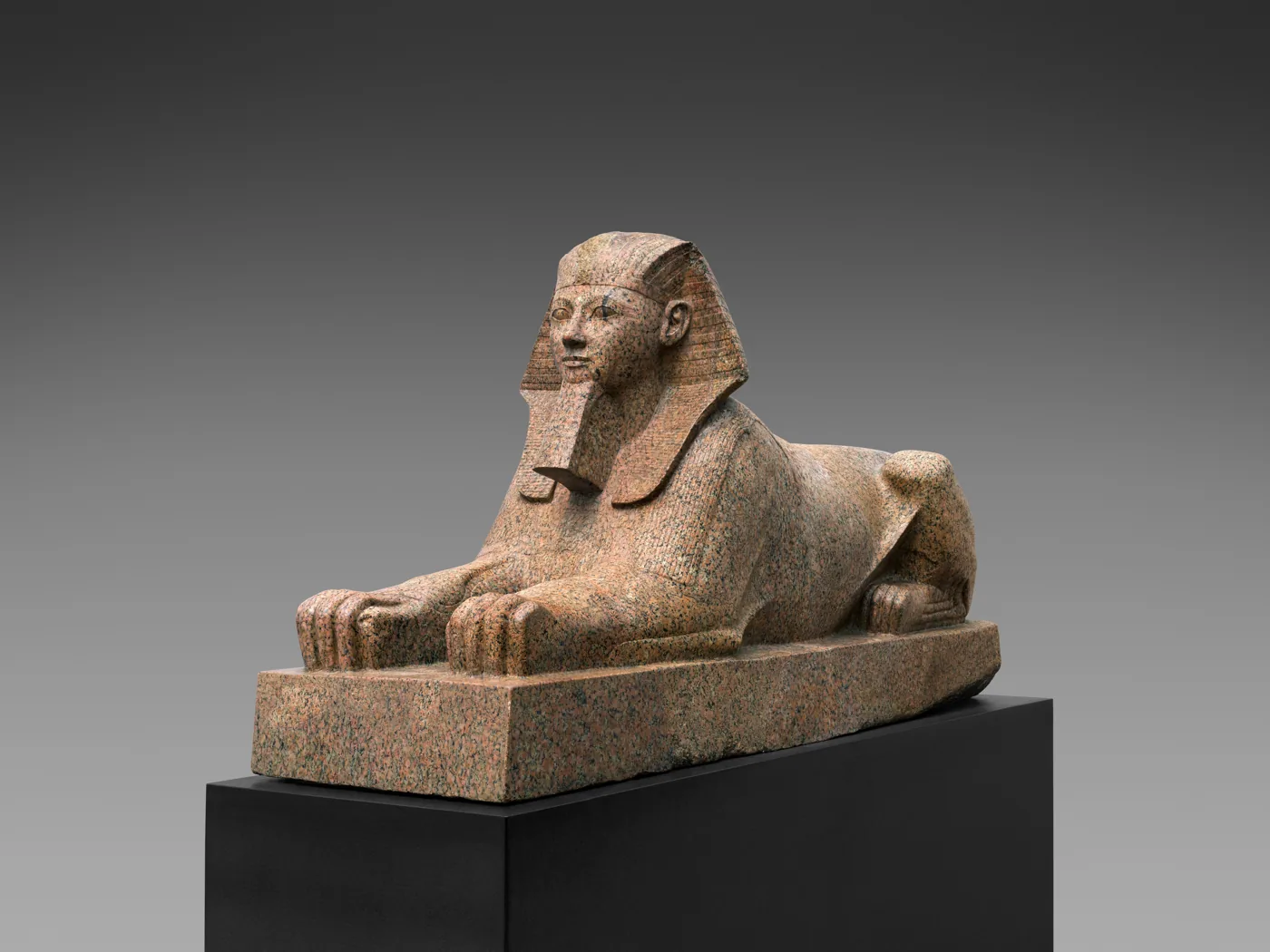
Sphinx of Hatshepsut. ca. 1473–1458 BCE. The Metropolitan Museum of Art, 31.3.166. Credit: Unidentified artist / The Metropolitan Museum of Art. Rogers Fund, 1931. Rights: Public domain; Met Open Access. Changes: Resized within1400px and converted to WebP; no crop or substantive alteration. Image source Image licence
Met API explicitly marks isPublicDomain=true. Image reuse permission does not transfer ownership of the object or resolve cultural permissions, sacred significance, provenance or restitution questions. Retain the catalog context.
History and context
A lion's body supports the human head of Hatshepsut in this monumental granite sphinx. The royal headcloth and ceremonial beard communicate kingship rather than offering a straightforward everyday likeness. The Metropolitan Museum identifies it as one of several sphinxes from her mortuary temple at Deir el-Bahri. Its present appearance also tells a later story: excavators recovered broken pieces, and reconstruction brought the figure back into a legible form. A future viewer should therefore distinguish surviving ancient material from modern fills. The object can introduce both the visual language of Egyptian rule and the work by which damaged cultural objects become available to later audiences.
What future readers can learn
Curatorial interpretation: the figure invites discussion of how rulers represent authority, including how a woman could use established signs of kingship. Its reconstruction makes preservation decisions visible rather than concealing them.
Limits and cultural context
The selected museum object is accession 31.3.166, not the Great Sphinx at Giza. An idealized royal image is not a literal portrait of dress in ordinary life. Museum reconstruction includes missing areas filled with new material.
Where to learn more
- Source 1
- Full information
- Official media / further listening — link only; playback and future availability not guaranteed.
See Sphinx of Hatshepsut in the Culture Ark gallery
CA0323: Wheat Field with Cypresses
CA0323 · visual art
Creator/community: Vincent van Gogh Place/era: Saint-Rémy, France; 1889
Generated interpretation

AI-generated imagined landscape of wheat, cypresses, hills and clouds, inspired by the painting’s subject; not Van Gogh’s canvas or a verified view of its exact location. Credit: AI-generated for Culture Ark using OpenAI image_gen, 2026-11-01. Rights: AI-generated output; no exclusive ownership or guaranteed copyrightability claimed. Changes: Resized within1400px and converted to WebP; no crop or substantive alteration.
The landscape, viewpoint, vegetation arrangement and weather are invented. This is not evidence of the artist’s location, working conditions or mental state.
Documented reference / existing artwork
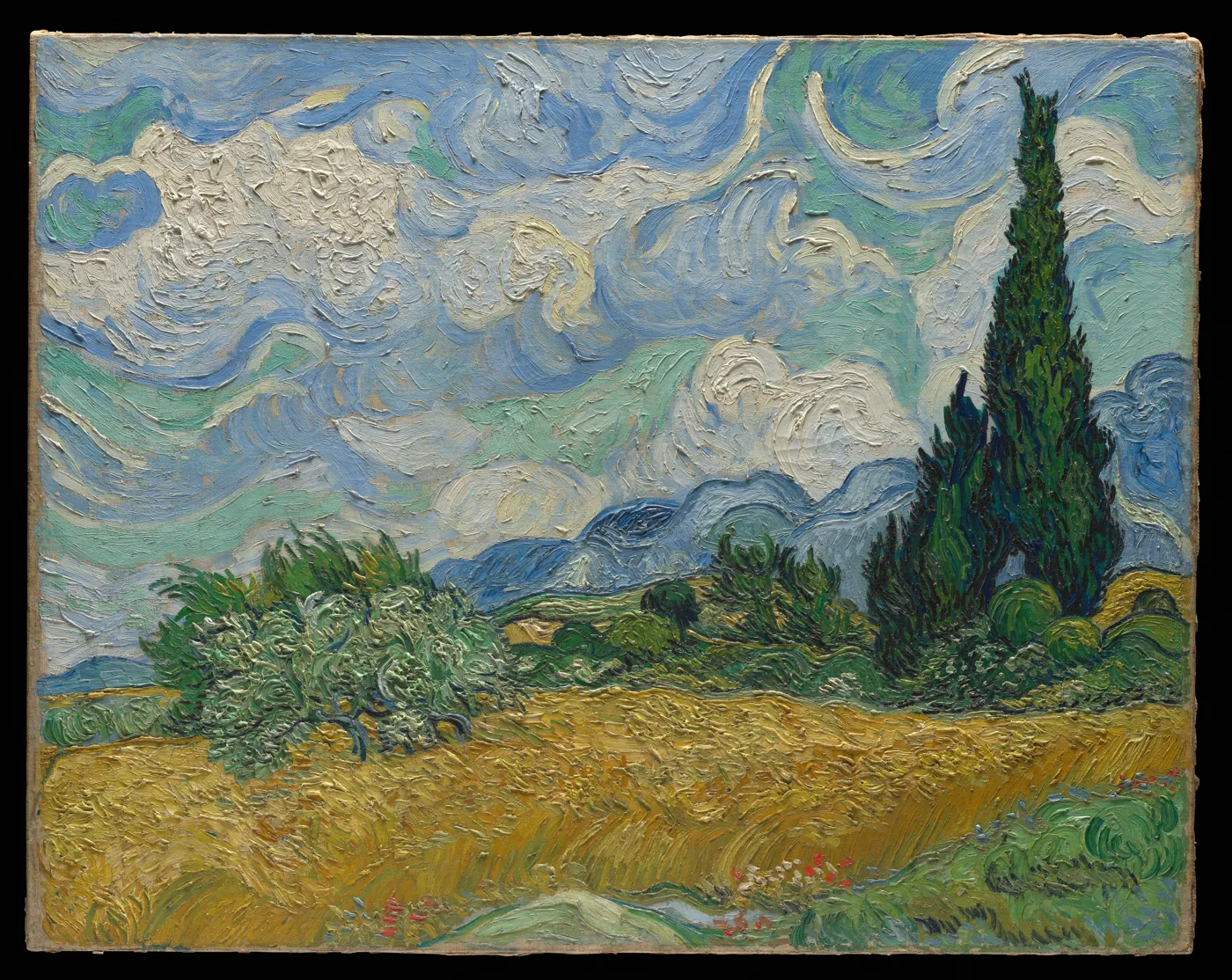
Wheat Field with Cypresses. 1889. The Metropolitan Museum of Art, 1993.132. Credit: Vincent van Gogh / The Metropolitan Museum of Art. Purchase, The Annenberg Foundation Gift, 1993. Rights: Public domain; Met Open Access. Changes: Resized within1400px and converted to WebP; no crop or substantive alteration. Image source Image licence
Met API explicitly marks isPublicDomain=true. Image reuse permission does not transfer ownership of the object or resolve cultural permissions, sacred significance, provenance or restitution questions. Retain the catalog context.
History and context
Van Gogh's landscape places dark cypresses beside a wheat field beneath a sky animated by thick brushwork. The Metropolitan Museum identifies this canvas as an outdoor study from 1889 and distinguishes it from two later studio versions. That distinction matters in an archive: similar compositions may be separate works rather than duplicate photographs of one painting. The visible paint can help a future viewer consider how an artist turns an encounter with weather, trees and cultivated land into a deliberately worked surface. The painting also belongs to a network of correspondence and gifts, since Van Gogh described it to his brother and made a smaller version for family members.
What future readers can learn
Curatorial interpretation: this work offers a way to compare the experience of a landscape with its painted transformation. The related versions and letters show artistic work circulating through personal relationships as well as public collections.
Limits and cultural context
This entry identifies the Met canvas, accession 1993.132. Do not merge it with the National Gallery version. Expressive brushwork is not evidence from which to diagnose the artist's mental state.
Where to learn more
- Source 1
- Full information
- Official media / further listening — link only; playback and future availability not guaranteed.
See Wheat Field with Cypresses in the Culture Ark gallery
CA0324: Moche stirrup-spout bottle with seated figure
CA0324 · visual art
Creator/community: Unrecorded Moche ceramic artist or artists Place/era: Peru; 200–500 CE
Generated interpretation
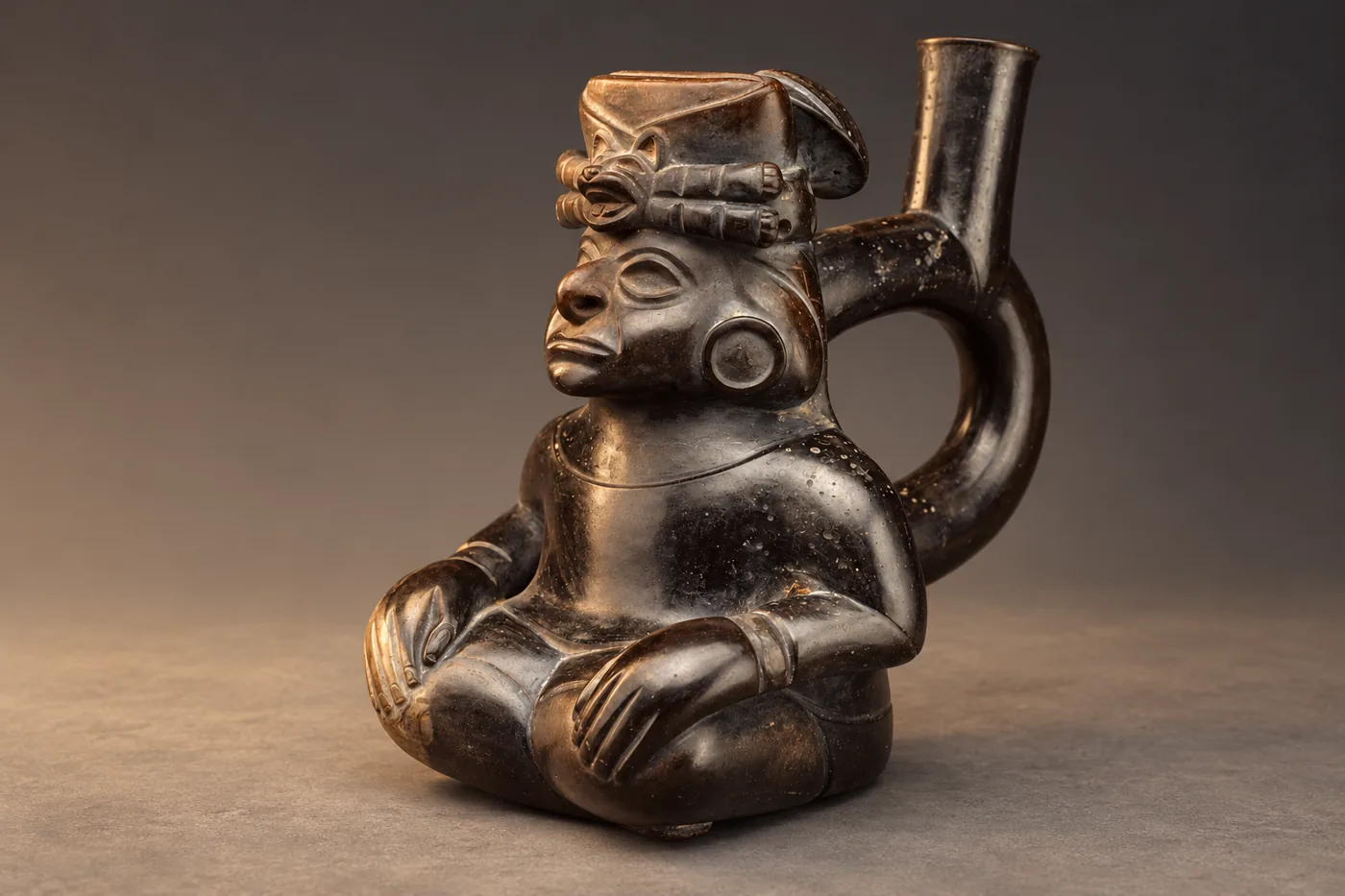
AI-generated interpretive study of the selected Moche ceramic bottle in an imagined studio; not a new historical photograph, functional diagram or reconstruction of use. Credit: AI-generated for Culture Ark using OpenAI image_gen, 2026-11-01. Rights: AI-generated output; no exclusive ownership or guaranteed copyrightability claimed. Changes: Resized within1400px and converted to WebP; no crop or substantive alteration.
Warm highlights and generated gloss alter the apparent surface. They do not establish the ceramic’s exact colour, condition, composition or manufacturing process. No claim is made about contents or spout function.
Documented reference / existing artwork
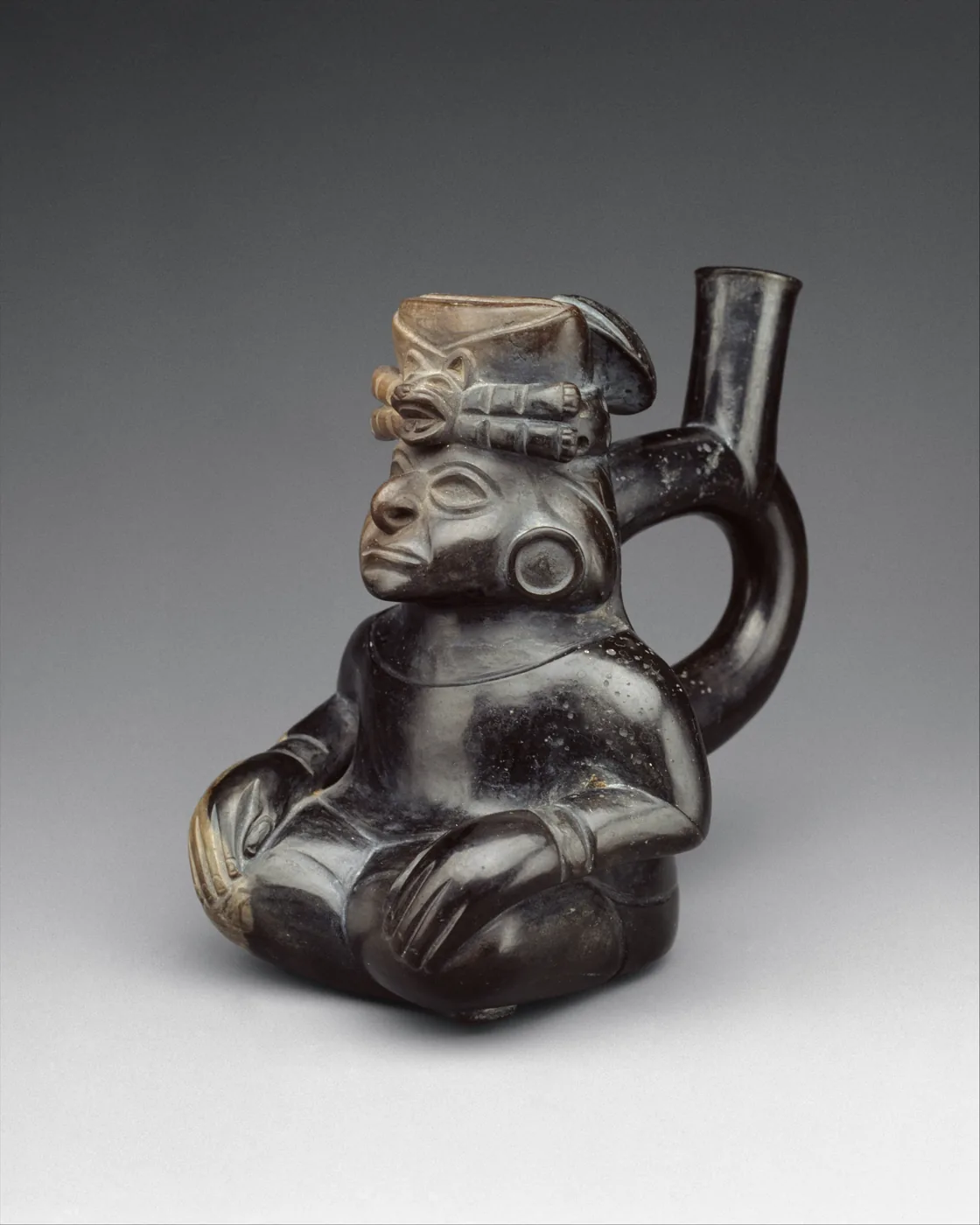
Stirrup-spout bottle with seated figure. 200 CE–500 CE. The Metropolitan Museum of Art, 82.1.30. Credit: Moche artist(s) / The Metropolitan Museum of Art. Gift of Henry G. Marquand, 1882. Rights: Public domain; Met Open Access. Changes: Resized within1400px and converted to WebP; no crop or substantive alteration. Image source Image licence
Met API explicitly marks isPublicDomain=true. Image reuse permission does not transfer ownership of the object or resolve cultural permissions, sacred significance, provenance or restitution questions. Retain the catalog context.
History and context
A seated person becomes the body of a ceramic bottle, joining a human image to a container. Above the figure, two branches meet in one spout, the form that modern catalogues call a stirrup spout. The figure wears a headdress with a small feline face. The Metropolitan Museum explains that such animal-fronted headgear may have indicated status or occupation, but does not identify this individual. This makes the bottle useful for teaching careful interpretation: visible details, plausible explanations and known names are different kinds of evidence. Preserve its shape and scale as well as its decoration, since the object was not simply a flat picture of a person.
What future readers can learn
Curatorial interpretation: a vessel can combine practical form, skilled modelling and social imagery. It also gives future readers practice in distinguishing what can be seen from what scholars infer.
Limits and cultural context
The bottle is accession 82.1.30. The meaning of the spout and headdress remains interpretive. Do not state the figure’s identity or an evaporation-prevention function as established fact.
Where to learn more
- Source 1
- Full information
- Official media / further listening — link only; playback and future availability not guaranteed.
See Moche stirrup-spout bottle with seated figure in the Culture Ark gallery
CA0325: Young Woman with a Water Pitcher
CA0325 · visual art
Creator/community: Johannes Vermeer Place/era: Delft, Netherlands; approximately 1662
Generated interpretation
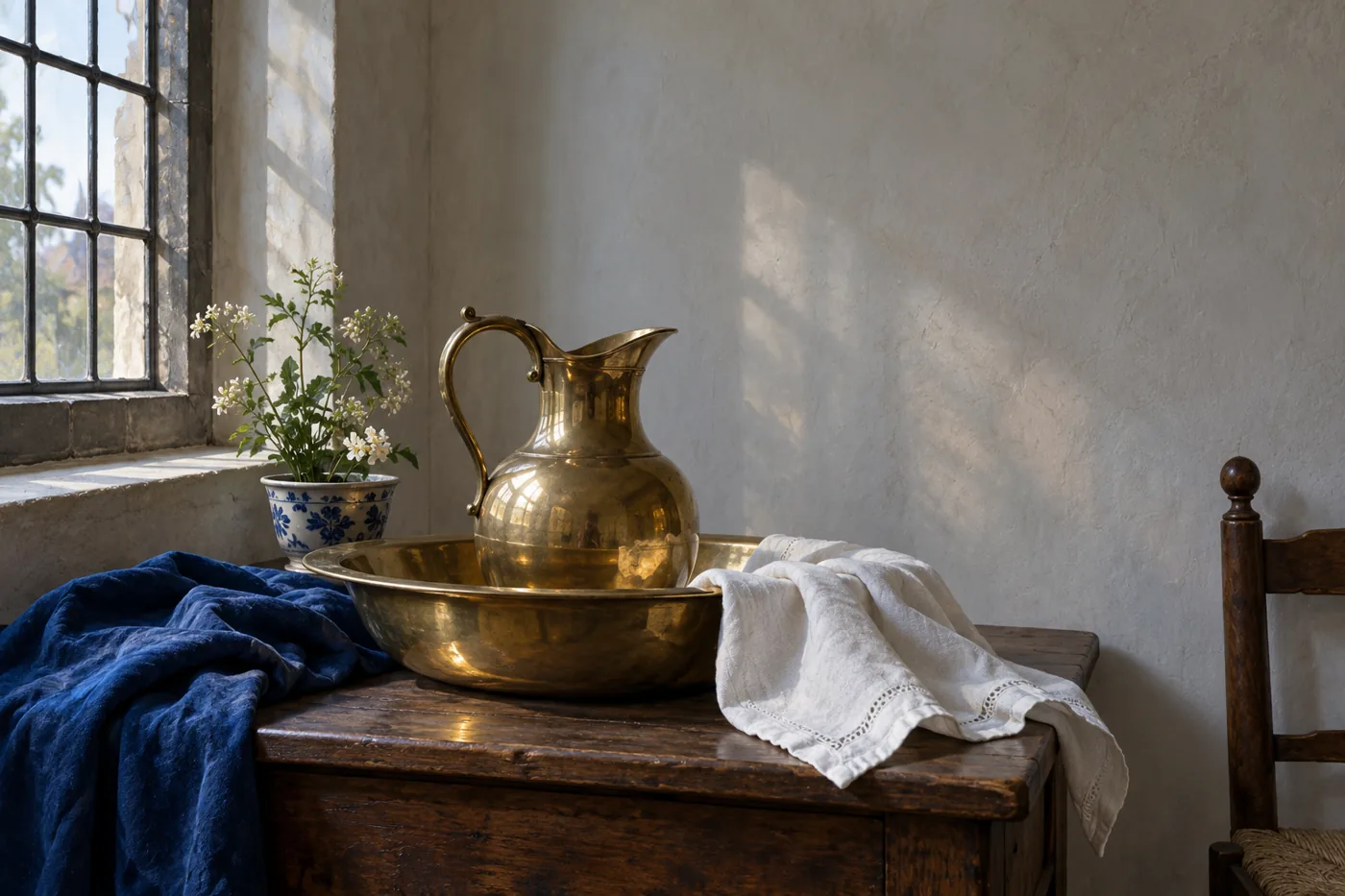
AI-generated still life of an invented pitcher, basin, linen and window light, inspired by the painting’s domestic themes; not Vermeer’s painting or a documented seventeenth-century room. Credit: AI-generated for Culture Ark using OpenAI image_gen, 2026-11-01. Rights: AI-generated output; no exclusive ownership or guaranteed copyrightability claimed. Changes: Resized within1400px and converted to WebP; no crop or substantive alteration.
The props, flowerpot, chair, room and lighting are invented. They are not a verified inventory of the painted household or evidence of period manufacture.
Documented reference / existing artwork
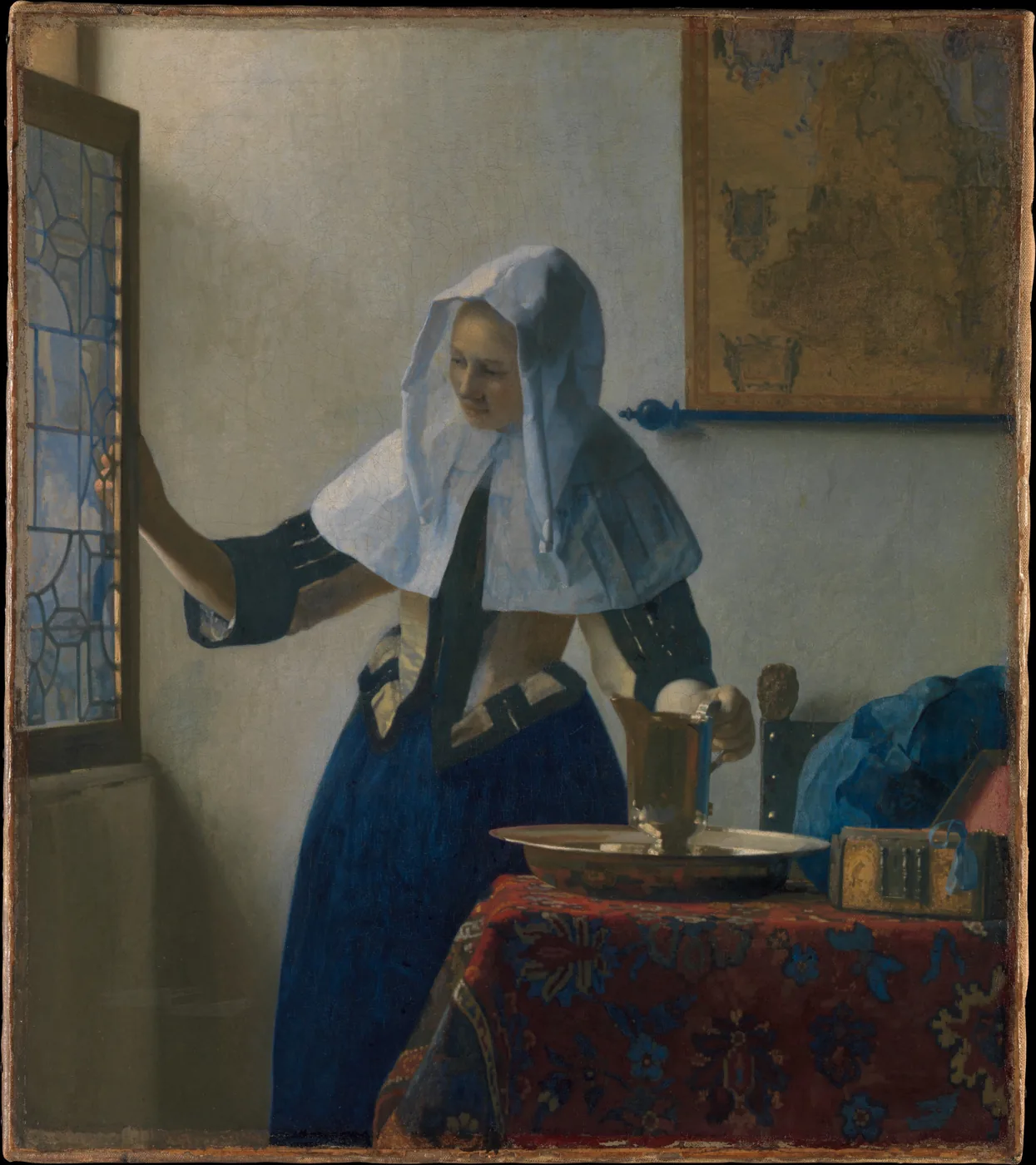
Young Woman with a Water Pitcher. ca. 1662. The Metropolitan Museum of Art, 89.15.21. Credit: Johannes Vermeer / The Metropolitan Museum of Art. Marquand Collection, Gift of Henry G. Marquand, 1889. Rights: Public domain; Met Open Access. Changes: Resized within1400px and converted to WebP; no crop or substantive alteration. Image source Image licence
Met API explicitly marks isPublicDomain=true. Image reuse permission does not transfer ownership of the object or resolve cultural permissions, sacred significance, provenance or restitution questions. Retain the catalog context.
History and context
A woman stands beside an open window with a pitcher and basin, her head and shoulders covered in white linen. Vermeer makes a quiet domestic moment into an arrangement of light, surfaces and attention. The Metropolitan Museum identifies the scene with morning washing and notes how the protective linen separates private preparation from a later public appearance. The pitcher catches light while the room contains objects that reward slower looking. For a future viewer, the painting offers both an image of household life and evidence of an artist’s choices. Its calm is constructed: it should not be mistaken for an unfiltered record of every seventeenth-century Dutch home.
What future readers can learn
Curatorial interpretation: the painting asks what kinds of daily activity deserve sustained attention. It also allows comparison between material objects in a room and the effects produced by painting them.
Limits and cultural context
This is accession 89.15.21. An idealized and selective interior cannot represent every social class. The depicted woman’s personal identity is not established by this entry.
Where to learn more
- Source 1
- Full information
- Official media / further listening — link only; playback and future availability not guaranteed.
See Young Woman with a Water Pitcher in the Culture Ark gallery
CA0326: Duccio’s Madonna and Child for private devotion
CA0326 · visual art
Creator/community: Duccio di Buoninsegna Place/era: Siena, Italy; approximately 1300
Generated interpretation
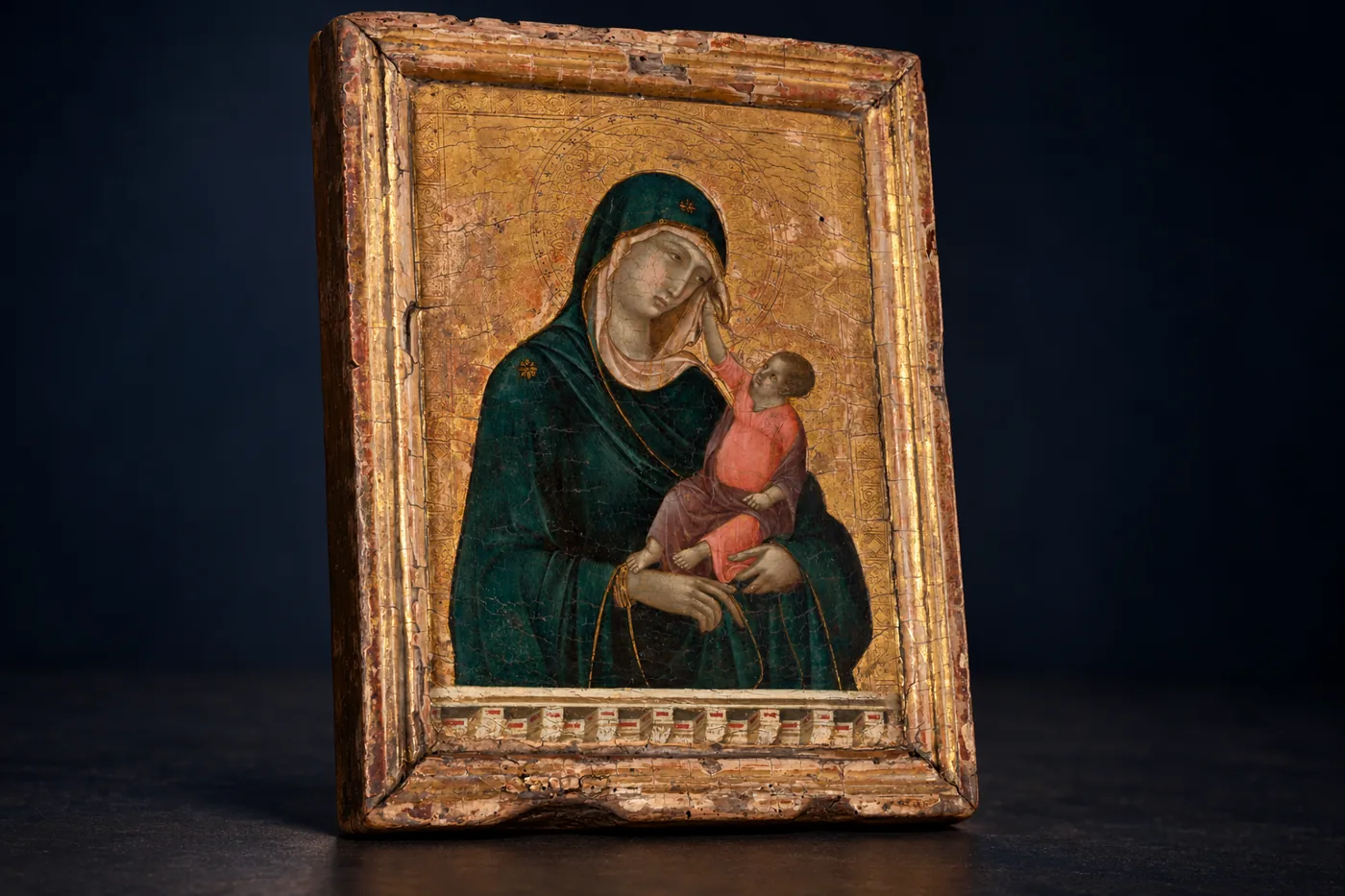
AI-generated interpretive study of Duccio’s selected panel in an imagined neutral display; not a documentary photograph, restored original or reconstruction of private devotion. Credit: AI-generated for Culture Ark using OpenAI image_gen, 2026-11-01. Rights: AI-generated output; no exclusive ownership or guaranteed copyrightability claimed. Changes: Resized within1400px and converted to WebP; no crop or substantive alteration.
The viewing angle, light and surface rendering are generated. Do not use the illustration to locate candle burns, assess conservation condition or establish the panel’s exact dimensions.
Documented reference / existing artwork
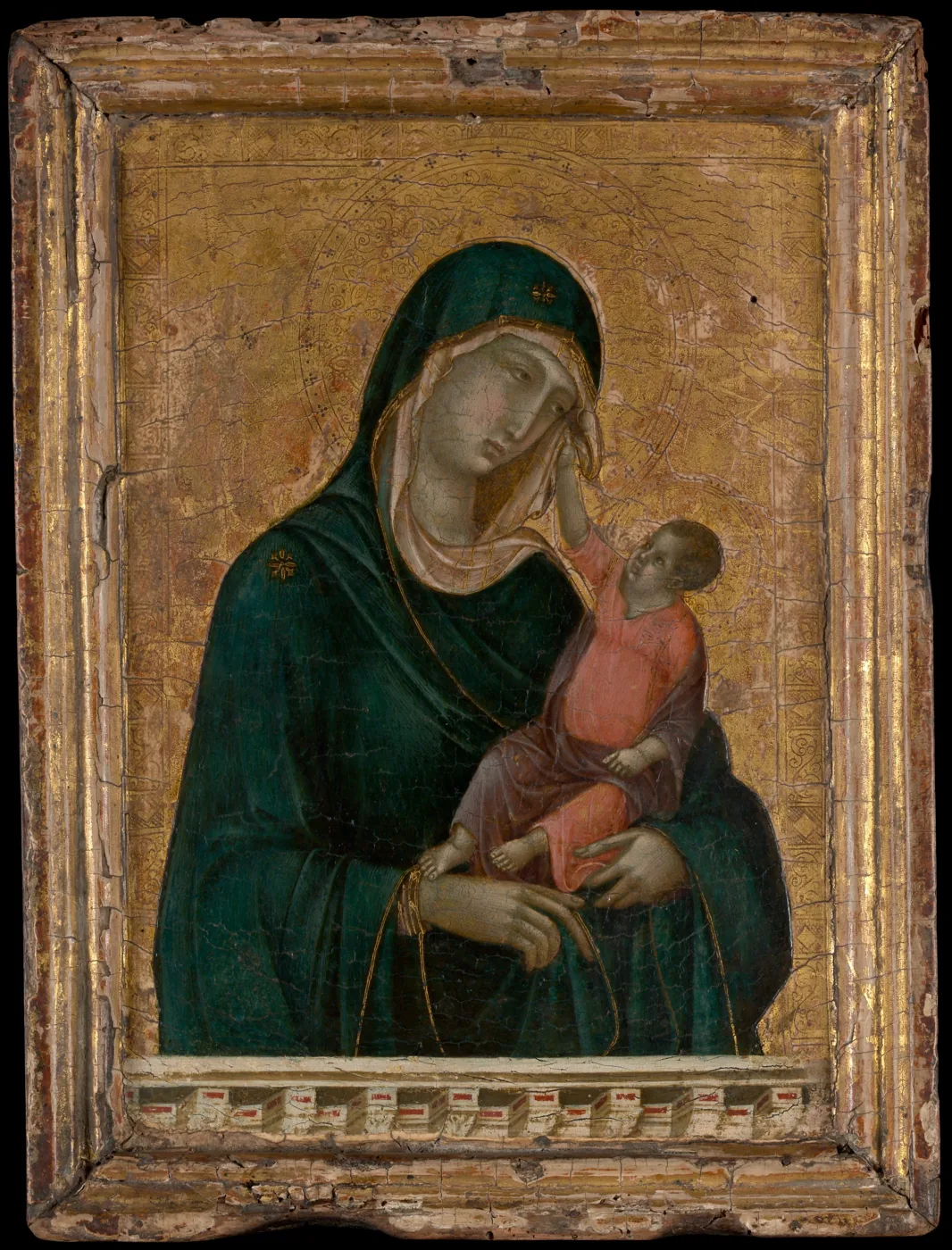
Madonna and Child. ca. 1290–1300. The Metropolitan Museum of Art, 2004.442. Credit: Duccio di Buoninsegna / The Metropolitan Museum of Art. Purchase, Rogers Fund, Walter and Leonore Annenberg and The Annenberg Foundation Gift, Lila Acheson Wallace Gift, Annette de la Renta Gift, Harris Brisbane Dick, Fletcher, Louis V. Bell, and Dodge Funds, Joseph Pulitzer Bequest, several members of The Chairman's Council Gifts, Elaine L. Rosenberg and Stephenson Family Foundation Gifts, 2003 Benefit Fund, and other gifts and funds from various donors, 2004. Rights: Public domain; Met Open Access. Changes: Resized within1400px and converted to WebP; no crop or substantive alteration. Image source Image licence
Met API explicitly marks isPublicDomain=true. Image reuse permission does not transfer ownership of the object or resolve cultural permissions, sacred significance, provenance or restitution questions. Retain the catalog context.
History and context
Duccio places Mary and the child Jesus behind a low painted parapet in this small devotional panel. Their gestures suggest a relationship between mother and child while retaining the work’s sacred purpose. The Metropolitan Museum’s exhibition account connects the panel to private devotion and notes candle burns along its original frame. Those marks are useful evidence of use, not simply damage to erase from the story. A future reader can consider how a small object structured an intimate encounter with religious imagery. The picture also invites attention to the painted boundary: it appears to join the viewer’s space to the represented figures while keeping those spaces distinct.
What future readers can learn
Curatorial interpretation: the object joins emotional intimacy to religious looking, and its frame reminds us that viewers interacted with artworks rather than only admiring them in museums.
Limits and cultural context
The approximate date is not exact. This specific small panel is not Duccio’s large Maestà altarpiece. Describe devotional meanings respectfully without assuming every Christian image functions in the same way.
Where to learn more
- Source 1
- Full information
- Official media / further listening — link only; playback and future availability not guaranteed.
See Duccio’s Madonna and Child for private devotion in the Culture Ark gallery
CA0327: The Unicorn Rests in a Garden
CA0327 · visual art
Creator/community: Unrecorded French designers and South Netherlandish tapestry weavers Place/era: Design associated with Paris and weaving with the Southern Netherlands; 1495–1505
Generated interpretation
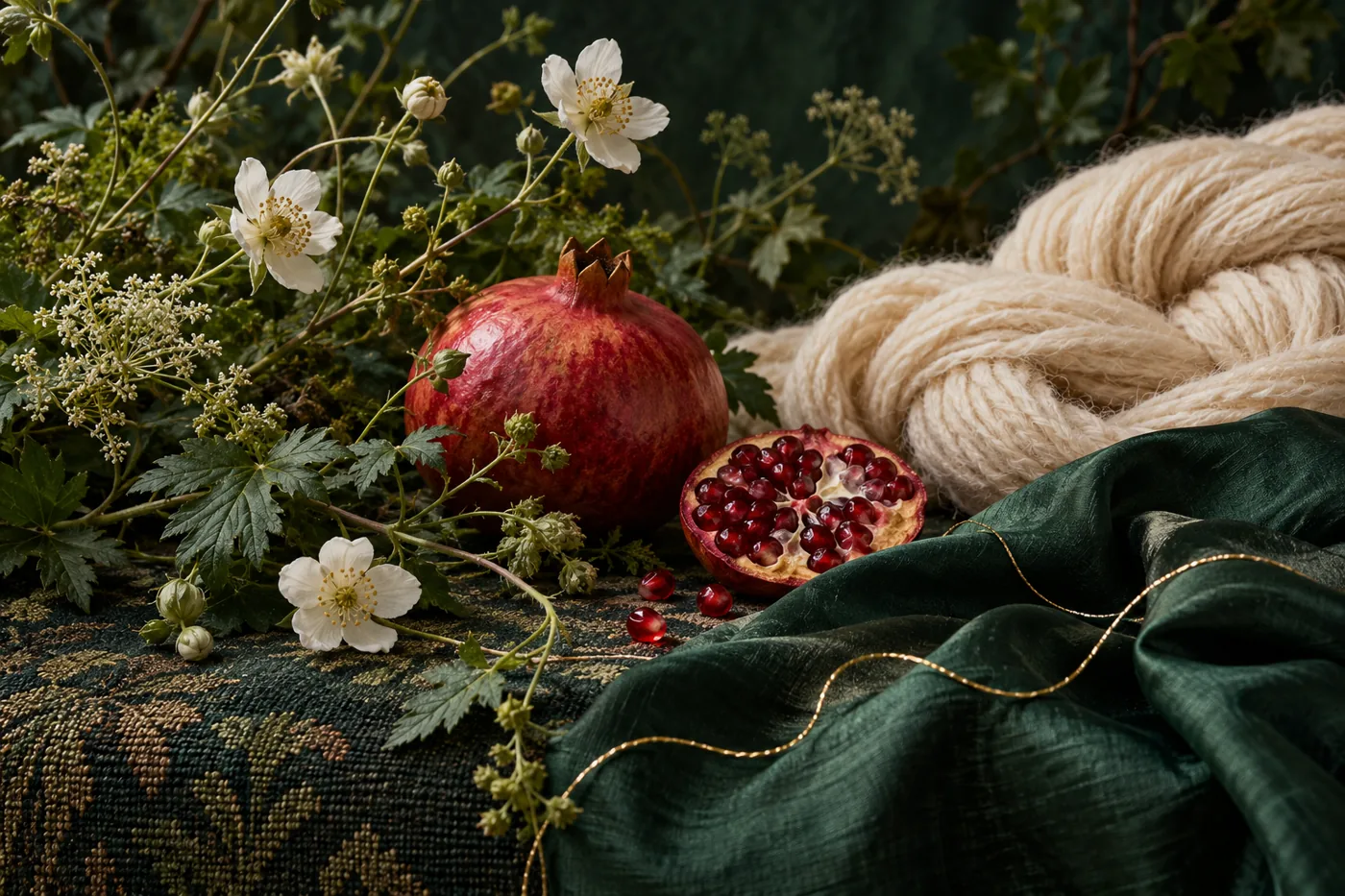
AI-generated material-and-garden still life with pomegranate, flowers, wool, fabric and gold-coloured thread; a thematic companion, not the selected tapestry or its original supplies. Credit: AI-generated for Culture Ark using OpenAI image_gen, 2026-11-01. Rights: AI-generated output; no exclusive ownership or guaranteed copyrightability claimed. Changes: Resized within1400px and converted to WebP; no crop or substantive alteration.
The props are invented and are not identified as the tapestry’s actual fibres, dyes, plants or weaving equipment. This is not a technical reconstruction or a claim about one definitive symbolic meaning.
Documented reference / existing artwork
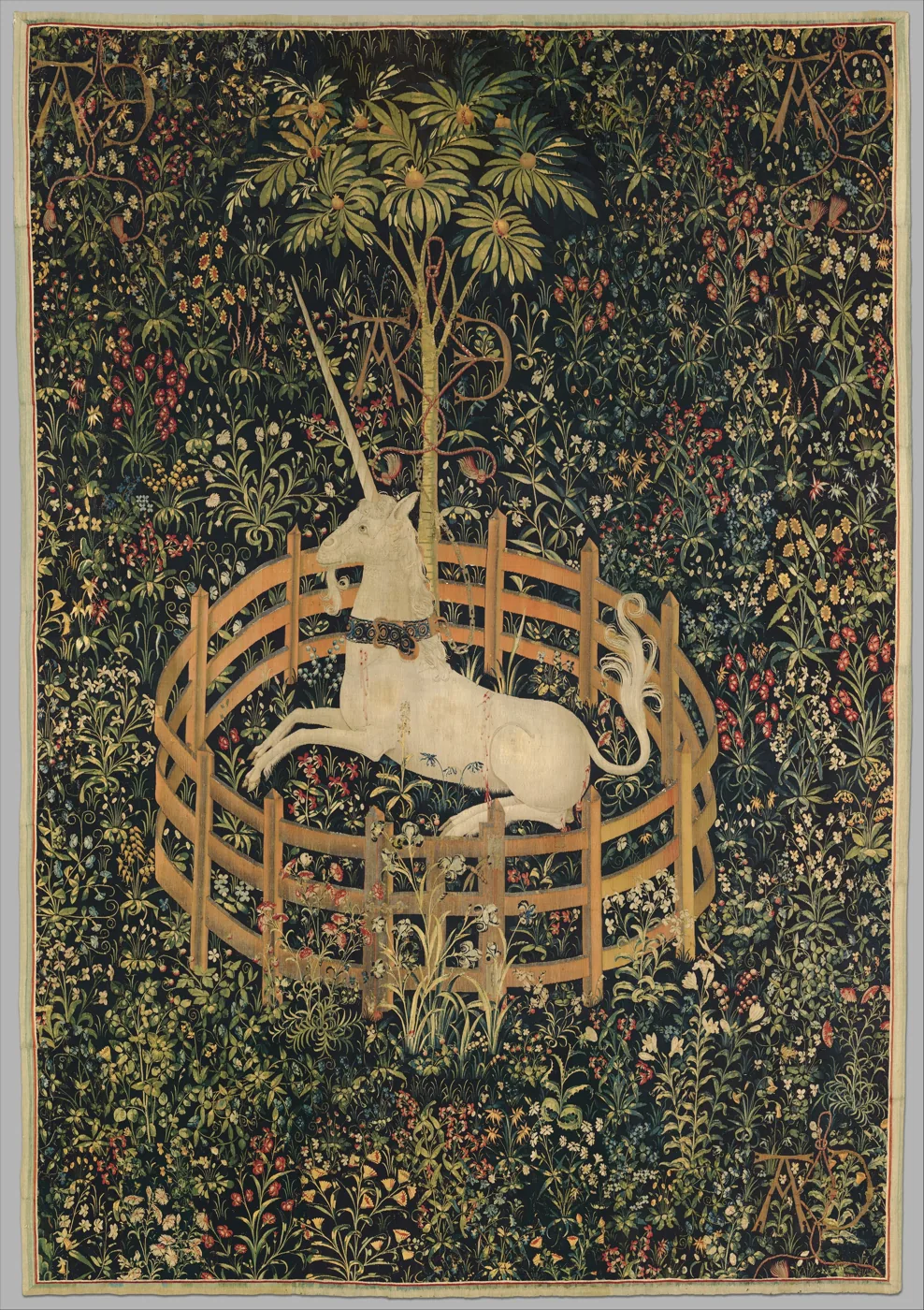
The Unicorn Rests in a Garden (from the Unicorn Tapestries). 1495–1505. The Metropolitan Museum of Art, 37.80.6. Credit: French (cartoon)/South Netherlandish (woven) / The Metropolitan Museum of Art. Gift of John D. Rockefeller Jr., 1937. Rights: Public domain; Met Open Access. Changes: Resized within1400px and converted to WebP; no crop or substantive alteration. Image source Image licence
Met API explicitly marks isPublicDomain=true. Image reuse permission does not transfer ownership of the object or resolve cultural permissions, sacred significance, provenance or restitution questions. Retain the catalog context.
History and context
A white unicorn sits within a low circular fence, tethered to a pomegranate tree and surrounded by flowering plants. The scene is woven with wool, silk and metal threads rather than painted on canvas. The Metropolitan Museum identifies several possible readings, including marriage and Christian symbolism, and notes that the hanging may originally have stood alone rather than forming part of a continuous hunt narrative. A future reader should retain those alternatives instead of reducing the image to one solved code. Close looking can follow the flowers and animal, while the materials remind viewers of the many decisions and skilled hands required to turn a design into a large textile.
What future readers can learn
Curatorial interpretation: the tapestry offers a case in which fantasy, botanical observation and social symbolism coexist. It also helps distinguish designing an image from the labour of weaving it.
Limits and cultural context
Interpretations are not certain original intentions. Medieval associations of plants with fertility are historical beliefs, not health advice. The selected hanging is accession 37.80.6, not every Unicorn Tapestry.
Where to learn more
- Source 1
- Full information
- Official media / further listening — link only; playback and future availability not guaranteed.
See The Unicorn Rests in a Garden in the Culture Ark gallery
CA0352: Pendant mask of Ìyọ́bà Idià
CA0352 · visual art
Creator/community: Ìgbèsànmwà ivory- and wood-carving guild artists; Edo court Place/era: Kingdom of Benin, present-day Nigeria; sixteenth century
Generated interpretation
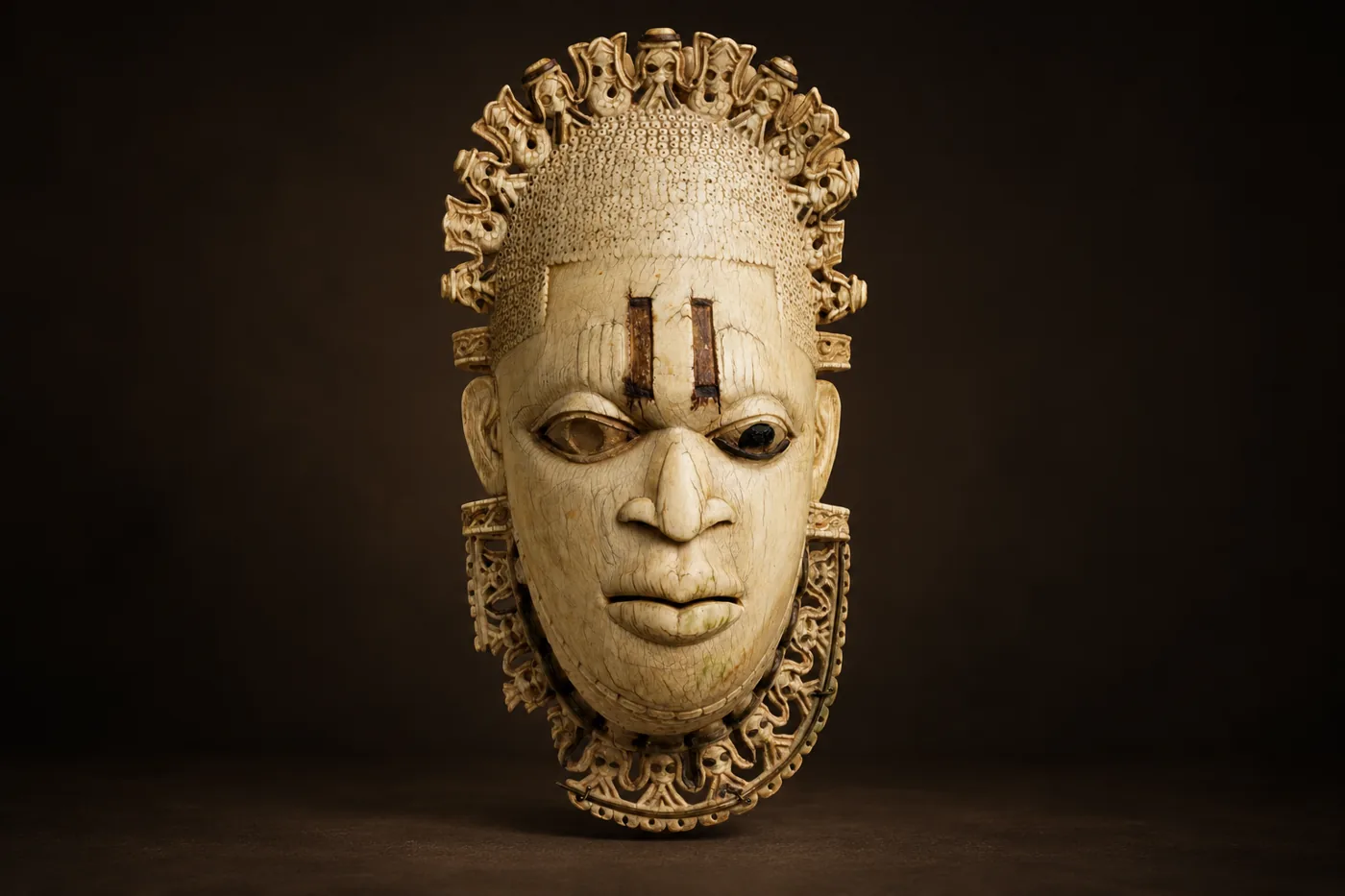
AI-generated interpretive study of the selected pendant mask in an imagined neutral studio; not a portrait of Idia from life, a wearing demonstration or a claim of cultural ownership. Credit: AI-generated for Culture Ark using OpenAI image_gen, 2026-11-01. Rights: AI-generated output; no exclusive ownership or guaranteed copyrightability claimed. Changes: Resized within1400px and converted to WebP; no crop or substantive alteration.
The studio setting, lighting and surface details are generated. This image does not settle attribution, provenance, restitution or cultural authority, and is not evidence of exact condition.
Documented reference / existing artwork
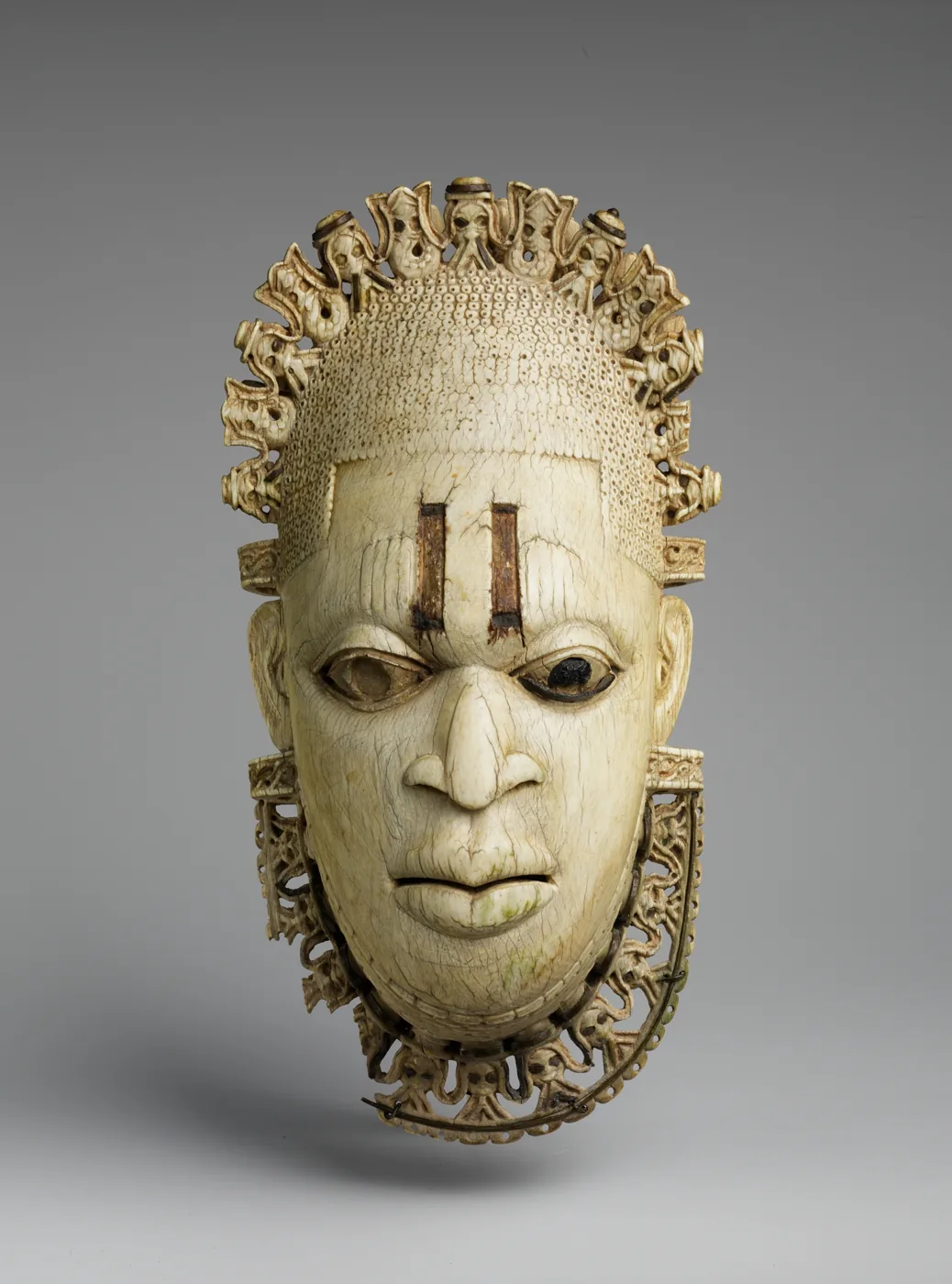
Pendant mask of Ìyọ́bà Idià. 16th century. The Metropolitan Museum of Art, 1978.412.323. Credit: Ìgbèsànmwà (ivory- and wood- carving guild) artists / The Metropolitan Museum of Art. The Michael C. Rockefeller Memorial Collection, Gift of Nelson A. Rockefeller, 1972. Rights: Public domain; Met Open Access. Changes: Resized within1400px and converted to WebP; no crop or substantive alteration. Image source Image licence
Met API explicitly marks isPublicDomain=true. Image reuse permission does not transfer ownership of the object or resolve cultural permissions, sacred significance, provenance or restitution questions. Retain the catalog context.
History and context
An idealised face is framed by carved details that connect a queen mother's memory with courtly and spiritual power. The Metropolitan Museum identifies this ivory pendant with Idia and explains that it was probably made for her son, Oba Esigie. Metal inlays and carved marks distinguish the forehead, while the surrounding ornament includes mudfish and Portuguese faces. These are not incidental decoration: the museum relates them to kingship, wealth and the sea. The object also belongs to a history disrupted by the British invasion of Benin in 1897 and the dispersal of palace art. A future archive should retain those relationships rather than detach the face as an anonymous luxury design.
What future readers can learn
Curatorial interpretation: It links a powerful woman, specialist court artists, symbolic materials and the consequences of colonial dispersal.
Limits and cultural context
The identification and original wearing occasion are qualified by the museum. Preserve provenance and contemporary Edo perspectives; an open image is not ownership of the culture.
Where to learn more
See Pendant mask of Ìyọ́bà Idià in the Culture Ark gallery
CA0353: Aowin memorial head
CA0353 · visual art
Creator/community: Akan artist, personal name unrecorded Place/era: Aowin traditional area, Ghana; eighteenth century
Generated interpretation
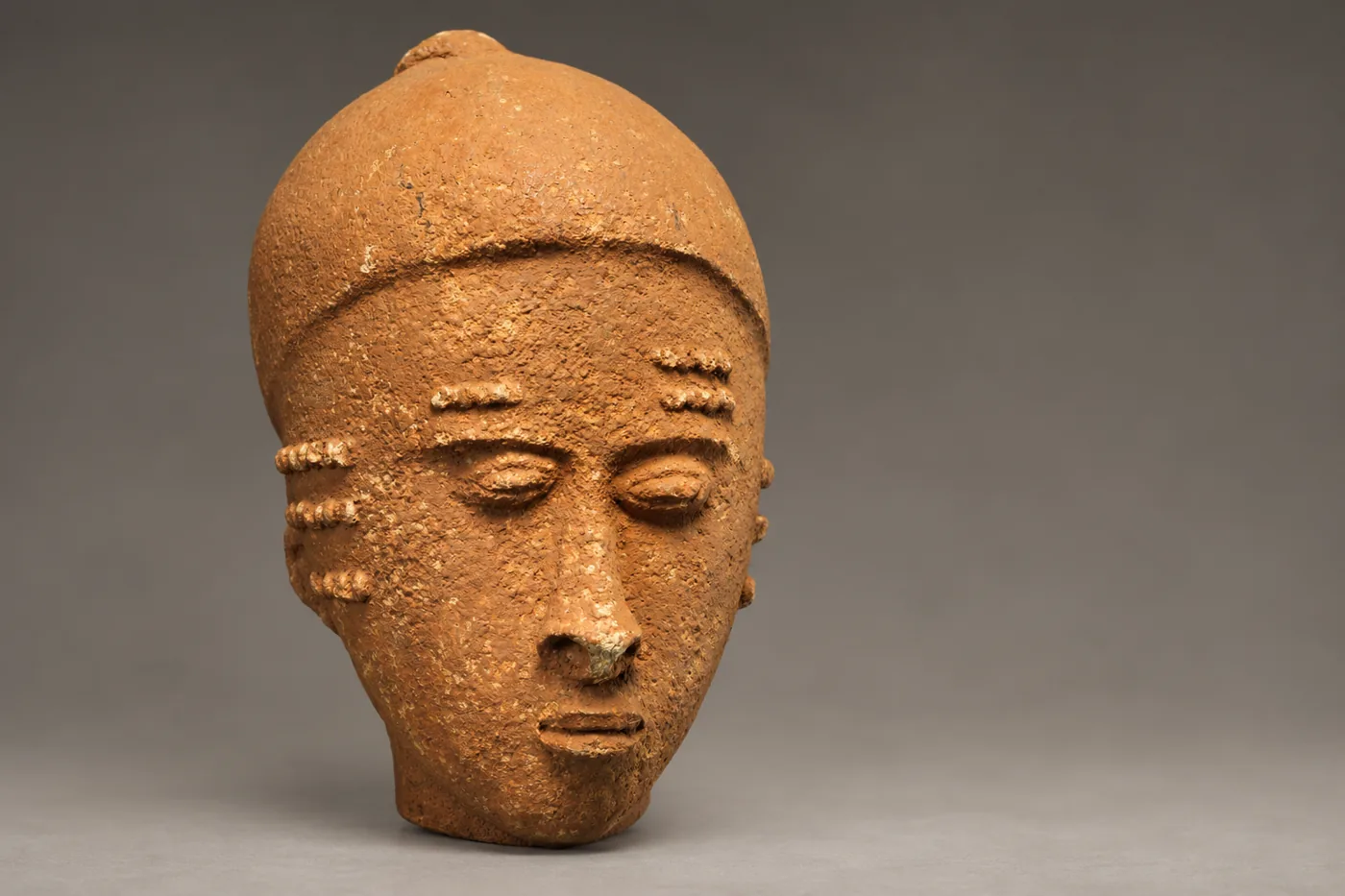
AI-generated interpretive study of the selected Aowin terracotta memorial head in an imagined studio; not a cemetery photograph, reconstructed person or demonstration of ancestral practice. Credit: AI-generated for Culture Ark using OpenAI image_gen, 2026-11-01. Rights: AI-generated output; no exclusive ownership or guaranteed copyrightability claimed. Changes: Resized within1400px and converted to WebP; no crop or substantive alteration.
Generated light, support and clay texture are not conservation documentation. The illustration cannot identify the maker’s name or gender, or recreate the memorial’s original social setting.
Documented reference / existing artwork
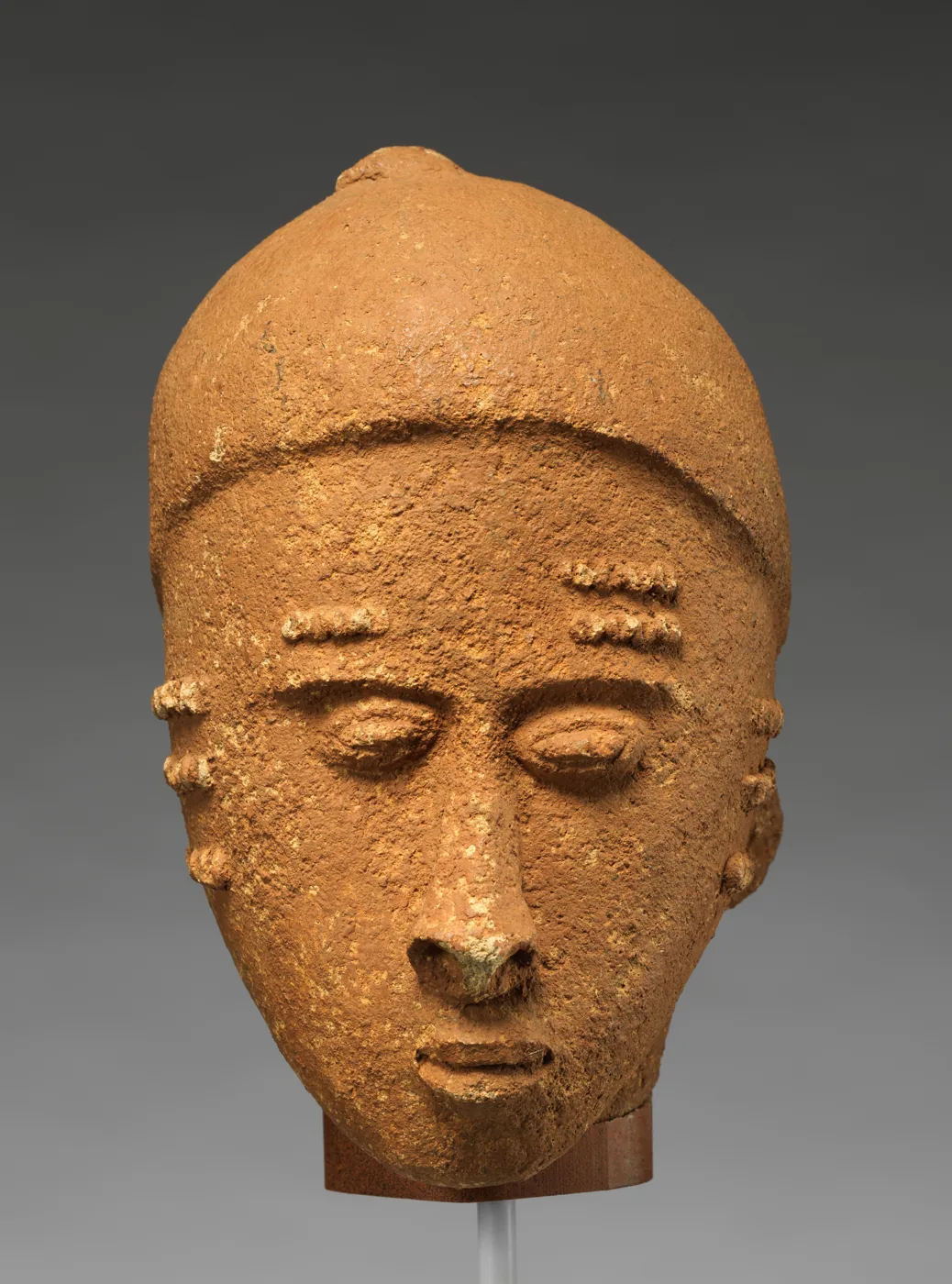
Memorial head. 18th century. The Metropolitan Museum of Art, 2018.925.1. Credit: Akan artist / The Metropolitan Museum of Art. Gift of Samuel and Gabrielle Lurie, in celebration of the Museum's 150th Anniversary, 2018. Rights: Public domain; Met Open Access. Changes: Resized within1400px and converted to WebP; no crop or substantive alteration. Image source Image licence
Met API explicitly marks isPublicDomain=true. Image reuse permission does not transfer ownership of the object or resolve cultural permissions, sacred significance, provenance or restitution questions. Retain the catalog context.
History and context
A terracotta head presents a composed face, marked temples and a carefully arranged coiffure. The Metropolitan Museum identifies it as an Akan memorial portrait from the Aowin area, made in the eighteenth century. Its account explains that such images could join earlier rulers and attendants in a sacred cemetery, where offerings sustained relationships with ancestors. The portrait therefore needs more than a detached description of shape. Its calm expression belongs to an idealised public memory, not necessarily to a moment caught from life. Selecting this particular head, accession 2018.925.1, gives future audiences an opportunity to consider how communities make the dead present and how clay can carry expectations about exemplary conduct.
What future readers can learn
Curatorial interpretation: It expands portraiture beyond individual likeness to include collective remembrance and continuing relationships with ancestors.
Limits and cultural context
The maker's name and gender are not established. Do not convert a general history of women making memorial ceramics into a certain attribution for this object.
Where to learn more
See Aowin memorial head in the Culture Ark gallery
CA0354: Mangaaka Power Figure, Met 2008.30
CA0354 · visual art
Creator/community: Yombe-Kongo artist and nganga ritual specialist Place/era: Chiloango River region, Republic of the Congo or Cabinda, Angola; approximately 1880–1900
Generated interpretation
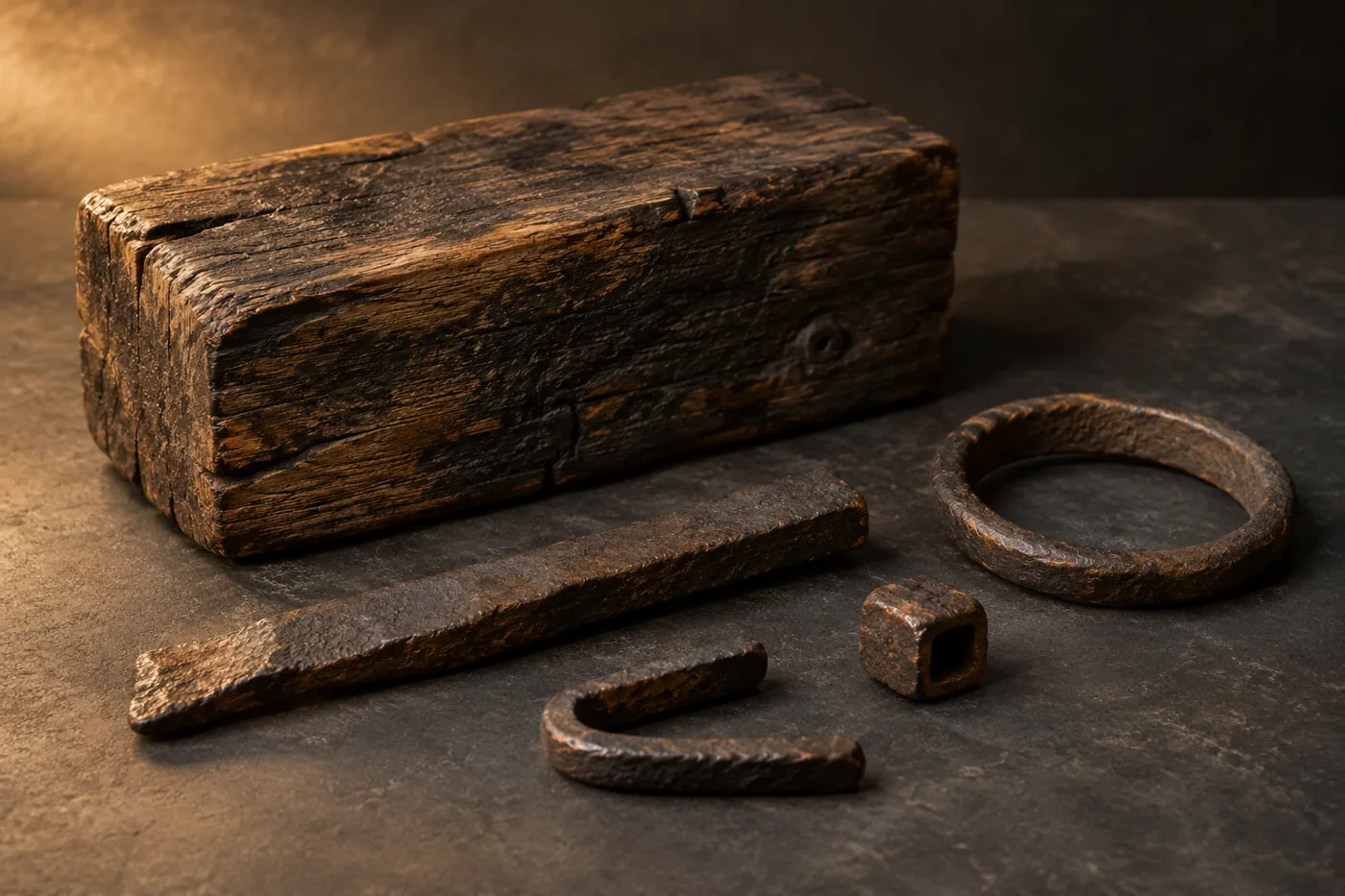
AI-generated still life of invented weathered wood and separate iron pieces; a material-themed companion, not fragments of the Mangaaka figure, ritual tools or a reconstruction of its preparation. Credit: AI-generated for Culture Ark using OpenAI image_gen, 2026-11-01. Rights: AI-generated output; no exclusive ownership or guaranteed copyrightability claimed. Changes: Resized within1400px and converted to WebP; no crop or substantive alteration.
All props are invented. Their forms, arrangement and surfaces are not evidence of original tools, components, substances or ritual methods. No claim of activation or authenticity is made.
Documented reference / existing artwork
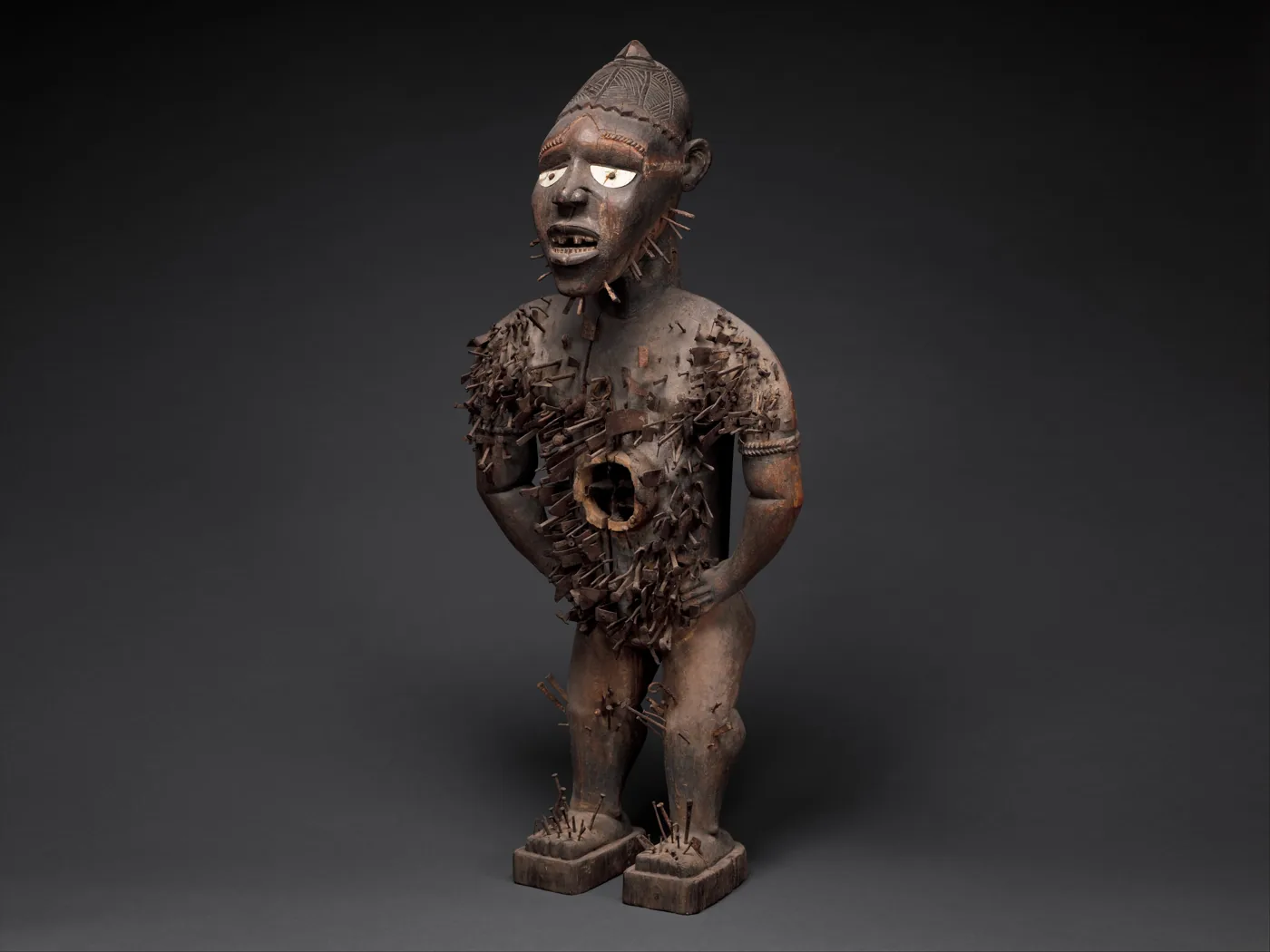
Mangaaka Power Figure (Nkisi N’Kondi). ca. 1880–1900. The Metropolitan Museum of Art, 2008.30. Credit: Yombe-Kongo artist and nganga (ritual specialist) / The Metropolitan Museum of Art. Purchase, Lila Acheson Wallace, Drs. Daniel and Marian Malcolm, Laura G. and James J. Ross, Jeffrey B. Soref, The Robert T. Wall Family, Dr. and Mrs. Sidney G. Clyman, and Steven Kossak Gifts, 2008. Rights: Public domain; Met Open Access. Changes: Resized within1400px and converted to WebP; no crop or substantive alteration. Image source Image licence
Met API explicitly marks isPublicDomain=true. Image reuse permission does not transfer ownership of the object or resolve cultural permissions, sacred significance, provenance or restitution questions. Retain the catalog context.
History and context
A standing figure leans forward with hands on hips, its torso carrying many embedded metal elements. The Metropolitan Museum identifies a collaboration between a Yombe-Kongo sculptor and a ritual specialist, not a solitary maker producing decoration. Its account connects Mangaaka with enforcing agreements and addressing serious community disputes. An abdominal cavity once held substances essential to the figure's spiritual role, so the visible wooden body was only part of the work. For a future viewer, this object challenges the assumption that sculpture is primarily something to look at. Its stance, additions and ritual preparation belonged to social relationships and obligations whose meaning cannot be reconstructed from a dramatic photograph alone.
What future readers can learn
Curatorial interpretation: It makes collaborative authorship and the relation between art, law and community responsibility tangible.
Limits and cultural context
This is accession 2008.30, not every Mangaaka figure. Avoid sensational labels such as fetish or claims that current viewers can activate its original ritual power.
Where to learn more
See Mangaaka Power Figure, Met 2008.30 in the Culture Ark gallery
How these pages were made
AI research agents gathered each work from the holding museum’s open-access record, wrote the history and context from the linked sources, and generated one interpretive image per work. Every reference photograph comes from an openly licensed museum collection, and its credit and licence are shown with it. The images were resized and converted to WebP without cropping or other substantive changes. Image reuse permission does not transfer ownership of the objects or settle questions of cultural permission, sacred significance, provenance or restitution, so each entry keeps its catalogue context.
Part of the Culture Ark, the culture half of the Noah’s Ark series. Browse the gallery or read all 60 illustrated picks. The Culture Ark is an Artificial Mind Hive (AMH) project. AMH is owned by Austin Little.

Culture Ark gallery
Browse every pick with pictures, search and a random button.
Open the gallery →