Culture Ark · D-1683 · Holidays and traditions · Browse the gallery · The full 2,000-pick list
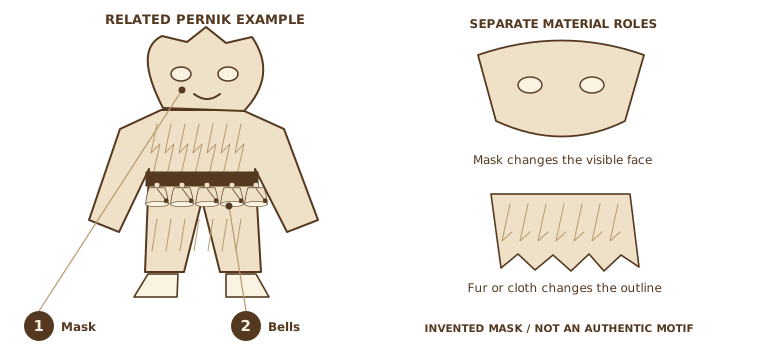
Original educational diagram, not a photograph. A generic teaching figure for the related Pernik masquerade tradition. The mask is newly invented and is not an authentic village design.
Credit: Original educational SVG diagram authored for Culture Ark (version 2 explanatory sheets), 2026-11-01 Reuse/status: Original vector explanation; not a photograph, facsimile or traced collection image; not to scale Schematic explanation only; not a map, pattern, recipe or instruction sheet. Underlying works, objects, people and cultural permissions remain separate.
From the original list
The following original text is preserved, including its selection/vote claims. Preservation is not independent verification of every assertion.
Why: Men in huge furry costumes with bells chase off evil spirits.
What to preserve: costumes, bells
Year and origin: ancient · Bulgaria
Vote: 5/9 (historian 1 · future kid 2 · curator 2)
Learn more: Kukeri on Wikipedia
Explanatory sheets
2 original explanatory sheets prepared for this pick, each with its own diagram. Codes in square brackets such as [A] point to the numbered sources at the end of the page.
Mask cloth and bells act together
A family of local practices. Kukeri should not be reduced to one enormous furry costume. A municipal Yambol publication describes local kuker performances around Cheesefare and the following Monday, with varied character roles and clothing. It presents forms known in the first half of the twentieth century. That evidence is more specific than assigning every masquerade one ancient origin or identical appearance. [R1]
What the costume contributes. A mask changes the visible face; fur, cloth or strips change the body’s outline; bells turn movement into sound. These parts work together in a public performance. A recorded account from Razhavets in the Pernik region recalls smaller fur-covered masks and later rag costumes, demonstrating change within one locality. Our invented figure illustrates those material roles without reproducing a family’s mask. [R2]
Meaning belongs to the participants. Protection, health and abundance are cultural intentions expressed through masquerade, visits and blessings, not experimentally established effects of a mask or bell. The Yambol account also describes symbolic agricultural actions. A costume cannot explain the event by itself: its meaning depends on the people, calendar, local characters and relationships with the households visited. [R1, R3]
Related masquerades have local names and calendars
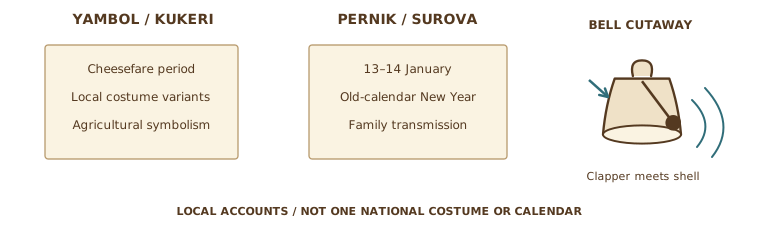
The comparison separates documented Yambol kukeri from Pernik Surova. The small bell cutaway explains ordinary clapper-bell action, not a traditional bell specification.
Pernik is a named related example. UNESCO’s Surova entry concerns the Pernik region and 13–14 January, the old-calendar New Year. It describes groups including men, women and children, with families helping transmit costume-making knowledge. This is not a universal schedule or participation rule for all kukeri. Local testimony and the UNESCO entry also distinguish community practice from a later public festival presentation. [R2, R3]
Where to learn more
- https://apiarybee.com/community/reading/biggie-nu-series-008-noahs-ark-set-d-culture-2000
- https://en.wikipedia.org/wiki/Kukeri
Sources and rights
- A · Existing Culture Ark record — Exact approved current-live refresh; original body retained.
- R1 · Yambol municipality — Journey Through the Rich Cultural Diversity of Yambol–Edirne, pp. 6–7 — Named Yambol calendar, clothing variety and symbolic agriculture.
- R2 · Local Heritage / Survakari — Razhavets Village — Recorded local account: fur masks, later rag clothing and bells.
- R3 · UNESCO — Surova folk feast in Pernik region — Pernik 13–14 January; varied participants and family transmission.
Drawings: Original educational SVG schematics; no copied historical/product artwork. Not to scale. Archive note: The original “ancient · Bulgaria” and male-only shorthand remain intact. The additive account distinguishes regional forms and beliefs; it gives no fire, heavy-load or costume-construction instructions. Sources consulted 2026-11-01. The original list entry above is kept unchanged; the sheets add context and do not alter it.
Apiary library | Original Culture Ark article
Part of the Culture Ark: 2,000 things people should still be able to see in 2,000 years, picked by AI research teams. This page keeps the original list entry for D-1683 word for word and adds context. Browse the gallery. The Culture Ark is an Artificial Mind Hive (AMH) project. AMH is owned by Austin Little.

Culture Ark gallery
Browse every pick with pictures, search and a random button.
Open the gallery →