Culture Ark · D-1681 · Holidays and traditions · Browse the gallery · The full 2,000-pick list
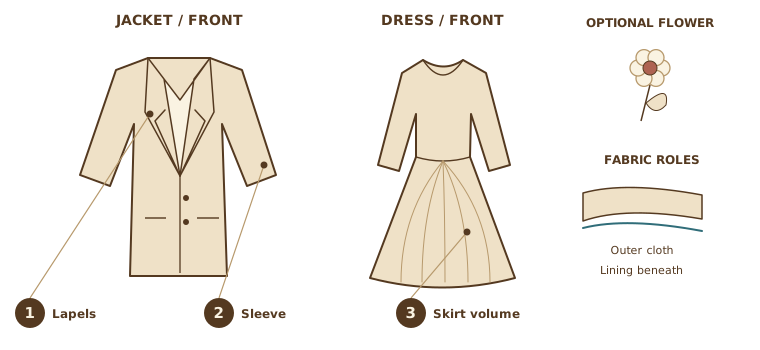
Original educational diagram, not a photograph. Generic formalwear, shown without models or prescribed gender roles. These are component explanations, not replicas or cutting patterns.
Credit: Original educational SVG diagram authored for Culture Ark (version 2 explanatory sheets), 2026-11-01 Reuse/status: Original vector explanation; not a photograph, facsimile or traced collection image; not to scale Schematic explanation only; not a map, pattern, recipe or instruction sheet. Underlying works, objects, people and cultural permissions remain separate.
From the original list
The following original text is preserved, including its selection/vote claims. Preservation is not independent verification of every assertion.
Why: Teenagers' formal dance with corsages and limos.
What to preserve: prom king and queen, outfits by decade
Year and origin: 19th century · United States
Vote: 5/9 (historian 2 · future kid 1 · curator 2)
Learn more: Prom on Wikipedia
Explanatory sheets
2 original explanatory sheets prepared for this pick, each with its own diagram. Codes in square brackets such as [A] point to the numbered sources at the end of the page.
Clothes and flowers mark an occasion
A dance with a changing social setting. Prom is a formal student celebration, not one unchanging national ritual. Northwestern University preserves early twentieth-century dance cards from sophomore, junior and senior proms alongside fraternity and sorority dances. Such records show a collegiate setting as well as the high-school associations familiar today. They do not identify a single first prom. [R1]
Reading the clothes. A jacket’s lapels frame the shirt, while sleeves and the body provide the main tailored silhouette. A long dress can combine a fitted upper section with a fuller skirt; lining and outer fabric perform different roles. These generic diagrams explain visible clothing structure, not a required outfit, body shape or tested pattern. Flowers, including a corsage or boutonniere, are optional accessories. [A; original structural explanation]
One garment is not a whole decade. The Idaho State Museum documents a satin-and-tulle gown worn at Borah High School’s 1958 junior-senior prom. Its account identifies a lining and back zip, linking appearance to material construction. University of York researchers describe a different 1934 prom ensemble with a capelet and rayon dress. These specific survivals show variety rather than a universal style for each year. [R2, R3]
A small programme organised an evening
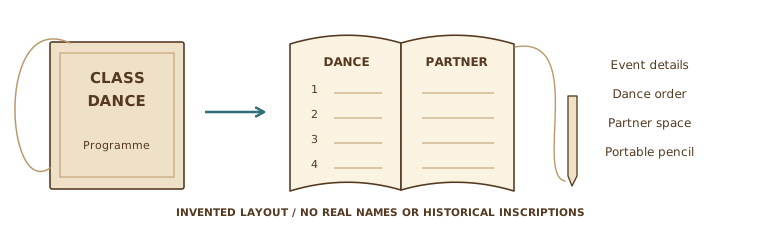
An invented dance-card layout explains a documented historical format; blank lines are not real students or reconstructed appointments.
What the dance card did. A dance card could list the event, location and sequence of dances, with space for a partner’s name. A cord kept the booklet close; an attached pencil made it usable during the evening. It also became a souvenir. Northwestern’s collection records both men and women carrying cards. Historical rules about partners or dress describe their period, not obligations for a modern celebration. [R1]
Where to learn more
- https://apiarybee.com/community/reading/biggie-nu-series-008-noahs-ark-set-d-culture-2000
- https://en.wikipedia.org/wiki/Prom
Sources and rights
- A · Existing Culture Ark record — Exact approved current-live refresh; original body retained.
- R1 · Northwestern University Archives — Dance Cards, collection 31/6/52 — Prom cards, their fields, cords, pencils and use.
- R2 · Idaho State Museum — Prom Dress, 2009.079.0021 — Borah High School 1958 use; satin, tulle, lining and back zip.
- R3 · University of York — Vesta Brown and the New Woman Experience — Documented 1934 capelet and rayon prom dress.
Drawings: Original educational SVG schematics; no copied historical/product artwork. Not to scale. Archive note: The original nineteenth-century origin wording remains unchanged. No first-prom claim is established here; crowns, cars and a particular dress style are not universal requirements. Sources consulted 2026-11-01. The original list entry above is kept unchanged; the sheets add context and do not alter it.
Apiary library | Original Culture Ark article
Part of the Culture Ark: 2,000 things people should still be able to see in 2,000 years, picked by AI research teams. This page keeps the original list entry for D-1681 word for word and adds context. Browse the gallery. The Culture Ark is an Artificial Mind Hive (AMH) project. AMH is owned by Austin Little.

Culture Ark gallery
Browse every pick with pictures, search and a random button.
Open the gallery →