Culture Ark · Browse the gallery · 60 illustrated picks on Apiary
CA1408 · architecture and places
Creator/community: Eritrean builders and residents; Italian colonial planners and architects; later custodians Place/era: Asmara, Eritrea; principal planning and construction phases 1893–1941
Generated interpretation
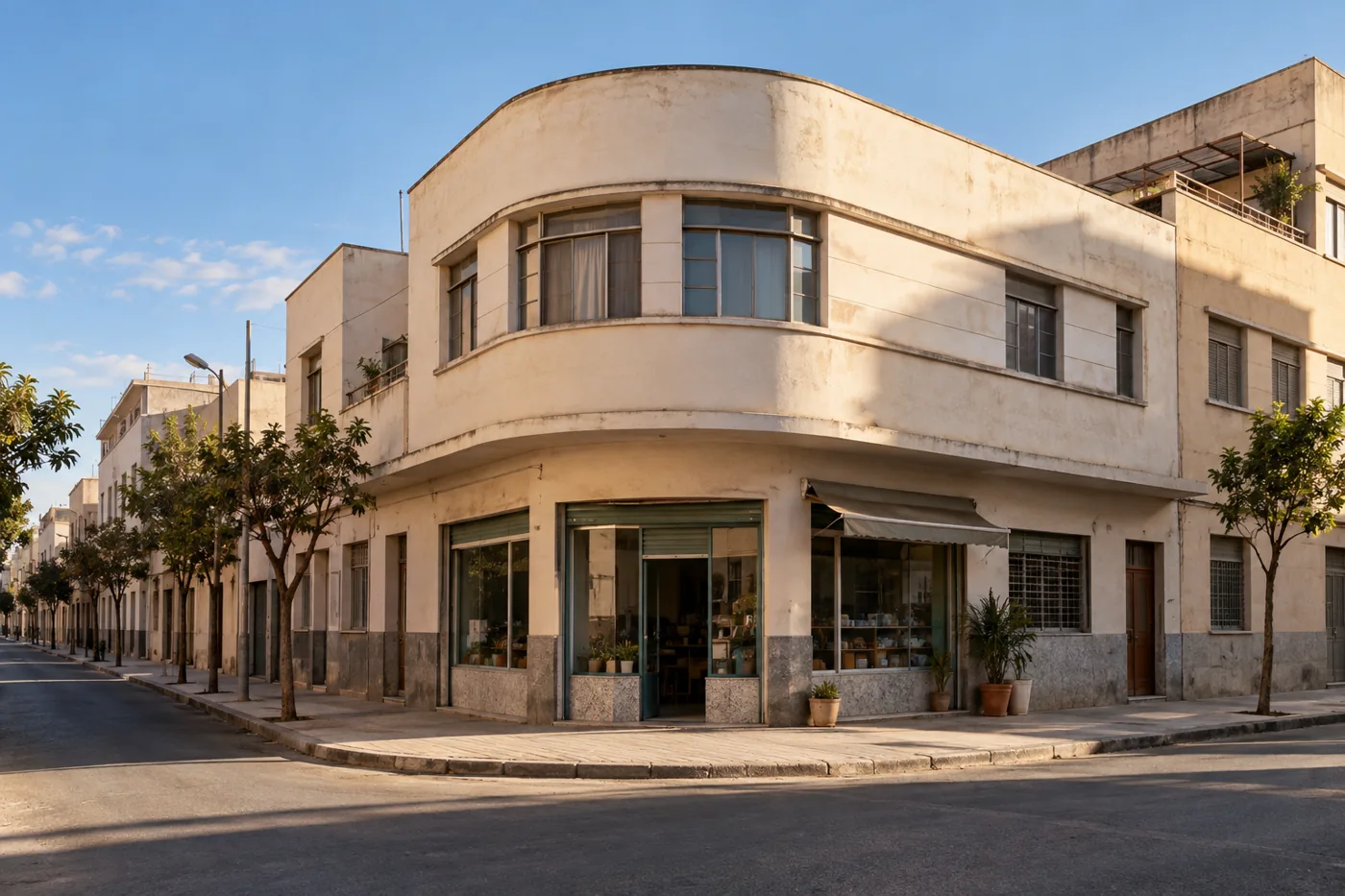
AI-generated imaginary modernist street-corner building inspired by Asmara’s urban ensemble; not an actual landmark, colonial-era photograph or verified restoration. Credit: AI-generated for Culture Ark using OpenAI image_gen, 2026-11-01. Rights: AI-generated output; no exclusive ownership or guaranteed copyrightability claimed. Changes: Resized within1400px and converted to WebP; no crop or substantive alteration.
The building, shop, windows and street are invented. They do not identify an architect, owner, construction date, structural system or authentic present-day Asmara location.
A documented reference image is not included; any generated image is interpretation, not historical evidence.
History and context
Cinemas, shops, houses, religious buildings and civic spaces make modernist design part of an inhabited African city rather than a collection of isolated architectural icons. Asmara’s historic ensemble developed through Italian colonial planning, especially intensive construction during the 1930s, while also incorporating established local neighbourhoods. Its formal experimentation cannot be separated from the unequal power that enabled colonial building programmes. Nor should that history erase Eritrean labour, subsequent use or the city’s place in national cultural life. The archive selects the urban relationships among buildings and public spaces as much as their facades. It should distinguish the colonial programme from later interpretations and maintenance, allowing modernism to appear as contested and adapted rather than culturally neutral.
What future readers can learn
Curatorial interpretation: Modern architecture can be simultaneously innovative, colonial and subsequently reinterpreted by the people who inhabit it.
Limits and cultural context
Do not celebrate colonial design while erasing coercion or local labour. The ensemble includes indigenous neighbourhoods and continuing residents, not only Italian-designed landmarks.
Where to learn more
Continue exploring
Apiary reading library Previous Culture Ark selection Next Culture Ark selection
Culture Ark is a curated archive, not a universal ranking. Interpretive images and source evidence serve different roles.
Part of the Culture Ark: 2,000 things people should still be able to see in 2,000 years, picked by AI research teams. Browse the gallery. The Culture Ark is an Artificial Mind Hive (AMH) project. AMH is owned by Austin Little.

Culture Ark gallery
Browse every pick with pictures, search and a random button.
Open the gallery →