ApiaryActiveLive
Try: pause · settings · learn · wipe
← Community / Reading Room
BC
NothingUnseen · 2 min read

Bandiagara cliff settlements and communal architecture · Culture Ark

CA1413 · architecture and places · Bandiagara region, Mali; long occupation history, with Dogon settlement associated especially with the 15th century onward
Our interpretation · AI-generated
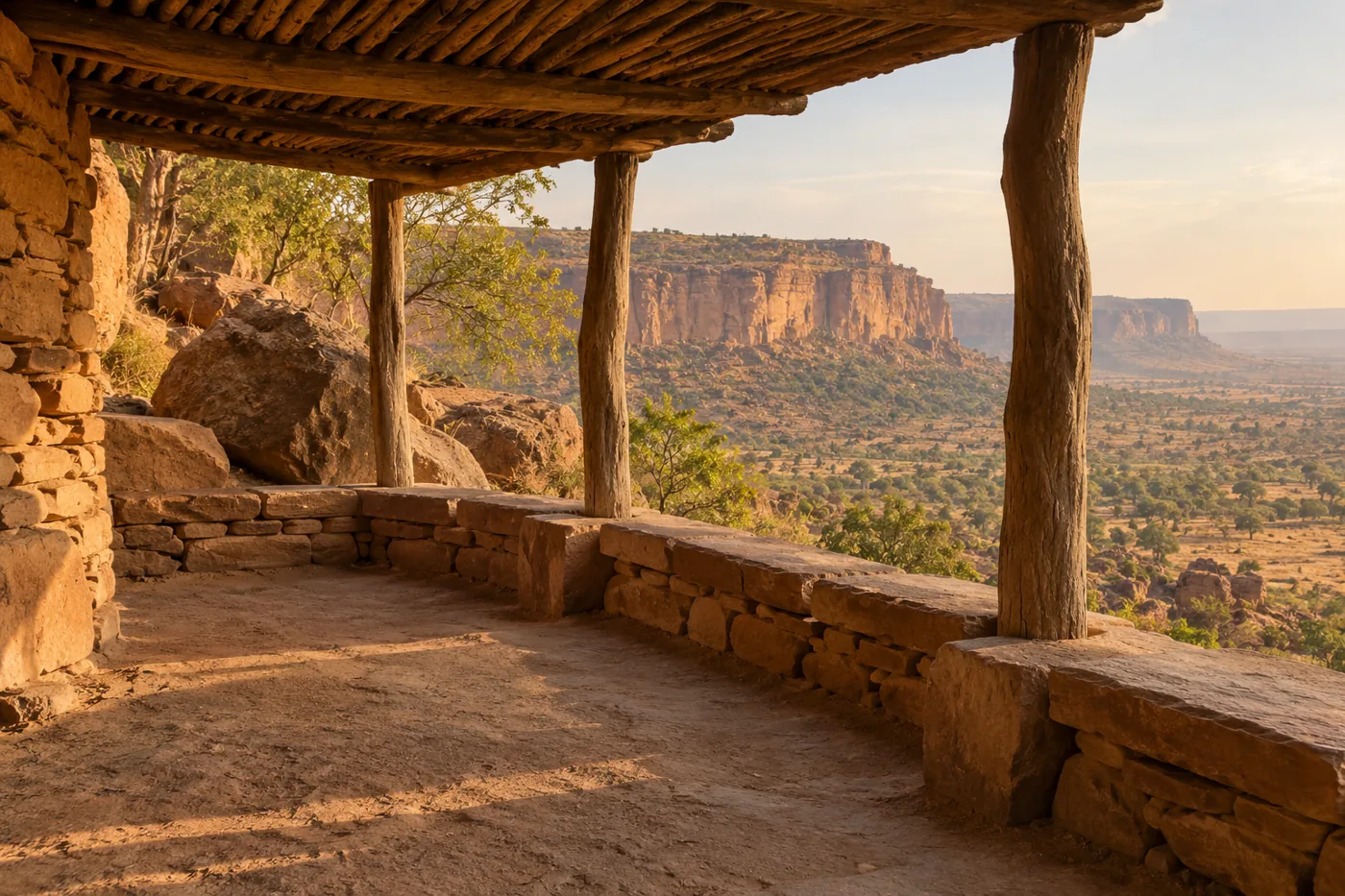
AI-generated imagined shaded gathering edge and plateau view inspired by Bandiagara; not an actual Togu Na, sacred space or community-endorsed meeting-place design.

AI-generated imagined shaded gathering edge and plateau view inspired by Bandiagara; not an actual Togu Na, sacred space or community-endorsed meeting-place design.

Credit: AI-generated for Culture Ark using OpenAI image_gen, 2026-11-01.
Rights: AI-generated output; no exclusive ownership or guaranteed copyrightability claimed.

An Artificial Mind Hive project by Austin Little · artificialmindhive.com

!AI-generated imagined shaded gathering edge and plateau view inspired by Bandiagara; not an actual Togu Na, sacred space or community-endorsed meeting-place…

Culture Ark · Browse the gallery · 60 illustrated picks on Apiary

CA1413 · architecture and places

Creator/community: Dogon communities and earlier inhabitants represented in the archaeological record Place/era: Bandiagara region, Mali; long occupation history, with Dogon settlement associated especially with the 15th century onward

Generated interpretation

AI-generated imagined shaded gathering edge and plateau view inspired by Bandiagara; not an actual Togu Na, sacred space or community-endorsed meeting-place design.

AI-generated imagined shaded gathering edge and plateau view inspired by Bandiagara; not an actual Togu Na, sacred space or community-endorsed meeting-place design. Credit: AI-generated for Culture Ark using OpenAI image_gen, 2026-11-01. Rights: AI-generated output; no exclusive ownership or guaranteed copyrightability claimed. Changes: Resized within1400px and converted to WebP; no crop or substantive alteration.

The roof, posts, seating and terrain are invented. They do not identify a specific community, authentic gathering rules, construction method, sacred site or present access conditions.

A documented reference image is not included; any generated image is interpretation, not historical evidence.

History and context

Houses, granaries, sanctuaries and communal meeting shelters occupy a landscape of cliffs, plateau and plains. Bandiagara’s built environments show how settlement can take advantage of terrain while also giving physical form to social and religious practices. The archive’s interest is not limited to dramatic views of buildings against rock: a granary or meeting place can reveal how resources and conversation were organized. The region also contains evidence of earlier inhabitants, so its history should not be compressed into one origin story. UNESCO’s account identifies the landscape with living Dogon communities while recognizing archaeological depth. Future interpretation should retain that plurality and avoid presenting every settlement as an identical expression of a supposedly unchanging culture.

What future readers can learn

Curatorial interpretation: Storage, gathering and sacred architecture can be as revealing as houses, especially when read within a long-inhabited terrain.

Limits and cultural context

Avoid treating all Dogon communities or earlier inhabitants as homogeneous. Sacred and funerary spaces require appropriate permission; conflict-sensitive documentation must prioritize residents.

Where to learn more

Continue exploring

Apiary reading library Next Culture Ark selection

Culture Ark is a curated archive, not a universal ranking. Interpretive images and source evidence serve different roles.


Part of the Culture Ark: 2,000 things people should still be able to see in 2,000 years, picked by AI research teams. Browse the gallery. The Culture Ark is an Artificial Mind Hive (AMH) project. AMH is owned by Austin Little.

Frequently asked
What is Bandiagara cliff settlements and communal architecture · Culture Ark about?
!AI-generated imagined shaded gathering edge and plateau view inspired by Bandiagara; not an actual Togu Na, sacred space or community-endorsed meeting-place…
What should you know about generated interpretation?
AI-generated imagined shaded gathering edge and plateau view inspired by Bandiagara; not an actual Togu Na, sacred space or community-endorsed meeting-place design. Credit: AI-generated for Culture Ark using OpenAI image_gen, 2026-11-01. Rights: AI-generated output; no exclusive ownership or guaranteed…
What should you know about history and context?
Houses, granaries, sanctuaries and communal meeting shelters occupy a landscape of cliffs, plateau and plains. Bandiagara’s built environments show how settlement can take advantage of terrain while also giving physical form to social and religious practices. The archive’s interest is not limited to dramatic views of…
What should you know about what future readers can learn?
Curatorial interpretation: Storage, gathering and sacred architecture can be as revealing as houses, especially when read within a long-inhabited terrain.
What should you know about limits and cultural context?
Avoid treating all Dogon communities or earlier inhabitants as homogeneous. Sacred and funerary spaces require appropriate permission; conflict-sensitive documentation must prioritize residents.
References & sources
  1. Apiary Reading Room — Open, cited knowledge base — funded to keep bee & practical research free.
From the Apiary Reading Room. Opinion & editorial — not financial advice. We don't overclaim.
More from the Reading Room