Culture Ark · Browse the gallery · 60 illustrated picks on Apiary
CA1417 · architecture and places
Creator/community: Mozabite Ibadi communities and builders Place/era: M’Zab Valley, Algeria; principal ksour founded between 1012 and 1350
Generated interpretation
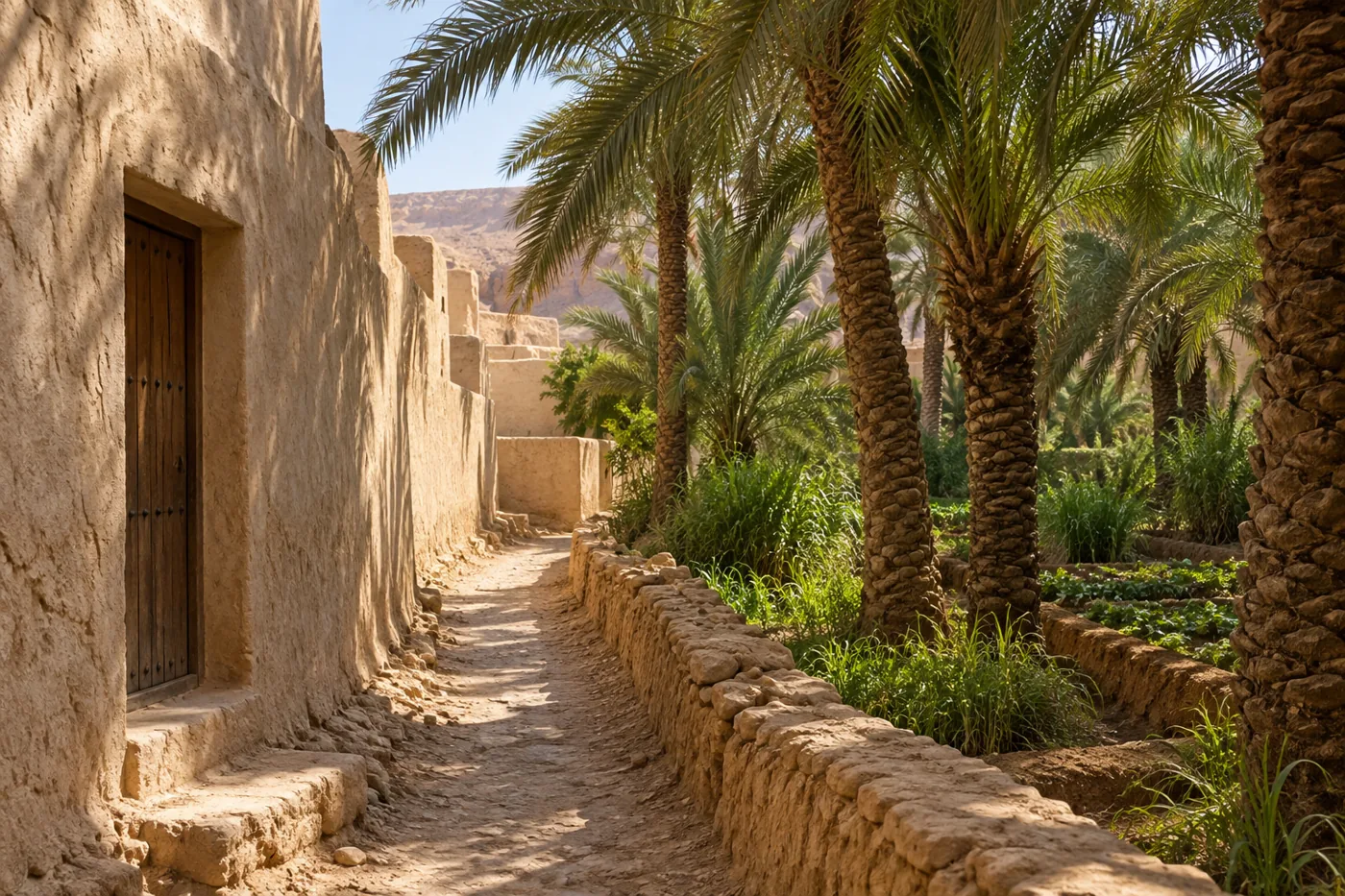
AI-generated imagined doorway, path and palm-grove edge inspired by the M’Zab’s housing-and-cultivation relationships; not a specific ksar or a water-system plan. Credit: AI-generated for Culture Ark using OpenAI image_gen, 2026-11-01. Rights: AI-generated output; no exclusive ownership or guaranteed copyrightability claimed. Changes: Resized within1400px and converted to WebP; no crop or substantive alteration.
The wall, path, planting and doorway are invented. They do not identify an actual household, sacred space, crop management system or method of water distribution.
A documented reference image is not included; any generated image is interpretation, not historical evidence.
History and context
Fortified settlements, cemeteries and palm groves form an interconnected response to life in a dry region. The five historic ksour of the M’Zab are organized around mosques whose prominent towers also served defensive purposes. Compact dwellings and shared systems for capturing and distributing water link family space with collective responsibility. UNESCO associates this organization with Mozabite Ibadi culture, while the particular founding dates of the settlements span several centuries. The archive should preserve that specificity rather than describe an abstract desert village. It should also avoid claiming that the present landscape is unchanged: maintenance, seasonal use and social decisions are part of its continuing history. The combination of housing and cultivated space is the cultural object selected here.
What future readers can learn
Curatorial interpretation: Water management, community institutions and domestic form can operate as one settlement system rather than separate architectural subjects.
Limits and cultural context
Founding dates do not date every building. Respect inhabited and sacred spaces, and avoid turning a conservation description of continuity into a claim of social immobility.
Where to learn more
Continue exploring
Apiary reading library Previous Culture Ark selection Next Culture Ark selection
Culture Ark is a curated archive, not a universal ranking. Interpretive images and source evidence serve different roles.
Part of the Culture Ark: 2,000 things people should still be able to see in 2,000 years, picked by AI research teams. Browse the gallery. The Culture Ark is an Artificial Mind Hive (AMH) project. AMH is owned by Austin Little.

Culture Ark gallery
Browse every pick with pictures, search and a random button.
Open the gallery →