Culture Ark · Browse the gallery · 60 illustrated picks on Apiary
CA1414 · architecture and places
Creator/community: Asante builders, shrine custodians and decorative craft specialists Place/era: Kumasi region, Ghana; surviving forms associated with the late 18th–19th-century kingdom, with later rebuilding
Generated interpretation
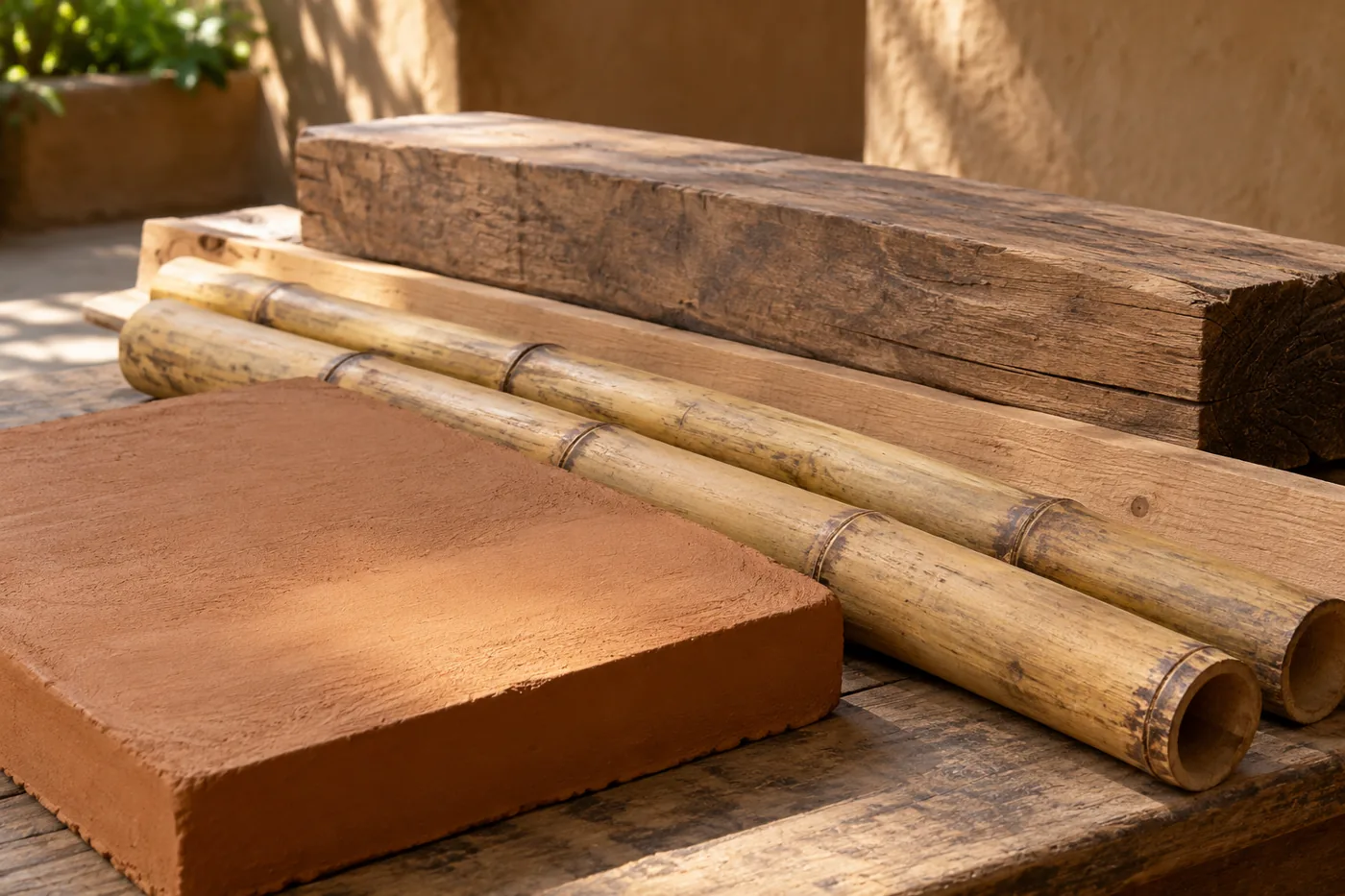
AI-generated timber, bamboo-like lengths and earthen-plaster still life inspired by the buildings’ material knowledge; not shrine fabric, an authentic workshop or a construction assembly. Credit: AI-generated for Culture Ark using OpenAI image_gen, 2026-11-01. Rights: AI-generated output; no exclusive ownership or guaranteed copyrightability claimed. Changes: Resized within1400px and converted to WebP; no crop or substantive alteration.
The materials and arrangement are invented props, not heritage fragments. Their appearance does not establish authentic proportions, species, construction sequences or symbolic meanings.
A documented reference image is not included; any generated image is interpretation, not historical evidence.
History and context
Courtyard buildings combine timber and bamboo frameworks, earthen surfaces and strongly modelled relief decoration. The surviving Asante shrine complexes make architecture, sculpture and religious practice difficult to separate. Motifs of plants, animals and abstract forms communicate inherited meanings rather than functioning only as ornament. Their continuing use and maintenance also complicate a simple distinction between original and replacement material: roofs, floors and parts of the structures have changed over time. This archive selection should preserve those alterations honestly while recognizing the technical and spiritual knowledge that gives the buildings continuity. Attention to the courtyard arrangement and decorated walls can show how a place of consultation and ceremony is made through many interacting forms of skilled work.
What future readers can learn
Curatorial interpretation: A building’s significance can depend on symbolic decoration and continuing practice, even when conservation history includes substantial material change.
Limits and cultural context
Do not describe all surviving fabric as original or reproduce shrine imagery without context. Traditional authorities and custodians remain relevant alongside state heritage management.
Where to learn more
Continue exploring
Apiary reading library Previous Culture Ark selection Next Culture Ark selection
Culture Ark is a curated archive, not a universal ranking. Interpretive images and source evidence serve different roles.
Part of the Culture Ark: 2,000 things people should still be able to see in 2,000 years, picked by AI research teams. Browse the gallery. The Culture Ark is an Artificial Mind Hive (AMH) project. AMH is owned by Austin Little.

Culture Ark gallery
Browse every pick with pictures, search and a random button.
Open the gallery →