Culture Ark · Browse the gallery · 60 illustrated picks on Apiary
CA1404 · architecture and places
Creator/community: Swahili builders and inhabitants; individual makers unrecorded Place/era: Coastal Kenya; settlement developed between the 10th and 17th centuries
Generated interpretation
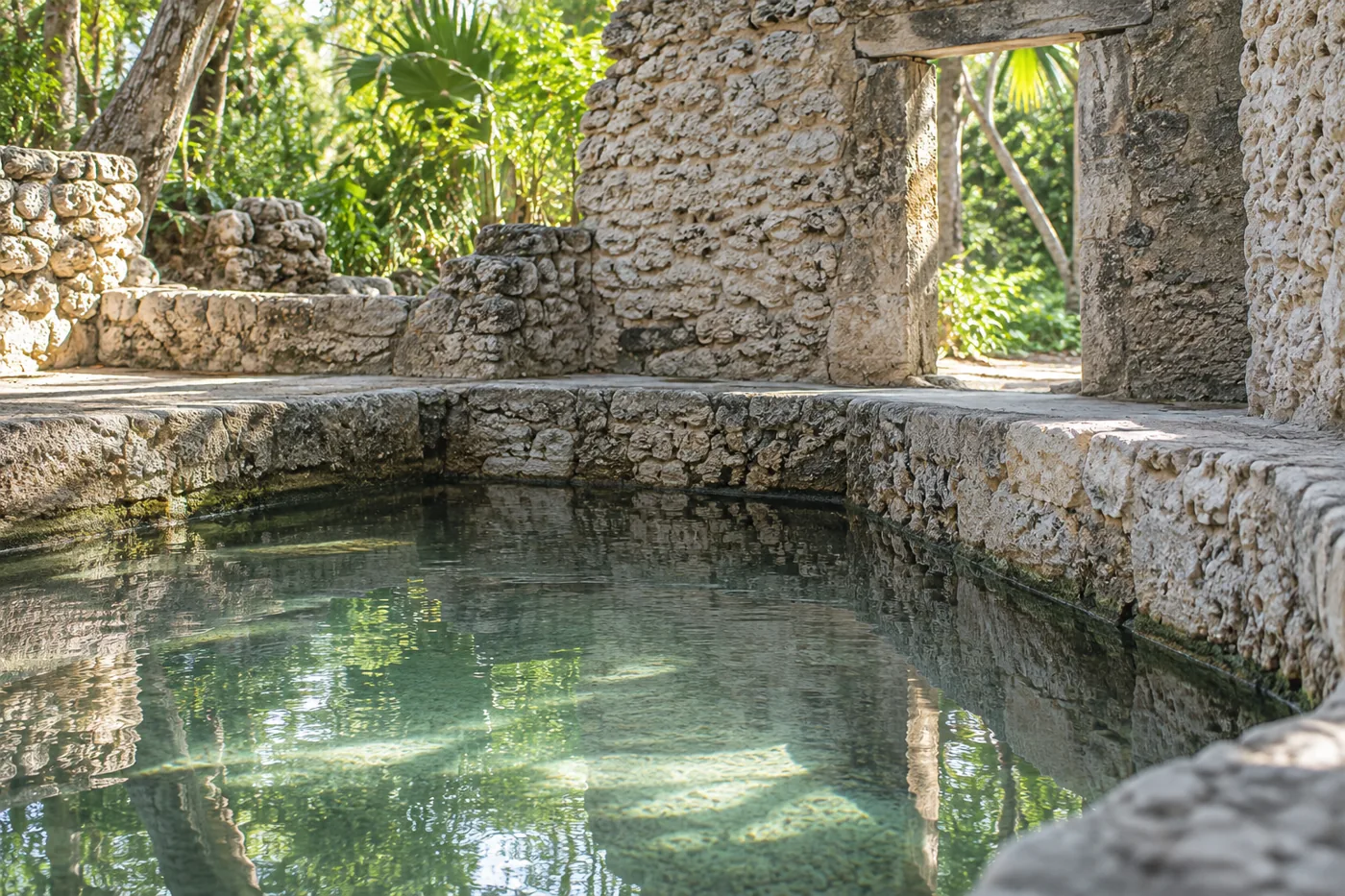
AI-generated coral-stone-and-water study inspired by Gedi’s urban infrastructure; not an identified well, basin, house or archaeological reconstruction. Credit: AI-generated for Culture Ark using OpenAI image_gen, 2026-11-01. Rights: AI-generated output; no exclusive ownership or guaranteed copyrightability claimed. Changes: Resized within1400px and converted to WebP; no crop or substantive alteration.
The basin, masonry, opening and forest setting are invented. They do not establish actual hydraulic function, chronology, engineering, room use or conservation condition.
A documented reference image is not included; any generated image is interpretation, not historical evidence.
History and context
Domestic buildings, mosques, civic spaces and water infrastructure survive within the walls of a former Swahili town surrounded by coastal forest. Gedi’s position away from the immediate shoreline does not make it isolated: its history belongs to trading and cultural networks extending across the Indian Ocean. Coral-based masonry, earth mortar and wood formed a built environment whose density and organization reveal both prosperity and social differences. The site is valuable here because ordinary houses and systems for managing water remain part of the story alongside elite structures. Future readers should understand an African urban society participating in long-distance exchange, without imagining that imported goods or overseas connections erased its local architectural knowledge and agency.
What future readers can learn
Curatorial interpretation: Town planning and water infrastructure can reveal everyday urban organization within international exchange, not just the wealth of a few monumental buildings.
Limits and cultural context
Archaeological remains do not reconstruct every inhabitant’s experience. Conservation and interpretation involve Kenyan institutions and local communities, not an ownerless abandoned city.
Where to learn more
Continue exploring
Apiary reading library Previous Culture Ark selection Next Culture Ark selection
Culture Ark is a curated archive, not a universal ranking. Interpretive images and source evidence serve different roles.
Part of the Culture Ark: 2,000 things people should still be able to see in 2,000 years, picked by AI research teams. Browse the gallery. The Culture Ark is an Artificial Mind Hive (AMH) project. AMH is owned by Austin Little.

Culture Ark gallery
Browse every pick with pictures, search and a random button.
Open the gallery →