Culture Ark · D-1649 · Holidays and traditions · Browse the gallery · The full 2,000-pick list
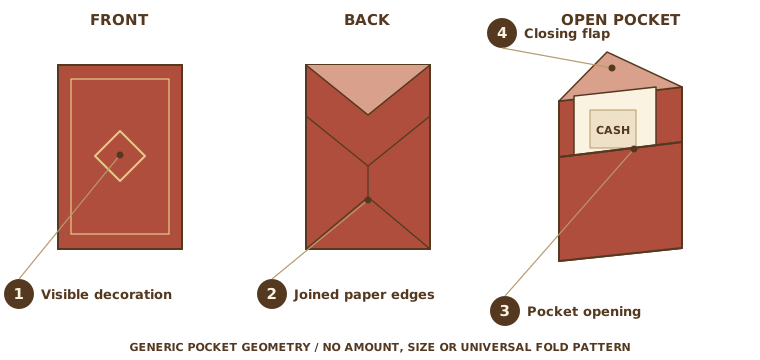
Original educational diagram, not a photograph. Representative packet anatomy. Actual formats, printing, folds and closures vary.
Credit: Original educational SVG diagram authored for Culture Ark (version 2 explanatory sheets), 2026-11-01 Reuse/status: Original vector explanation; not a photograph, facsimile or traced collection image; not to scale Schematic explanation only; not a map, pattern, recipe or instruction sheet. Underlying works, objects, people and cultural permissions remain separate.
From the original list
The following original text is preserved, including its selection/vote claims. Preservation is not independent verification of every assertion.
Why: Money in red envelopes, now sent digitally by the billions.
What to preserve: designs, WeChat hongbao numbers by year
Year and origin: ancient · China
Vote: 6/9 (historian 2 · future kid 2 · curator 2)
Learn more: Red envelope on Wikipedia
Explanatory sheets
2 original explanatory sheets prepared for this pick, each with its own diagram. Codes in square brackets such as [A] point to the numbered sources at the end of the page.
One packet has a public face and a private interior
A changing material history. Red-envelope giving is a longstanding Chinese custom, but today’s printed packet has its own history. Singapore museum collections document handwritten wishes and decorated examples from the early twentieth century. Commercial printing expanded the available designs, while businesses used packets for promotion. Later, banks and department stores became familiar distributors. This history does not establish one precise ancient invention date. [R1]
What the paper object does. In a representative packet, folded paper forms a pocket: joined side and bottom edges retain the contents, while an opening and flap allow access. Its front offers a visible surface for colour, imagery or good wishes; its interior conceals the money. This is a generic structural explanation, not a claim that every packet uses the same folds or closure. [R1, R2]
An exchange, not merely a container. The gift communicates blessings and goodwill at New Year and occasions such as weddings and birthdays. Elders often give money to children, but relationships and local etiquette vary. Singapore accounts also describe gifts to parents and employees. Greetings can accompany the handover. Red’s auspicious association gives the wrapping meaning beyond its practical job of holding cash. [R1, R2]
Different media carry a related social purpose
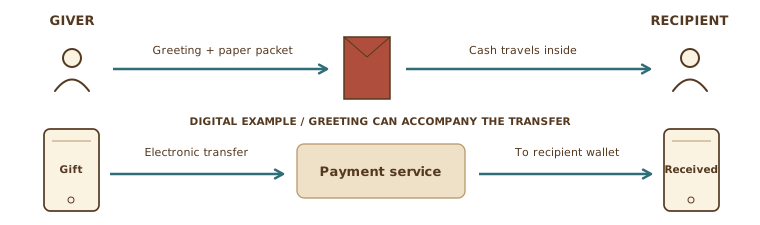
A paper packet carries cash physically; a digital packet represents an electronic gift. Etiquette and platforms vary.
Paper and digital variants. Electronic red packets retain a gift-and-greeting idea while changing the mechanism. Tencent dates its Weixin Red Packets feature to 2014: money moves through a payment service into the recipient’s wallet rather than travelling inside paper. That is one platform’s development, not the origin of every digital gift. Physical packets continue alongside electronic versions; neither form represents all households or communities. [R2, R3]
Where to learn more
- https://apiarybee.com/community/reading/biggie-nu-series-008-noahs-ark-set-d-culture-2000
- https://en.wikipedia.org/wiki/Red_envelope
Sources and rights
- A · Existing Culture Ark record — Exact approved current-live refresh; original body retained.
- R1 · Sun Yat Sen Nanyang Memorial Hall, published by Singapore Chinese Cultural Centre Culturepaedia — Red packets (Hongbao) — Singapore collection evidence, printed designs, goodwill and changing recipients.
- R2 · Bank of England Museum; curator Jennifer Adam — Celebrating Lunar New Year — Auspicious meaning, occasions, elders-to-children example and digital variants.
- R3 · Tencent — Old Traditions Meet New Technology: The Spring Festival Celebration Goes Virtual — Company account dates its Weixin feature to 2014; no adoption statistics used.
Drawings: Original educational SVG schematics; no copied historical/product artwork. Not to scale. Archive note: The original “ancient · China” wording is unchanged. Pocket geometry is a representative explanatory model, not a historical pattern; no amount or adoption total is invented. Sources consulted 2026-11-01. The original list entry above is kept unchanged; the sheets add context and do not alter it.
Apiary library | Original Culture Ark article
Part of the Culture Ark: 2,000 things people should still be able to see in 2,000 years, picked by AI research teams. This page keeps the original list entry for D-1649 word for word and adds context. Browse the gallery. The Culture Ark is an Artificial Mind Hive (AMH) project. AMH is owned by Austin Little.

Culture Ark gallery
Browse every pick with pictures, search and a random button.
Open the gallery →