Culture Ark · D-1629 · Holidays and traditions · Browse the gallery · The full 2,000-pick list
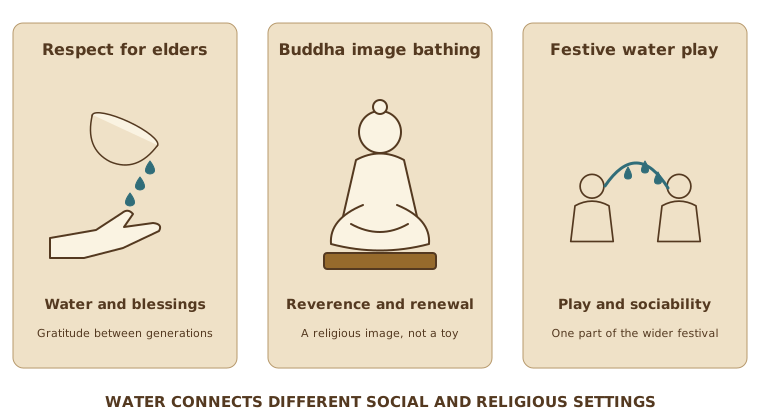
Original educational diagram, not a photograph. The three scenes are separate cultural settings. The Buddha image is a respectful original schematic, not a reconstruction of a specific sacred sculpture.
Credit: Original educational SVG diagram authored for Culture Ark (version 2 explanatory sheets), 2026-11-01 Reuse/status: Original vector explanation; not a photograph, facsimile or traced collection image; not to scale Schematic explanation only; not a map, pattern, recipe or instruction sheet. Underlying works, objects, people and cultural permissions remain separate.
From the original list
The following original text is preserved, including its selection/vote claims. Preservation is not independent verification of every assertion.
Why: Thai New Year became a nationwide water fight.
What to preserve: water-pouring blessing, street water fights, Buddha image bathing
Year and origin: ancient · Thailand
Vote: 7/9 (historian 2 · future kid 3 · curator 2)
Learn more: Songkran (Thailand) on Wikipedia
Explanatory sheets
2 original explanatory sheets prepared for this pick, each with its own diagram. Codes in square brackets such as [S1] point to the numbered sources at the end of the page.
Water means more than a water fight
Respect and renewal. Pouring water can express cleansing, reverence and wishes for good fortune during Songkran. Younger people pay respect to elders and receive blessings; bathing Buddha images is a distinct act of religious reverence. These meanings are social and religious, not claims that water physically removes misfortune. [S1, S2]
Play within a larger festival. Splashing water, games, music and feasting are also part of Songkran. The highly visible street celebration exists alongside family visits, temple activities and remembrance of ancestors. A photograph of water play captures one mode of participation, rather than the whole traditional Thai New Year. [S1]
Regional and family customs differ. Participation and photography should respect the people and the setting.
The new year reconnects generations
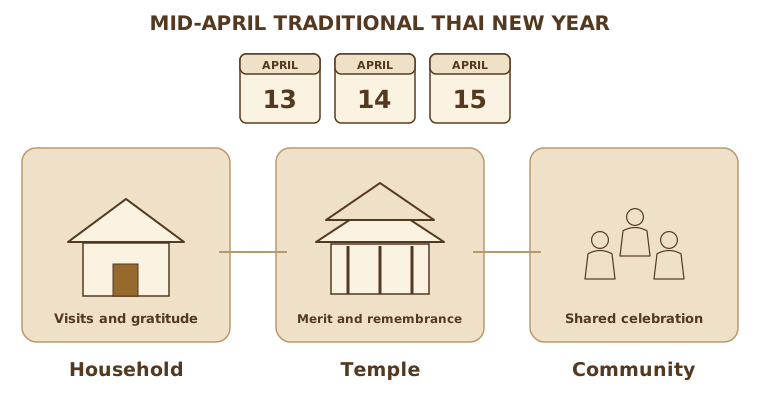
The April band identifies the familiar core period, not a current event schedule. Local celebrations may last longer and place activities on different days.
Household and temple. Songkran’s familiar core dates are 13–15 April. Official descriptions include cleaning homes and public spaces, preparing offerings, visiting temples and making sand stupas. Families may return to their home communities, so the festival renews relationships as well as marking the year. [S2, S3]
A living tradition. Knowledge is transmitted through families, communities and education. UNESCO’s 2023 inscription recognizes Songkran as a living tradition, with attention to elders, cooperation and well-wishing. Public celebrations and tourism can change its scale; safeguarding concerns include over-commercialization and excessive water use. [S1]
The date band is not a universal three-day sequence. Local names and activities deserve their own descriptions.
Where to learn more
- https://apiarybee.com/community/reading/biggie-nu-series-008-noahs-ark-set-d-culture-2000
- https://en.wikipedia.org/wiki/Songkran_%28Thailand%29
Sources and rights
- S1 · UNESCO — Songkran inscription decision 2023 — Water symbolism, families, elders, transmission and safeguarding concerns.
- S2 · Thailand Government — Get to know Songkran — Core April dates, elder blessings, temple activities and sand pagodas.
- S3 · Tourism Authority of Thailand — Songkran traditions — Family visits, offerings, garlands, image bathing and longer local celebrations.
Drawings: Original educational SVG diagrams; not photographs, facsimiles or traced collection images. Sources consulted 2026-11-01. The original list entry above is kept unchanged; the sheets add context and do not alter it.
Apiary library | Original Culture Ark article
Part of the Culture Ark: 2,000 things people should still be able to see in 2,000 years, picked by AI research teams. This page keeps the original list entry for D-1629 word for word and adds context. Browse the gallery. The Culture Ark is an Artificial Mind Hive (AMH) project. AMH is owned by Austin Little.

Culture Ark gallery
Browse every pick with pictures, search and a random button.
Open the gallery →