Culture Ark · Browse the gallery · 60 illustrated picks on Apiary
CA1420 · architecture and places
Creator/community: Yemeni builders, households, merchants and religious communities Place/era: Sana’a, Yemen; long urban history with early Islamic organization and later rebuilt houses
Generated interpretation
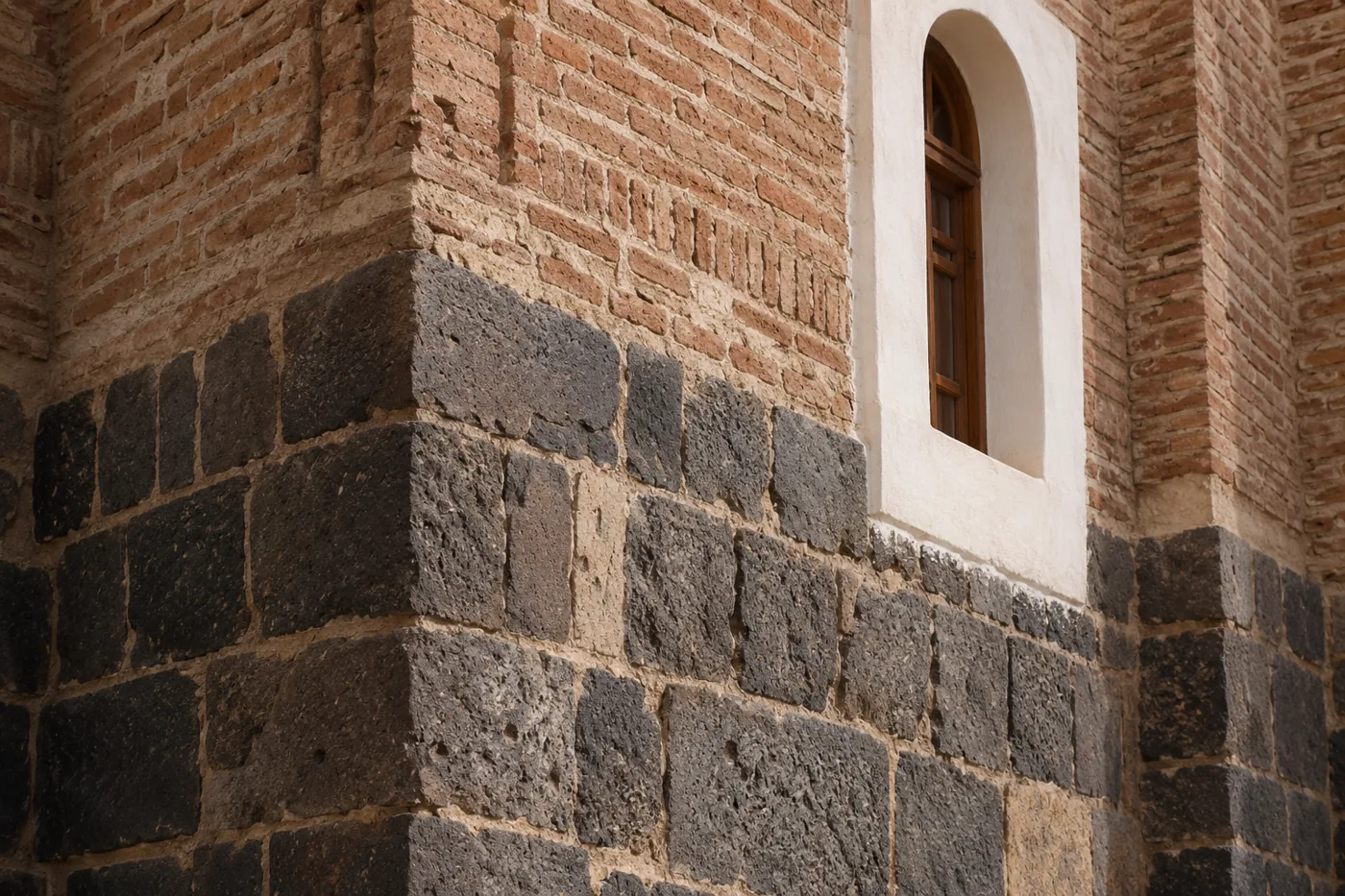
AI-generated stone, brick and plain plaster study inspired by Sana’a’s material vocabulary; not an actual facade, authentic ornament pattern or current-condition image. Credit: AI-generated for Culture Ark using OpenAI image_gen, 2026-11-01. Rights: AI-generated output; no exclusive ownership or guaranteed copyrightability claimed. Changes: Resized within1400px and converted to WebP; no crop or substantive alteration.
The masonry, mortar, window and plaster are invented. They do not establish actual age, construction sequence, structural detail, conservation state or safe access.
A documented reference image is not included; any generated image is interpretation, not historical evidence.
History and context
Multi-storey houses with patterned brickwork and white gypsum details share a cityscape with mosques, baths, markets and green garden spaces. Sana’a’s architectural character comes from this dense relationship of built forms and open areas, not simply from an isolated decorated facade. Stone lower floors, earthen construction and fired brick belong to a varied material vocabulary developed and renewed over time. The city’s early Islamic significance should not be confused with a claim that all present houses were constructed in that period. UNESCO itself distinguishes long-standing spatial organization from more recent domestic buildings. This archive selection can preserve a culture of urban living while making historical layering visible, including the continuing work of residents and craft specialists.
What future readers can learn
Curatorial interpretation: An urban pattern may endure while its buildings are rebuilt; preserving culture requires separating continuity of organization from age of physical fabric.
Limits and cultural context
UNESCO’s short summary and detailed account differ on house ages; use the qualified later-building distinction. Current condition and access require separate conflict-sensitive verification.
Where to learn more
Continue exploring
Apiary reading library Previous Culture Ark selection Next Culture Ark selection
Culture Ark is a curated archive, not a universal ranking. Interpretive images and source evidence serve different roles.
Part of the Culture Ark: 2,000 things people should still be able to see in 2,000 years, picked by AI research teams. Browse the gallery. The Culture Ark is an Artificial Mind Hive (AMH) project. AMH is owned by Austin Little.

Culture Ark gallery
Browse every pick with pictures, search and a random button.
Open the gallery →