Culture Ark · Browse the gallery · 60 illustrated picks on Apiary
CA1419 · architecture and places
Creator/community: Hadrami builders, households and trading communities Place/era: Hadramawt, Yemen; surviving urban form principally developed from the 16th century
Generated interpretation
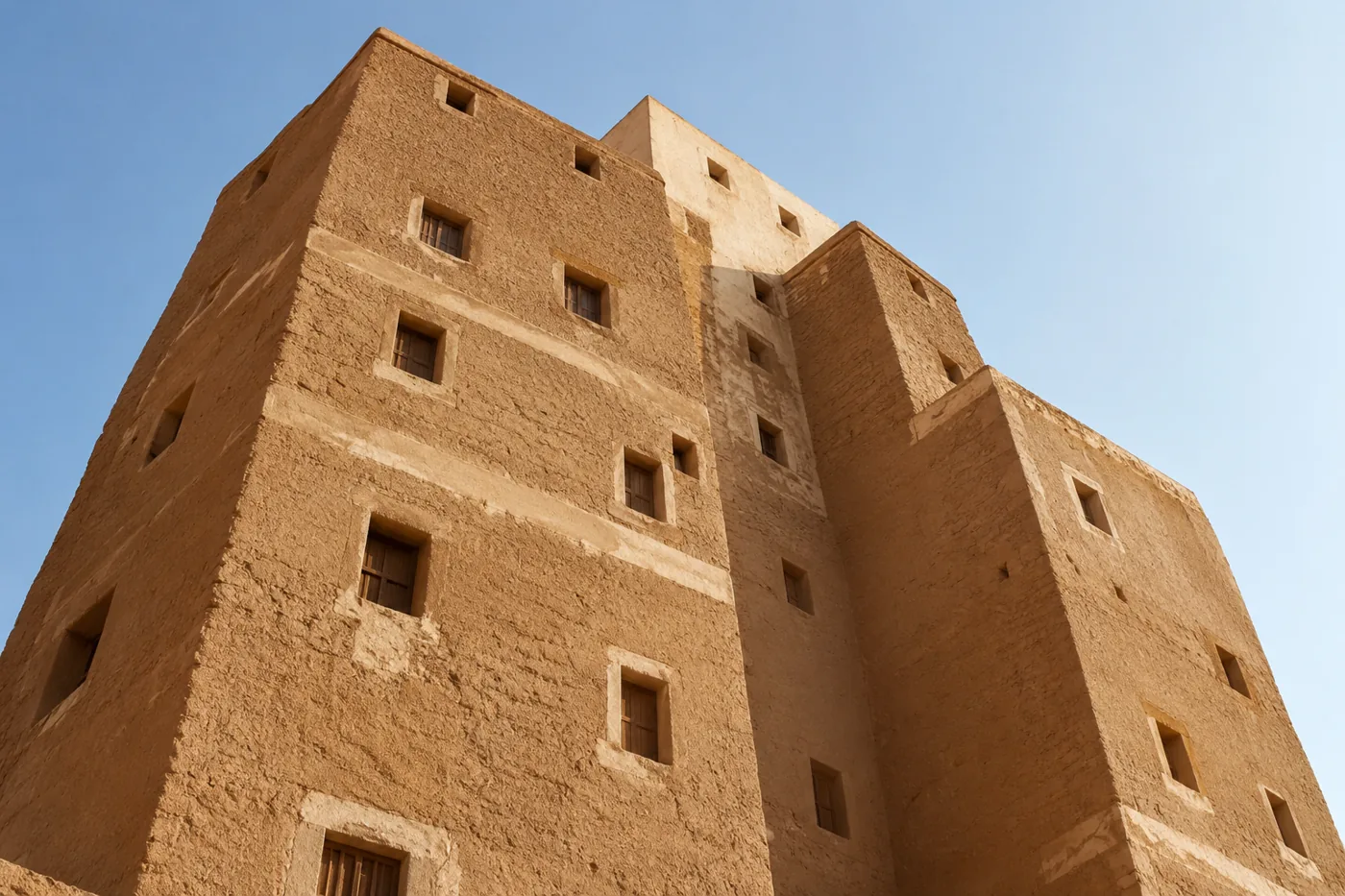
AI-generated tall earthen-facade study inspired by Shibam’s vertical urbanism; not a known tower, current-condition photograph or structural model. Credit: AI-generated for Culture Ark using OpenAI image_gen, 2026-11-01. Rights: AI-generated output; no exclusive ownership or guaranteed copyrightability claimed. Changes: Resized within1400px and converted to WebP; no crop or substantive alteration.
Height, windows, surface bands and neighbouring forms are invented. The image establishes no building safety, historic fabric, flood damage, conflict condition or travel access.
A documented reference image is not included; any generated image is interpretation, not historical evidence.
History and context
Tall earthen houses rise within a compact walled street plan, showing that dense vertical living does not require modern steel-framed construction. Shibam’s tower dwellings combine defence, family accommodation and a limited urban footprint within the landscape of Wadi Hadramawt. Their materials also connect the city to the surrounding cultivated land and the management of seasonal water. The present historic form developed after destructive flooding in the sixteenth century, while later repair and rebuilding continued. Preserving Shibam as culture means recording construction knowledge and relationships with agriculture, not only a skyline compared to a modern metropolis. Such comparisons can be visually convenient but risk making a distinctive Hadrami settlement seem merely an early version of somebody else’s city.
What future readers can learn
Curatorial interpretation: Dense vertical settlement can emerge from earthen construction, local environmental knowledge and social needs rather than a single modern technological pathway.
Limits and cultural context
Date structures and repairs individually. Avoid romanticizing vulnerability or implying safe access; conflict and flood conditions require separate current assessment.
Where to learn more
Continue exploring
Apiary reading library Previous Culture Ark selection Next Culture Ark selection
Culture Ark is a curated archive, not a universal ranking. Interpretive images and source evidence serve different roles.
Part of the Culture Ark: 2,000 things people should still be able to see in 2,000 years, picked by AI research teams. Browse the gallery. The Culture Ark is an Artificial Mind Hive (AMH) project. AMH is owned by Austin Little.

Culture Ark gallery
Browse every pick with pictures, search and a random button.
Open the gallery →