Culture Ark · Browse the gallery · Dish with Peacock Design in the gallery · 60 illustrated picks on Apiary
CA0404 · visual art
Creator/community: Unrecorded Iznik potter and painter Place/era: Iznik, present-day Türkiye; early 17th century
Generated interpretation
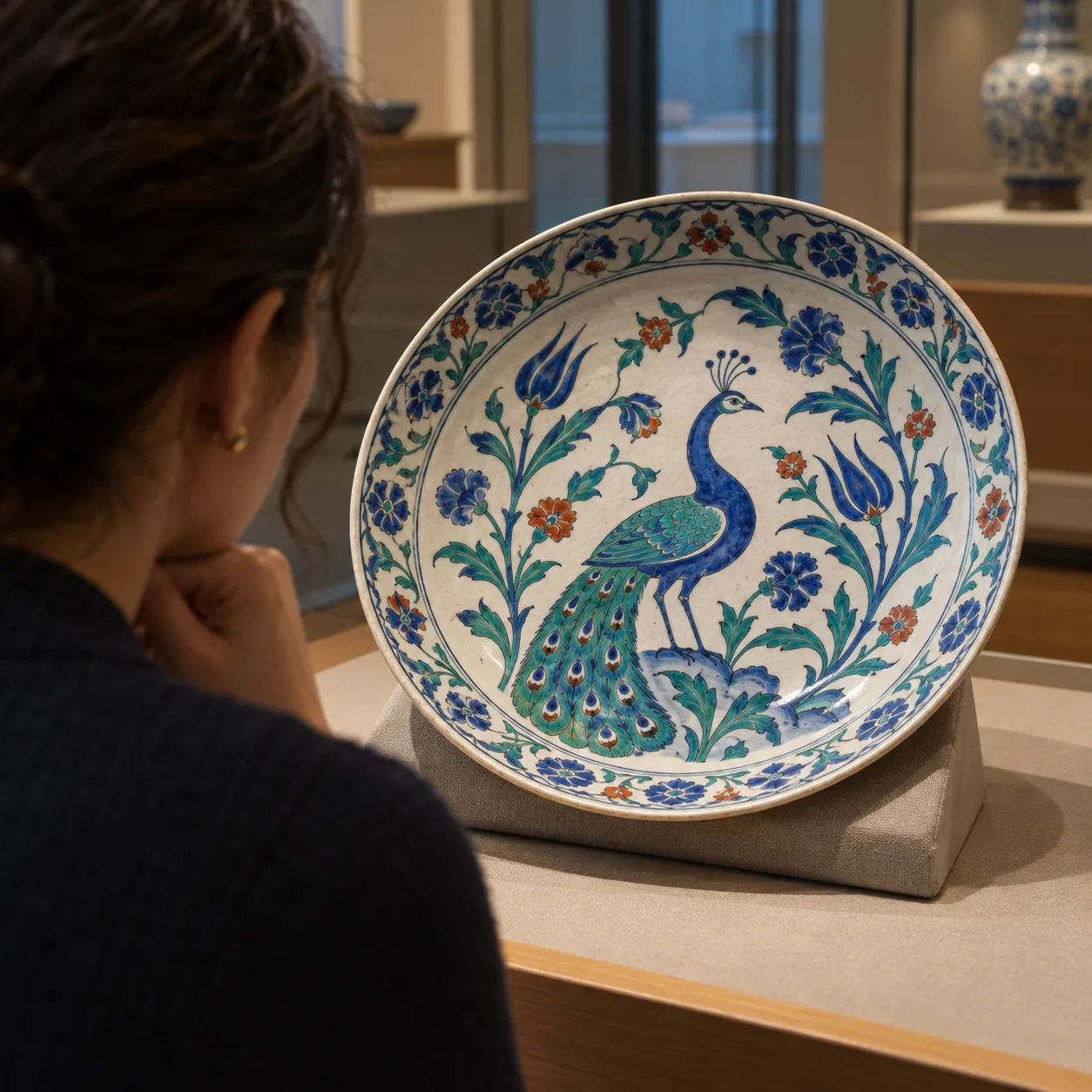
An imagined visitor studies an invented peacock-decorated dish. Credit: AI-generated for Culture Ark using OpenAI image generation. Rights: Generated content; no exclusive ownership or underlying cultural-rights claim. Changes: Resized within1400px and converted to WebP; no crop or substantive alteration.
Bird ornament and glazed surface clear. Dish differs from the museum object and is not its reproduction. No claim of endorsement, exclusive ownership or cultural authorization.
Documented reference / existing artwork
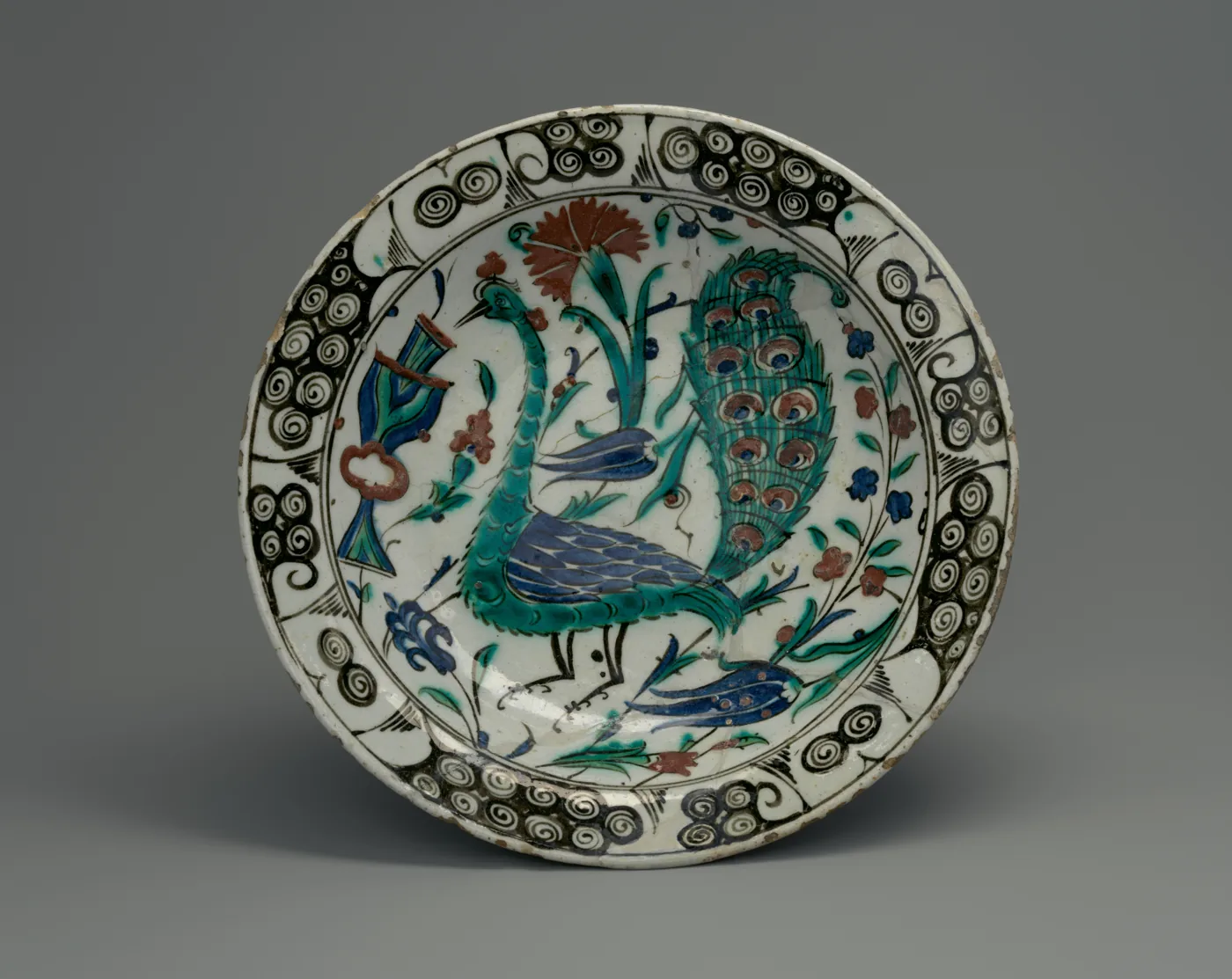
Dish with Peacock Design. early 17th century. The Metropolitan Museum of Art, 65.103. Credit: Unidentified artist / The Metropolitan Museum of Art. Gift of Edward J. Wormley, 1965. Rights: Public domain; Met Open Access. Changes: Resized within1400px and converted to WebP; no crop or substantive alteration. Image source Image licence
Met API explicitly marks isPublicDomain=true. Image reuse permission does not transfer ownership of the object or resolve cultural permissions, sacred significance, provenance or restitution questions. Retain the catalog context.
History and context
A peacock occupies the centre of this painted stonepaste dish from Iznik. Its patterned body and surrounding ornament turn a familiar bird into a design fitted to a circular surface, while the transparent glaze integrates the painted colours with the vessel. The Metropolitan Museum dates the dish to the early seventeenth century and distinguishes it from objects intended for royal use. That modest distinction is a reason to preserve it, not a reason to overlook it. Culture also takes form in vessels that bring skilled decoration into less exalted settings. The dish offers a way to discuss pleasure, repetition, and workshop production without assuming that cultural significance always requires a unique imperial commission.
What future readers can learn
Curatorial interpretation: Everyday or nonroyal decorative objects can reveal a culture’s visual pleasures as clearly as elite commissions.
Limits and cultural context
The museum’s nonroyal classification does not identify the original owner or prove a specific household use. Do not assign a single fixed symbolic meaning to the peacock without further evidence.
Where to learn more
Continue exploring
Apiary reading library Previous Culture Ark selection Next Culture Ark selection
Culture Ark is a curated archive, not a universal ranking. Interpretive images and source evidence serve different roles.
Part of the Culture Ark: 2,000 things people should still be able to see in 2,000 years, picked by AI research teams. Browse the gallery. The Culture Ark is an Artificial Mind Hive (AMH) project. AMH is owned by Austin Little.

Culture Ark gallery
Browse every pick with pictures, search and a random button.
Open the gallery →