Culture Ark · Browse the gallery · Kneeling bearded figure in the gallery · 60 illustrated picks on Apiary
CA0358 · visual art
Creator/community: Olmec artist or artists, names unrecorded Place/era: Mesoamerica; approximately 900–400 BCE
Generated interpretation
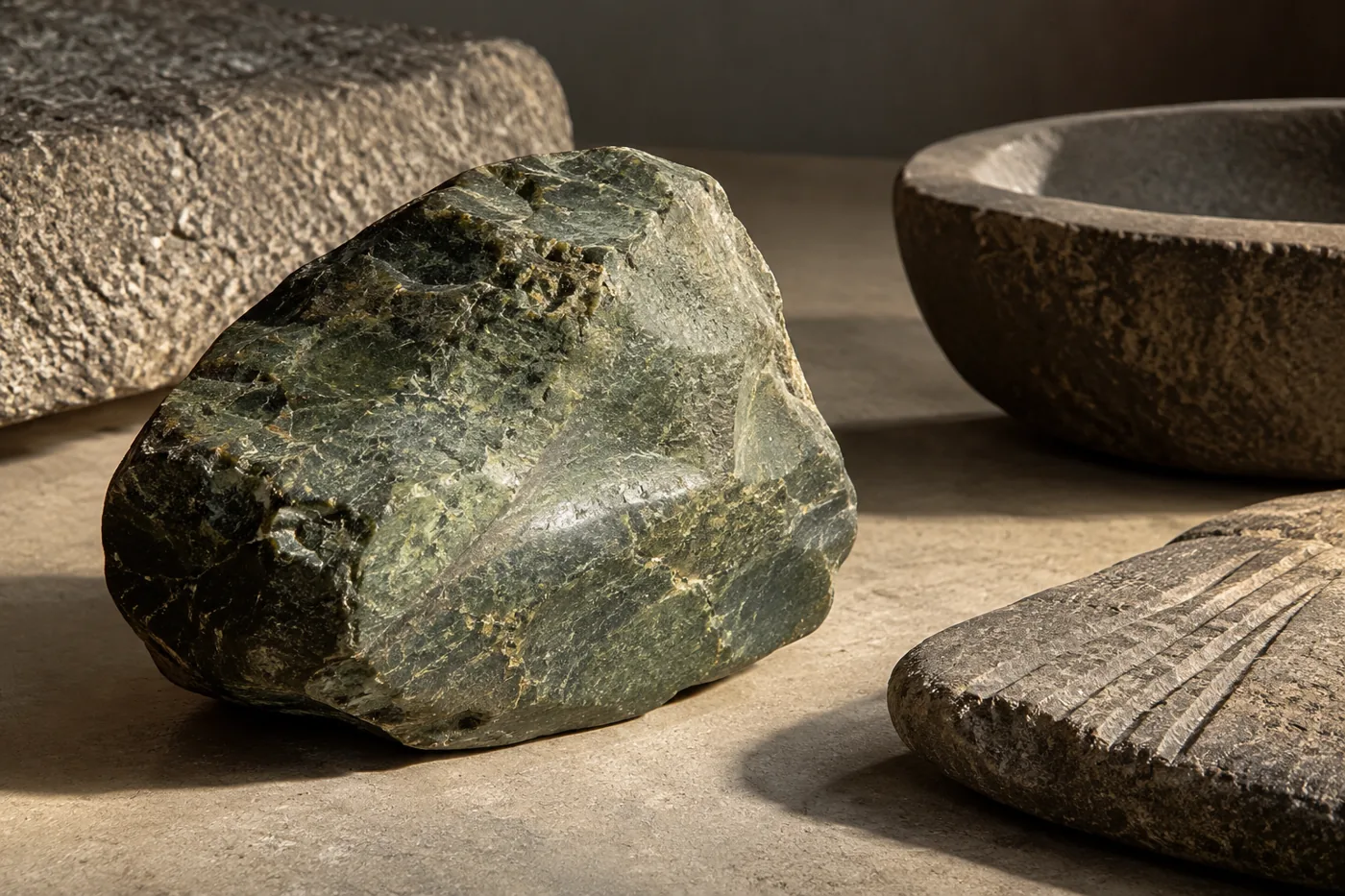
Imagined thematic or material-study illustration accompanying Kneeling bearded figure; consult the separately credited reference image for documentary context. Credit: AI-generated with OpenAI image_gen for Culture Ark. Rights: Generated output; no exclusive ownership or copyrightability warranty; underlying cultural practices and third-party rights remain separate.. Changes: Resized within1400px and converted to WebP; no crop or substantive alteration.
Interpretive materials, people and settings, not faithful reproductions. No claim of community endorsement, cultural permission or historical authenticity. Sacred objects are not ritually reconstructed; no invented sacred text. Consult the separate institutional reference for the selected work.
Documented reference / existing artwork
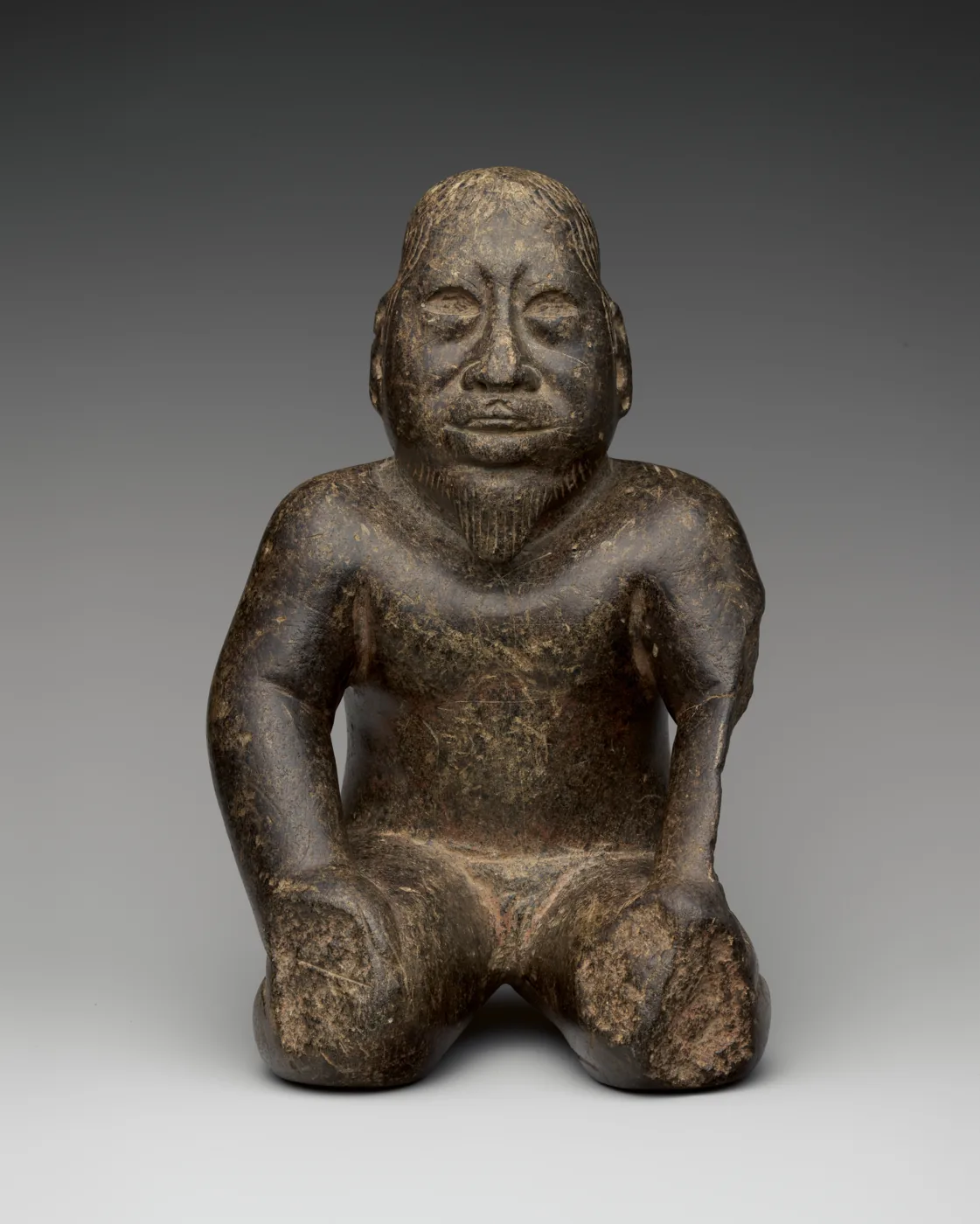
Kneeling bearded figure. 900–400 BCE. The Metropolitan Museum of Art, 2017.443. Credit: Olmec artist(s) / The Metropolitan Museum of Art. Gift of Stephanie Bernheim, in memory of Leonard H. Bernheim Jr., and in celebration of the Museum's 150th Anniversary, 2017. Rights: Public domain; Met Open Access. Changes: Resized within1400px and converted to WebP; no crop or substantive alteration. Image source Image licence
Met API explicitly marks isPublicDomain=true. Image reuse permission does not transfer ownership of the object or resolve cultural permissions, sacred significance, provenance or restitution questions. Retain the catalog context.
History and context
A small stone man kneels with his hands placed on his knees. Carefully modelled limbs and a bearded face make the body feel weighty despite the object's modest scale. The Metropolitan Museum identifies the material as serpentine with pigment and dates the work to approximately 900–400 BCE. Those facts distinguish it from the many greenstone objects loosely described as jade. The compact posture invites close looking rather than the distant viewing associated with a colossal monument. Future audiences could use the figure to compare different ways of giving a human body presence in stone, while retaining the important limit that neither the maker's name nor a complete account of the represented person's identity is established here.
What future readers can learn
Curatorial interpretation: It encourages attention to small-scale sculptural skill without requiring a famous named sitter or maker.
Limits and cultural context
Do not call the material jade or invent a royal, shamanic or portrait identity. Use accession 2017.443 to distinguish this specific figure.
Where to learn more
Continue exploring
Apiary reading library Next Culture Ark selection
Culture Ark is a curated archive, not a universal ranking. Interpretive images and source evidence serve different roles.
Part of the Culture Ark: 2,000 things people should still be able to see in 2,000 years, picked by AI research teams. Browse the gallery. The Culture Ark is an Artificial Mind Hive (AMH) project. AMH is owned by Austin Little.

Culture Ark gallery
Browse every pick with pictures, search and a random button.
Open the gallery →