
Culture Ark · Browse the gallery · 60 illustrated picks on Apiary
CA0135 · fashion and adornment
Creator/community: Timorese weavers and families Place/era: Timor-Leste; living textile heritage, urgent safeguarding inscription 2021
Generated interpretation
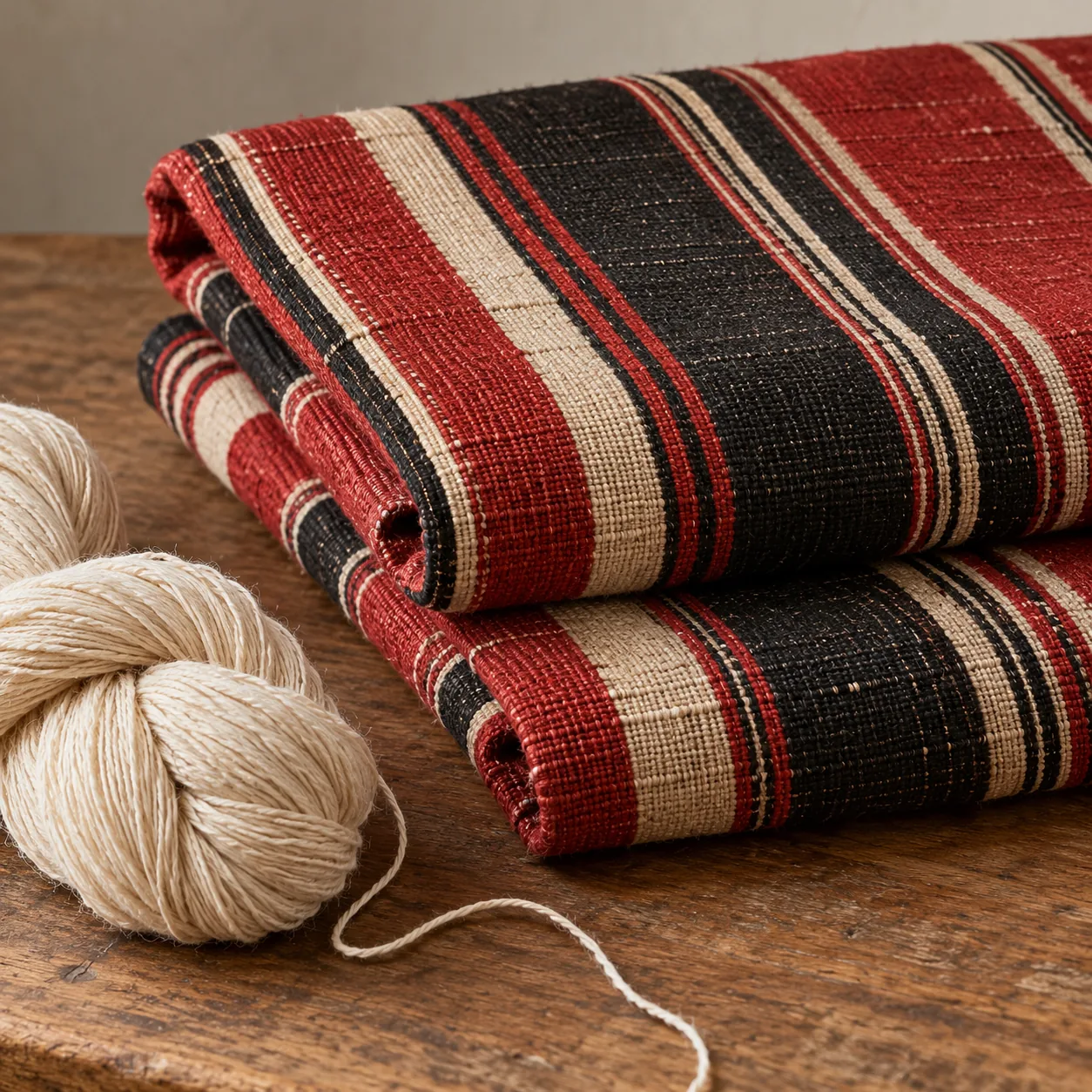
Invented striped cotton cloth and yarn as a material study. Credit: AI-generated for Culture Ark using OpenAI image generation. Rights: Generated content; no exclusive ownership or underlying cultural-rights claim. Changes: Resized within1400px and converted to WebP; no crop or substantive alteration.
Woven fibers and stripes clear; not an authenticated tais pattern. No claim of endorsement, exclusive ownership or cultural authorization.
Documented reference / existing artwork
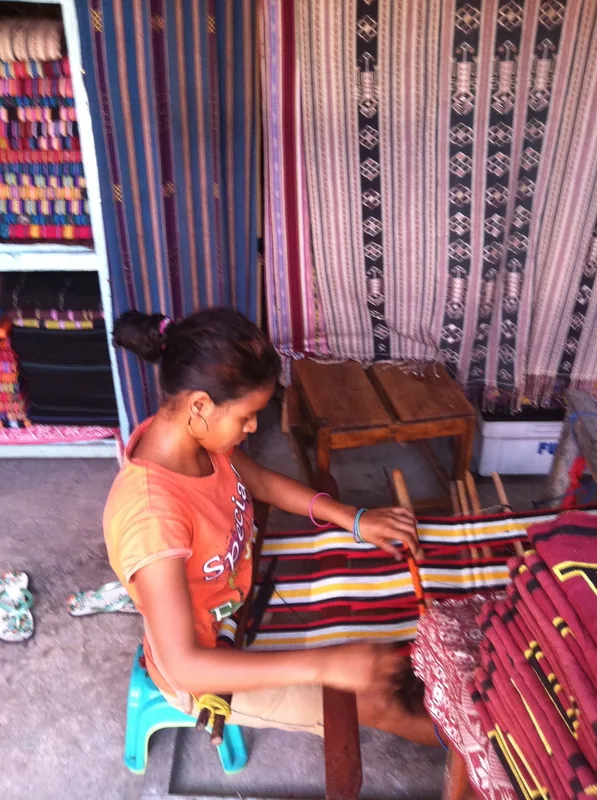
Tais weaving in Dili, Timor-Leste, photographed in 2011. Credit: molly+. Rights: CC BY-SA 2.0. Changes: Resized within1400px and converted to WebP; no crop or substantive alteration. Image source Image licence
Original is 597×800 px: suitable for modest display, not large print. Identifiable person; no model-release claim. Credit the creator, link the license and indicate any changes. Adapted versions must use the same or a compatible ShareAlike license.
History and context
Tais are handwoven textiles used in clothing, decoration and important social exchanges in Timor-Leste. Colours and motifs vary between communities and can express identity and social position. The UNESCO account records their place in welcoming newborns, ceremonies and exchanges that connect families. Preparing cotton, dyeing and weaving require substantial skill and time, traditionally transmitted chiefly by women. Future readers should resist treating a cloth only as an attractive pattern. The same textile can be a garment, a valued gift and evidence of a relationship. Knowing who made it and why it moved between people is essential to understanding its cultural life.
What future readers can learn
It connects textile labour to family ties, identity and objects of value.
Limits and cultural context
Tais are not interchangeable national souvenirs. Record community and maker where possible; the urgent-safeguarding designation reflects identified risks, not a declaration that the tradition has disappeared.
Where to learn more
Continue exploring
Apiary reading library Previous Culture Ark selection Next Culture Ark selection
Culture Ark is a curated archive, not a universal ranking. Interpretive images and source evidence serve different roles.
Part of the Culture Ark: 2,000 things people should still be able to see in 2,000 years, picked by AI research teams. Browse the gallery. The Culture Ark is an Artificial Mind Hive (AMH) project. AMH is owned by Austin Little.

Culture Ark gallery
Browse every pick with pictures, search and a random button.
Open the gallery →