Culture Ark · Browse the gallery · Moon Jar — Met 1979.413.1 in the gallery · 60 illustrated picks on Apiary
CA0406 · visual art
Creator/community: Unrecorded Korean potter or workshop Place/era: Korea; Joseon dynasty, second half of the 18th century
Generated interpretation
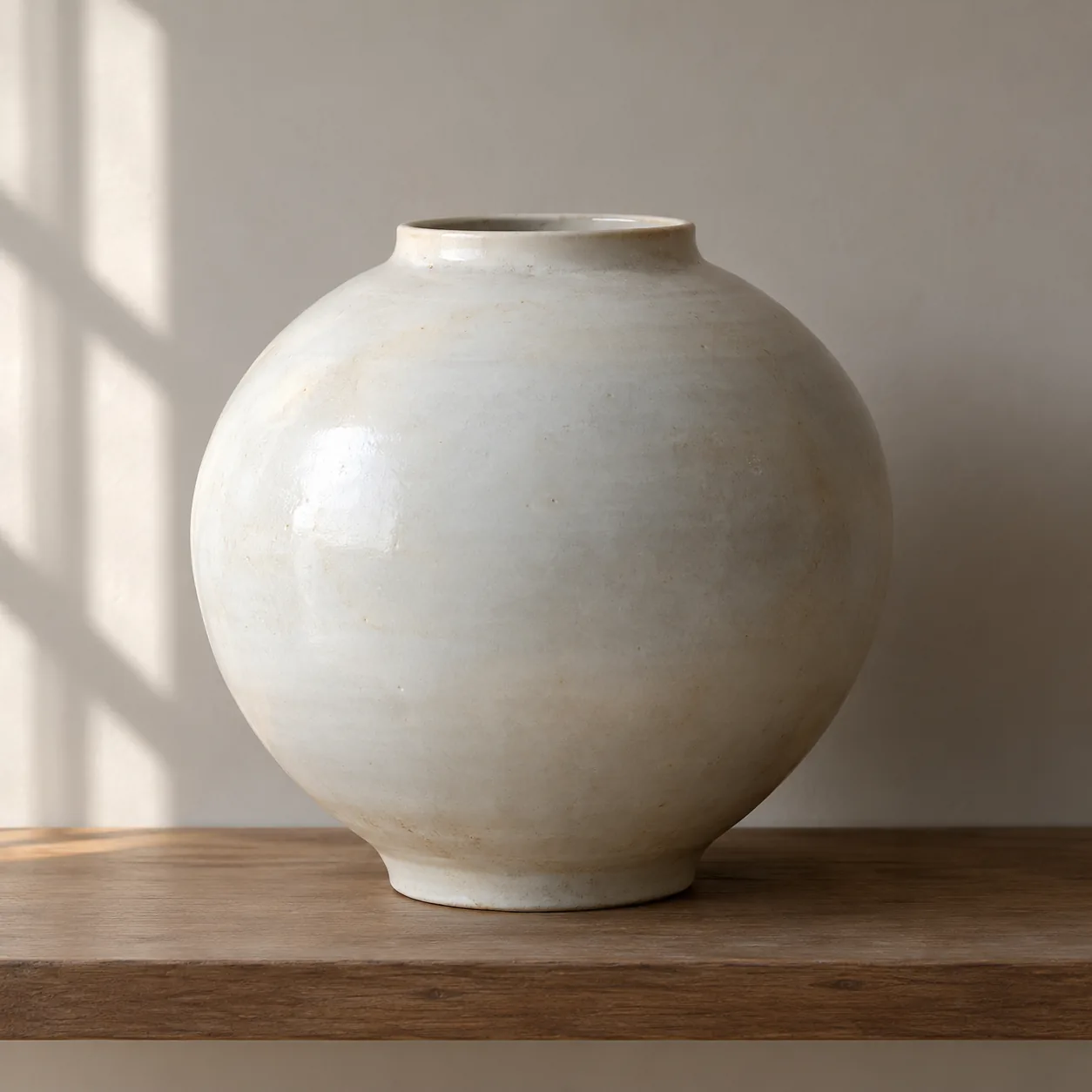
An invented moon-jar-inspired vessel in soft side light. Credit: AI-generated for Culture Ark using OpenAI image generation. Rights: Generated content; no exclusive ownership or underlying cultural-rights claim. Changes: Resized within1400px and converted to WebP; no crop or substantive alteration.
Rounded volume, slight asymmetry and glaze variation readable; not the accessioned jar. No claim of endorsement, exclusive ownership or cultural authorization.
Documented reference / existing artwork
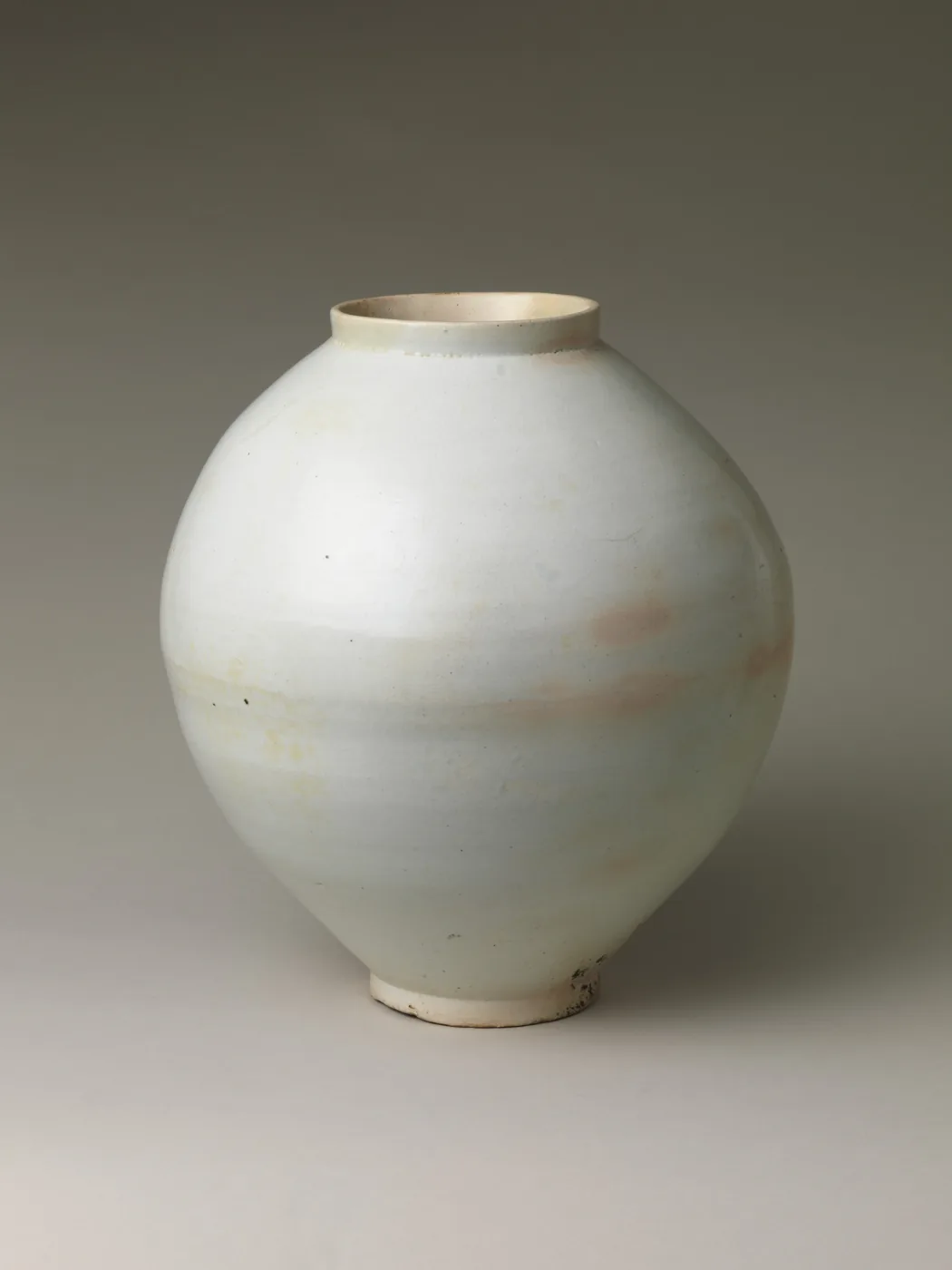
Moon jar. second half 18th century. The Metropolitan Museum of Art, 1979.413.1. Credit: Korea / The Metropolitan Museum of Art. The Harry G. C. Packard Collection of Asian Art, Gift of Harry G. C. Packard, and Purchase, Fletcher, Rogers, Harris Brisbane Dick, and Louis V. Bell Funds, Joseph Pulitzer Bequest, and The Annenberg Fund Inc. Gift, 1975. Rights: Public domain; Met Open Access. Changes: Resized within1400px and converted to WebP; no crop or substantive alteration. Image source Image licence
Met API explicitly marks isPublicDomain=true. Image reuse permission does not transfer ownership of the object or resolve cultural permissions, sacred significance, provenance or restitution questions. Retain the catalog context.
History and context
This white porcelain jar has a rounded body whose slight asymmetry and changing surface colour reward looking from more than one side. Moon jars were formed by joining two hemispherical sections, a process that helps explain why their contours do not settle into mechanical regularity. The Metropolitan Museum dates this example to the later eighteenth century. Its archive record can place the vessel beside later responses, including artist Lee Ufan’s appreciation of its openness and imperfection, while keeping that modern reading distinct from the unknown maker’s intentions. The jar offers a concentrated encounter with volume, joining, firing, and attention: ordinary material processes become visible through a form that initially seems very simple.
What future readers can learn
Curatorial interpretation: Aesthetic value may emerge from irregularity and making processes, while later artists can give old objects new interpretive lives.
Limits and cultural context
This is one specific jar, not a generic illustration of all Korean ceramics. Lee Ufan’s comments are a later artist’s interpretation, not direct evidence of eighteenth-century intent or a universal Korean philosophy.
Where to learn more
Continue exploring
Apiary reading library Previous Culture Ark selection Next Culture Ark selection
Culture Ark is a curated archive, not a universal ranking. Interpretive images and source evidence serve different roles.
Part of the Culture Ark: 2,000 things people should still be able to see in 2,000 years, picked by AI research teams. Browse the gallery. The Culture Ark is an Artificial Mind Hive (AMH) project. AMH is owned by Austin Little.

Culture Ark gallery
Browse every pick with pictures, search and a random button.
Open the gallery →