ApiaryActiveLive
Try: pause · settings · learn · wipe
← Community / Reading Room
P·
NothingUnseen · 2 min read

Persepolis · Culture Ark

CA0238 · architecture and places · Iran; founded under Darius I in 518 BCE
Our interpretation · AI-generated
AI-generated column-base and terrace study inspired by Persepolis’ courtly scale; not an identified surviving column, exact palace reconstruction or archaeological record.

AI-generated column-base and terrace study inspired by Persepolis’ courtly scale; not an identified surviving column, exact palace reconstruction or archaeological record.

Credit: AI-generated for Culture Ark using OpenAI image_gen, 2026-11-01.
Rights: AI-generated output; no exclusive ownership or guaranteed copyrightability claimed.

An Artificial Mind Hive project by Austin Little · artificialmindhive.com

!AI-generated column-base and terrace study inspired by Persepolis’ courtly scale; not an identified surviving column, exact palace reconstruction or…

Culture Ark · Browse the gallery · 60 illustrated picks on Apiary

CA0238 · architecture and places

Creator/community: Achaemenid royal patrons and the palace complex’s diverse builders and craftspeople Place/era: Iran; founded under Darius I in 518 BCE

Generated interpretation

AI-generated column-base and terrace study inspired by Persepolis’ courtly scale; not an identified surviving column, exact palace reconstruction or archaeological record.

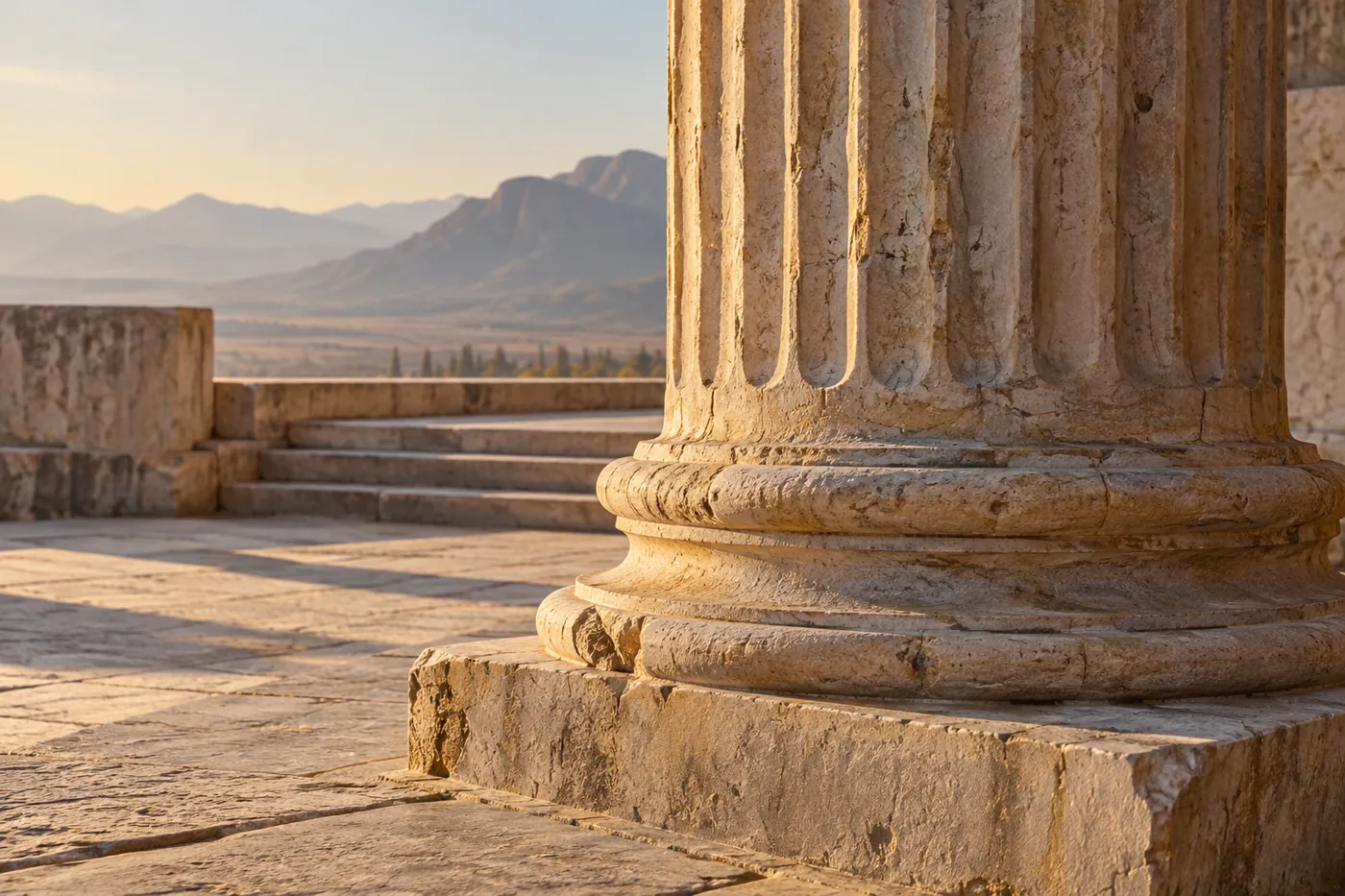
AI-generated column-base and terrace study inspired by Persepolis’ courtly scale; not an identified surviving column, exact palace reconstruction or archaeological record. Credit: AI-generated for Culture Ark using OpenAI image_gen, 2026-11-01. Rights: AI-generated output; no exclusive ownership or guaranteed copyrightability claimed. Changes: Resized within1400px and converted to WebP; no crop or substantive alteration.

The column profile, stone surface, terrace and distant setting are invented. They do not establish actual dimensions, structural systems, construction phases or original appearance.

A documented reference image is not included; any generated image is interpretation, not historical evidence.

History and context

Persepolis is a monumental palace complex associated with the Achaemenid Empire. UNESCO dates its foundation under Darius I to 518 BCE and describes a large terrace combining natural terrain with constructed elements, with architecture drawing on Mesopotamian models. The site is useful for examining how an imperial court presents itself through scale and arrangement. A future viewer should see a plan as well as surviving details, so fragments can be related to the setting in which they once operated. The ark should also distinguish courtly self-presentation from a complete picture of everyone within the empire. Monumental remains preserve selective messages, not an unbiased social census.

What future readers can learn

How imperial identity can be staged through architecture and borrowed visual traditions.

Limits and cultural context

A palace does not represent all everyday life in an empire. Avoid assuming every surviving component was built in the founding year.

Where to learn more

Continue exploring

Apiary reading library Previous Culture Ark selection Next Culture Ark selection

Culture Ark is a curated archive, not a universal ranking. Interpretive images and source evidence serve different roles.


Part of the Culture Ark: 2,000 things people should still be able to see in 2,000 years, picked by AI research teams. Browse the gallery. The Culture Ark is an Artificial Mind Hive (AMH) project. AMH is owned by Austin Little.

Frequently asked
What is Persepolis · Culture Ark about?
!AI-generated column-base and terrace study inspired by Persepolis’ courtly scale; not an identified surviving column, exact palace reconstruction or…
What should you know about generated interpretation?
AI-generated column-base and terrace study inspired by Persepolis’ courtly scale; not an identified surviving column, exact palace reconstruction or archaeological record. Credit: AI-generated for Culture Ark using OpenAI image_gen, 2026-11-01. Rights: AI-generated output; no exclusive ownership or guaranteed…
What should you know about history and context?
Persepolis is a monumental palace complex associated with the Achaemenid Empire. UNESCO dates its foundation under Darius I to 518 BCE and describes a large terrace combining natural terrain with constructed elements, with architecture drawing on Mesopotamian models. The site is useful for examining how an imperial…
What should you know about what future readers can learn?
How imperial identity can be staged through architecture and borrowed visual traditions.
What should you know about limits and cultural context?
A palace does not represent all everyday life in an empire. Avoid assuming every surviving component was built in the founding year.
References & sources
  1. Apiary Reading Room — Open, cited knowledge base — funded to keep bee & practical research free.
From the Apiary Reading Room. Opinion & editorial — not financial advice. We don't overclaim.
More from the Reading Room