Culture Ark · Browse the gallery · 60 illustrated picks on Apiary
CA0227 · architecture and places
Creator/community: Nabataean communities, builders and later inhabitants Place/era: Present-day Jordan; ancient caravan city
Generated interpretation
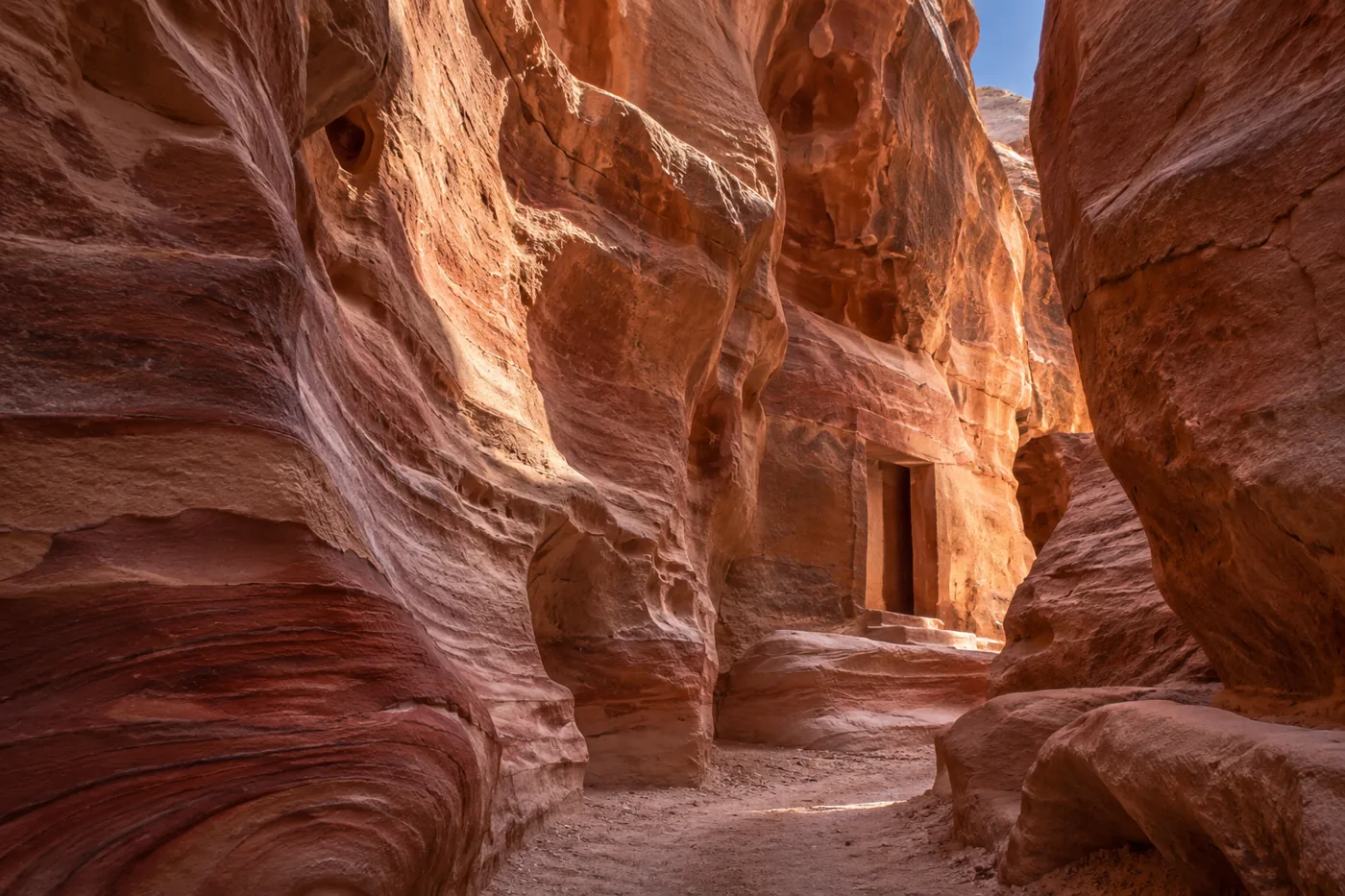
AI-generated rose-sandstone passage and carved opening inspired by Petra’s rock-cut setting; not a photograph of an identified monument or a reconstruction of its function. Credit: AI-generated for Culture Ark using OpenAI image_gen, 2026-11-01. Rights: AI-generated output; no exclusive ownership or guaranteed copyrightability claimed. Changes: Resized within1400px and converted to WebP; no crop or substantive alteration.
The opening, rock formations, route and light are invented. No exact Petra location, chronology, use, geological survey or original appearance is documented.
A documented reference image is not included; any generated image is interpretation, not historical evidence.
History and context
Petra combines construction with the carving of architectural forms into rock. UNESCO describes the Nabataean city as a crossroads linking Arabia, Egypt and Syria-Phoenicia, and identifies a meeting of regional traditions with Hellenistic architecture. The site is therefore useful for discussing cultural exchange rather than treating striking facades as unexplained wonders. A future viewer should understand that the celebrated exterior images belong to a larger urban landscape of passages, gorges and structures. Selecting plans and carefully captioned views would help restore that context. Its inclusion also asks how the movement of people and goods can appear in the shapes and visual languages of buildings.
What future readers can learn
How exchange routes can shape architectural culture.
Limits and cultural context
Do not attribute the whole site to a single period or portray its builders as mysterious. Identify individual buildings before asserting their function.
Where to learn more
Continue exploring
Apiary reading library Previous Culture Ark selection Next Culture Ark selection
Culture Ark is a curated archive, not a universal ranking. Interpretive images and source evidence serve different roles.
Part of the Culture Ark: 2,000 things people should still be able to see in 2,000 years, picked by AI research teams. Browse the gallery. The Culture Ark is an Artificial Mind Hive (AMH) project. AMH is owned by Austin Little.

Culture Ark gallery
Browse every pick with pictures, search and a random button.
Open the gallery →