
Culture Ark · Browse the gallery · Great Mosque of Djenné in the gallery · 60 illustrated picks on Apiary
CA0017 · architecture and places
Creator/community: Djenné’s Muslim community and earthen-building craftspeople Place/era: Djenné, Mali; present mosque reconstructed in 1906–1907 within a much older urban and religious setting
Generated interpretation
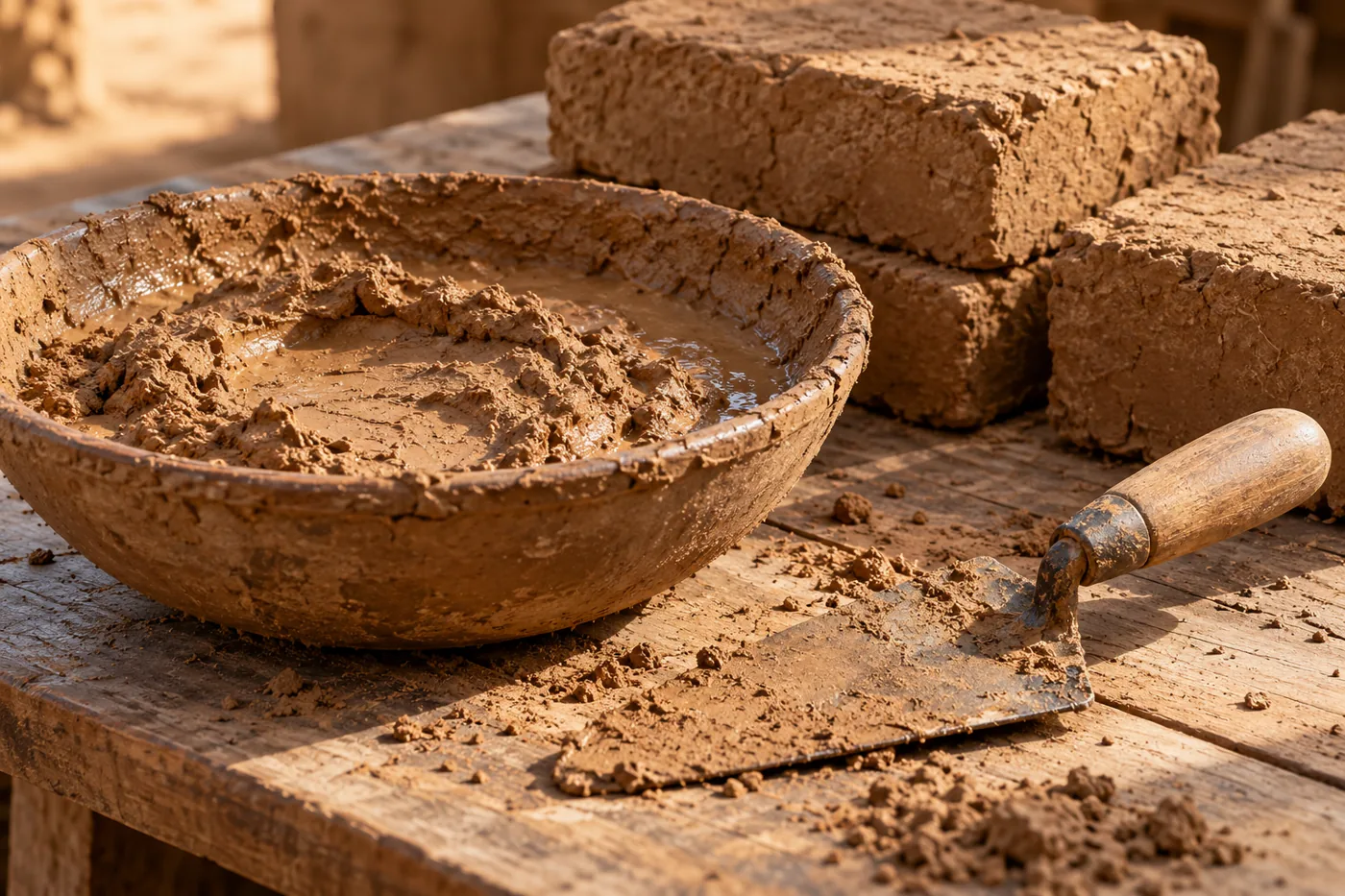
Invented earthen blocks, plaster and trowel; material-craft interpretation, not a Djenné maintenance record or construction recipe. Credit: AI-generated for Culture Ark using OpenAI image_gen, 2026-11-01. Rights: AI-generated output; no exclusive ownership or guaranteed copyrightability claimed. Changes: Resized within1400px and converted to WebP; no crop or substantive alteration.
Interpretive presentation artwork, not documentary evidence. Underlying music, film, brands and personality rights remain separate.
Documented reference / existing artwork
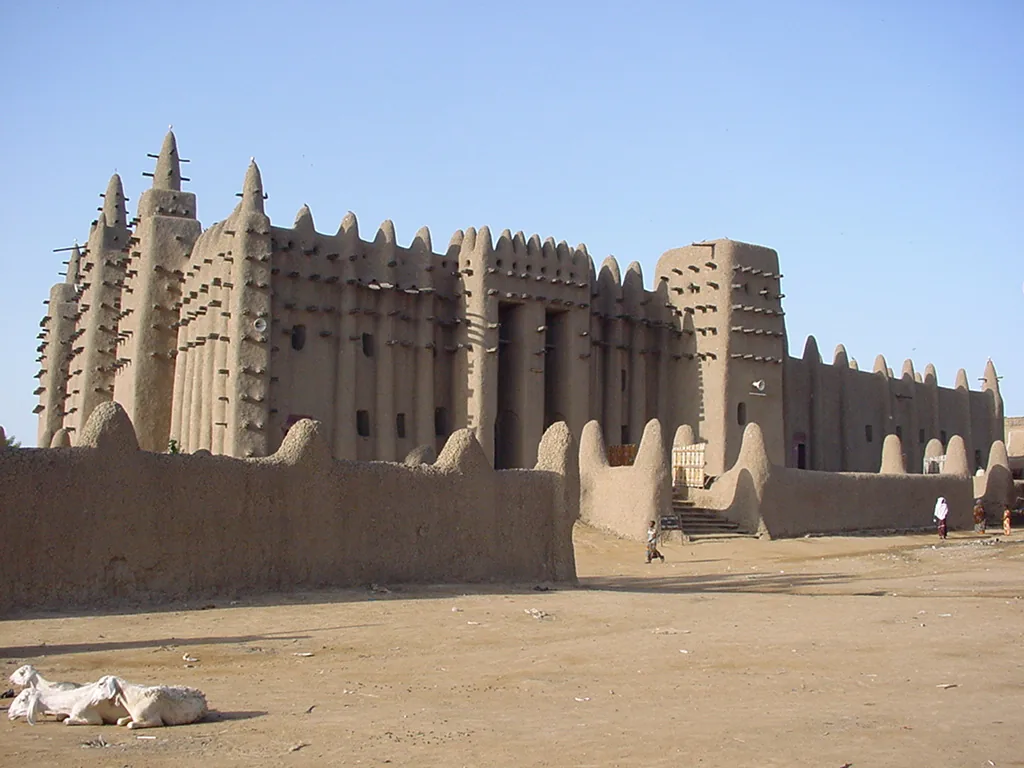
Great Mosque of Djenné, Mali. Credit: Andy Gilham. Rights: CC BY-SA 3.0. Changes: Resized within1400px and converted to WebP; no crop or substantive alteration. Image source Image licence
License applies to this image only. No endorsement, personality-rights clearance or cultural permission implied. Preserve attribution and applicable share-alike terms.
History and context
The Great Mosque belongs to Djenné’s living townscape, not an isolated collection of ruins. UNESCO’s account places the town within trans-Saharan trade and the regional spread of Islam, and identifies the mosque’s 1906–1907 reconstruction as an expression of local religious architecture. Earthen buildings connect its monumental forms with the materials and skilled work of the surrounding settlement. The useful cultural object is therefore both a building and its relationship to a town. Preserve photographs with dates, architectural explanations and local accounts of care, rather than reducing the mosque to an exotic silhouette. Its history also reminds future readers that reconstruction can form part of heritage rather than automatically erase it.
What future readers can learn
It demonstrates that architectural value can lie in earth, skilled upkeep, religious use and a coherent urban setting, not only in expensive permanent materials or isolated masterpieces.
Limits and cultural context
Do not date the current mosque to antiquity merely because Djenné has an ancient history. Accounts of the reconstruction’s colonial context differ; avoid an unsupported single-person authorship claim. This is a religious place, not a public stage.
Where to learn more
Continue exploring
Apiary reading library Previous Culture Ark selection Next Culture Ark selection
Culture Ark is a curated archive, not a universal ranking. Interpretive images and source evidence serve different roles.
Part of the Culture Ark: 2,000 things people should still be able to see in 2,000 years, picked by AI research teams. Browse the gallery. The Culture Ark is an Artificial Mind Hive (AMH) project. AMH is owned by Austin Little.

Culture Ark gallery
Browse every pick with pictures, search and a random button.
Open the gallery →