

Culture Ark · Browse the gallery · Go, also called Weiqi and Baduk in the gallery · 60 illustrated picks on Apiary
CA0016 · games and play
Creator/community: Generations of players in China, Korea and Japan, now joined by international Go communities Place/era: Originating in ancient China; long-established East Asian and modern global practice
Generated interpretation
AI-generated still life of Go stones and wooden bowls; no game position or historical object is depicted. Credit: AI-generated for Culture Ark using OpenAI image_gen, 2026-11-01. Rights: AI-generated output; no exclusive ownership or guaranteed copyrightability claimed. Changes: Resized within1400px and converted to WebP; no crop or substantive alteration.
Interpretive presentation artwork, not documentary evidence. Underlying music, film, brands and personality rights remain separate.
Documented reference / existing artwork
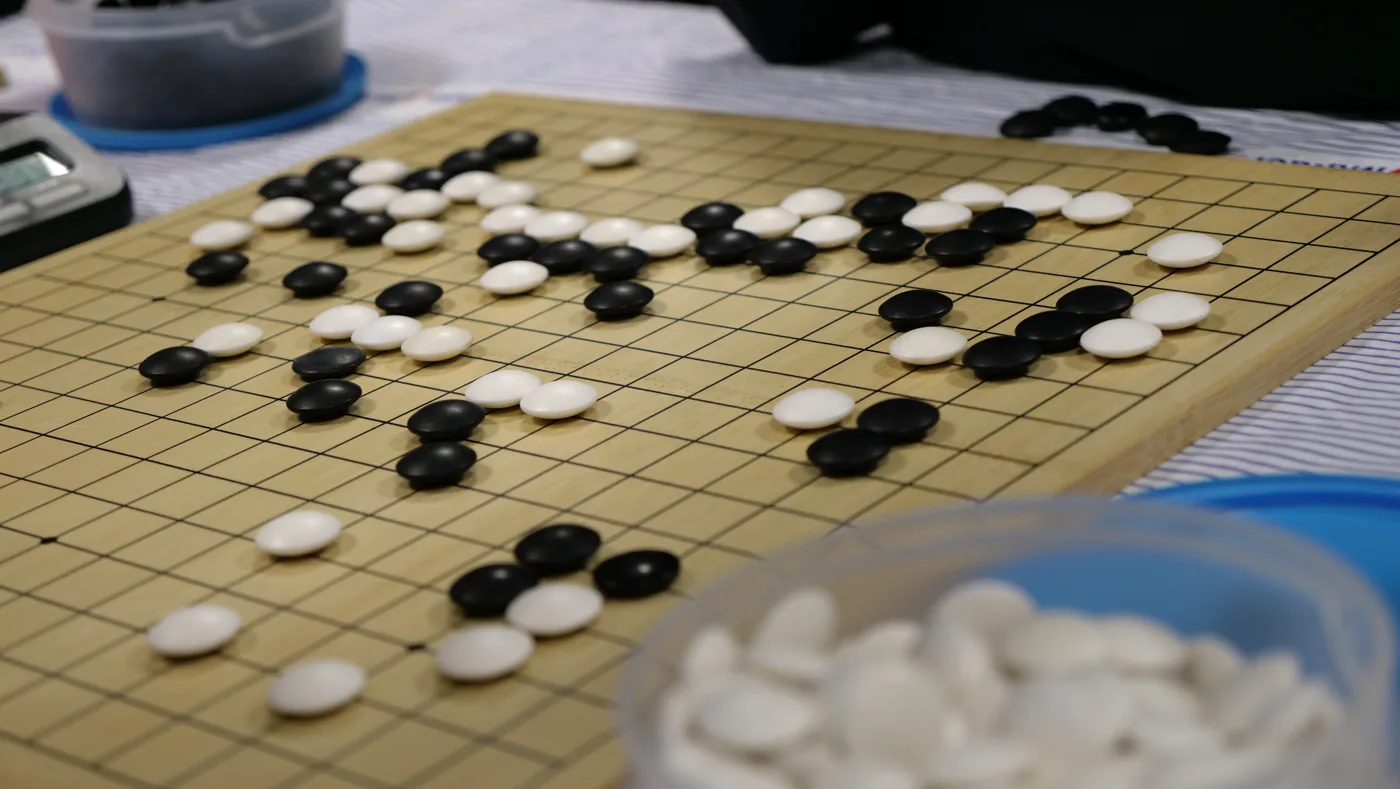
A Go board and stones. Credit: Culture Japon. Rights: CC BY-SA 4.0. Changes: Resized within1400px and converted to WebP; no crop or substantive alteration. Image source Image licence
License applies to this image only. No endorsement, personality-rights clearance or cultural permission implied. Preserve attribution and applicable share-alike terms.
History and context
Go is a board-game tradition whose long history links China, Korea and Japan. The Japanese name Go is widely used in English; Weiqi and Baduk are the Chinese and Korean names. The British Go Association describes the game’s precise origins as unknown, separating historical uncertainty from legends that attribute its invention to an emperor. Its account traces the game’s movement through East Asia and later growth in Europe and elsewhere. For a cultural ark, preserve more than a picture of stones on a board: include a clear rules reference, names in several languages and examples of how communities teach and discuss play. A game is a repeatable social activity, not merely its equipment.
What future readers can learn
Go provides a way to experience inherited culture directly by playing. Comparing local names and organized communities reveals how a shared activity can travel without becoming culturally uniform.
Limits and cultural context
Do not present a legendary inventor or a precise ancient founding year as established fact. Historical estimates are approximate. Later rulesets and scoring conventions should be documented explicitly if game records are added.
Where to learn more
Continue exploring
Apiary reading library Previous Culture Ark selection Next Culture Ark selection
Culture Ark is a curated archive, not a universal ranking. Interpretive images and source evidence serve different roles.
Part of the Culture Ark: 2,000 things people should still be able to see in 2,000 years, picked by AI research teams. Browse the gallery. The Culture Ark is an Artificial Mind Hive (AMH) project. AMH is owned by Austin Little.

Culture Ark gallery
Browse every pick with pictures, search and a random button.
Open the gallery →