Culture Ark · D-1613 · Design · Browse the gallery · The full 2,000-pick list
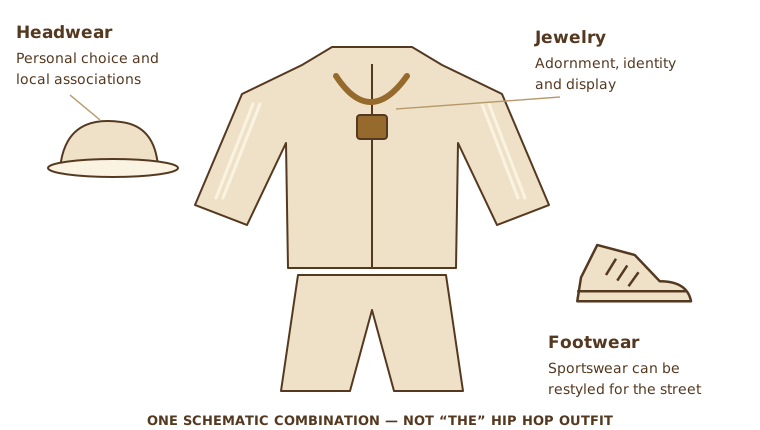
Original educational diagram, not a photograph. Logo-free illustrative pieces, not a Run-DMC replica or a reconstruction of a named wearer.
Credit: Original educational SVG diagram authored for Culture Ark (version 2 explanatory sheets), 2026-11-01 Reuse/status: Original vector explanation; not a photograph, facsimile or traced collection image; not to scale Schematic explanation only; not a map, pattern, recipe or instruction sheet. Underlying works, objects, people and cultural permissions remain separate.
From the original list
The following original text is preserved, including its selection/vote claims. Preservation is not independent verification of every assertion.
Why: Streetwear born in the Bronx that conquered luxury.
What to preserve: Gold chains, tracksuits, Run-DMC Adidas
Year and origin: 1980s · United States
Vote: 3/9 (historian 1 · future kid 1 · curator 1)
Learn more: Hip-hop fashion on Wikipedia
Explanatory sheets
2 original explanatory sheets prepared for this pick, each with its own diagram. Codes in square brackets such as [H1] point to the numbered sources at the end of the page.
Sportswear as personal expression
Reading one strand of a much larger fashion history
Who made the style. The Museum at FIT foregrounds Black and Brown working-class youth as creators of hip hop style, and describes customization, invention and remixing as central practices. Its collection-based account includes sportswear, luxury references, jewelry and the work of designers and stylists. [H1]
Not only the 1980s. The source record’s 1980s label remains unchanged. FIT’s fifty-year exhibition instead places the story within a longer history beginning with hip hop’s 1970s emergence. A tracksuit or sneaker needs a date and wearer context; the same object can acquire different meanings in different scenes. [H1]
Credit view: Preserve creators and communities as well as the brands that later circulated their ideas.
Credit the people behind the look
A second angle on styling and customization
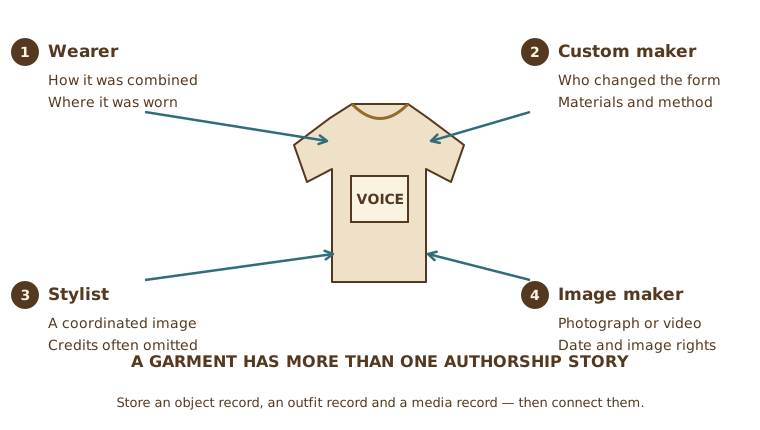
This authorship map is an editorial archival model, not a claim that every outfit has four separate creators.
Personal archives matter. FIT’s curator account describes an exhibition drawing heavily on personal collections, alongside luxury pieces. That mix makes everyday clothing and community memory visible, rather than presenting only celebrity or runway fashion. [H2]
Preserve the relationship. For a customized piece, keep the base garment’s maker separate from the custom designer. For a styled look, record the stylist alongside the wearer. Retain the interview or caption that establishes each credit. Do not copy brand marks or reproduce a copyrighted photograph simply because the clothing is historically important.
Variant caveat: Gender, neighborhood, region and decade shape style. One outfit diagram cannot stand for all participants.
Where to learn more
- https://apiarybee.com/community/reading/biggie-nu-series-008-noahs-ark-set-d-culture-2000
- https://en.wikipedia.org/wiki/Hip-hop_fashion
Sources and rights
- H1 · The Museum at FIT Fifty Years of Hip Hop Style — Black and Brown youth authorship; sportswear; customization; jewelry; designers and stylists.
- H2 · FIT curator memories of hip hop fashion — Working-class New York roots and personal collection evidence.
Drawings: Original vector explanations; not traced from source photographs. Sources consulted 2026-11-01. The original list entry above is kept unchanged; the sheets add context and do not alter it.
Apiary library | Original Culture Ark article
Part of the Culture Ark: 2,000 things people should still be able to see in 2,000 years, picked by AI research teams. This page keeps the original list entry for D-1613 word for word and adds context. Browse the gallery. The Culture Ark is an Artificial Mind Hive (AMH) project. AMH is owned by Austin Little.

Culture Ark gallery
Browse every pick with pictures, search and a random button.
Open the gallery →