Culture Ark · D-1599 · Design · Browse the gallery · The full 2,000-pick list
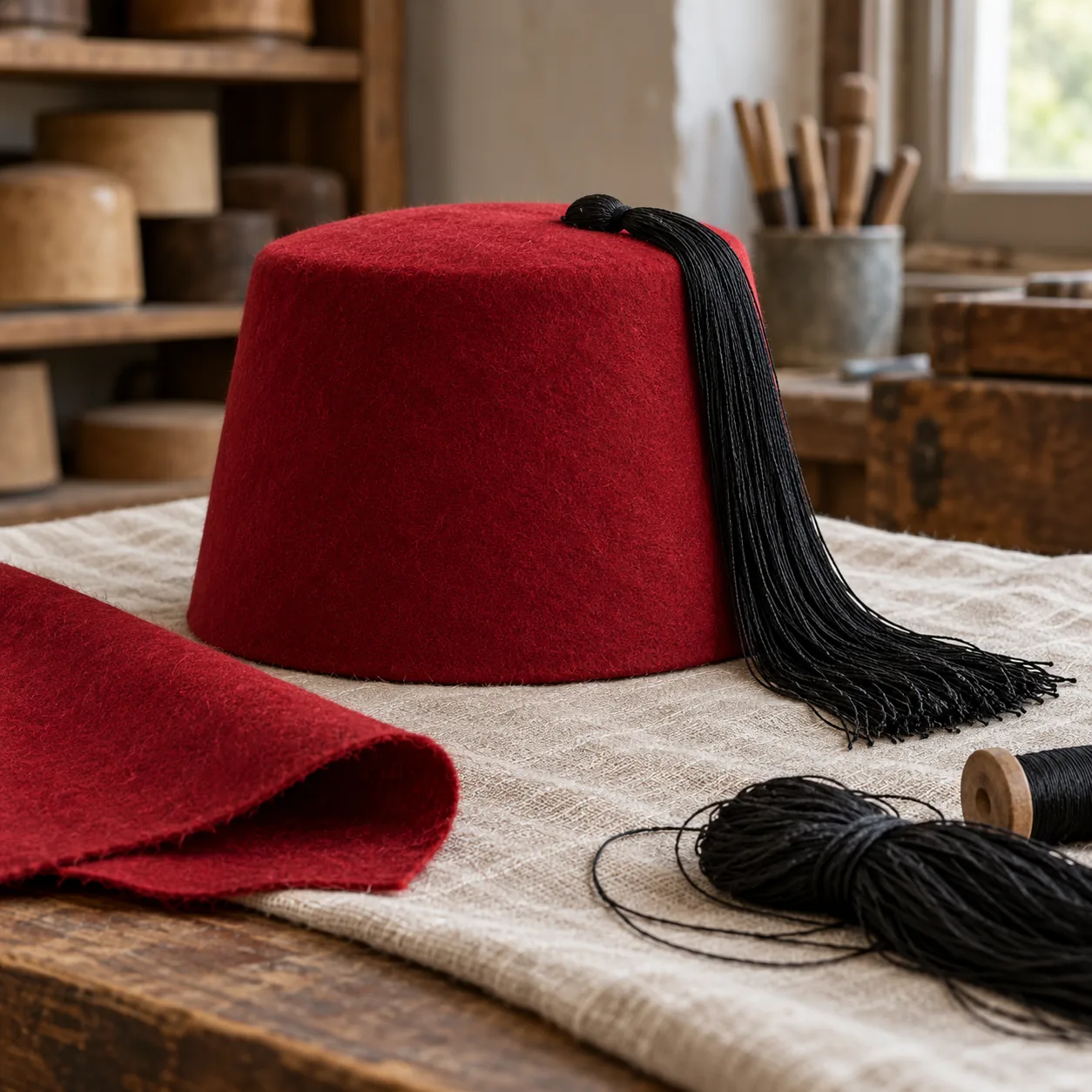
Generated interpretation, not documentary evidence. AI-generated invented red felt fez with black tassel and material samples; not an Ottoman museum artifact or the British Museum's maroon-and-blue example.
Credit: AI-generated for Culture Ark using OpenAI image generation Reuse/status: Generated content; no exclusive ownership or underlying-work rights claimed Individually inspected: felt texture, flat top and tassel are clear. Shape, materials and workshop are invented contextual details, not provenance or authenticity evidence. No authentic-reference or endorsement claim.
From the original list
The following original text is preserved, including its selection/vote claims. Preservation is not independent verification of every assertion.
Why: A felt hat that became the Ottoman emblem.
What to preserve: Fez city dyes, Ottoman dress reform
Year and origin: 17th century · Morocco
Vote: 3/9 (historian 1 · future kid 1 · curator 1)
Learn more: Fez (hat) on Wikipedia
Supplemental context
The fez shows how a small item of clothing can carry the force of public reform. The British Museum connects its adoption by Ottoman state functionaries under Mahmud II with nineteenth-century efforts to reorganize dress alongside other institutions. In that setting, the cap could signify modernization rather than simply an unchanging tradition. The museum's own example is a maroon felt tarbush with a blue silk tassel from historic Palestine, dated around the late nineteenth to early twentieth century. For future readers, such an object demonstrates that regional examples and political meanings must be studied together rather than collapsed into one stereotyped hat.
Creator/community: Hatmakers and wearers across Ottoman and related regional contexts Place/era: North Africa and Ottoman regions; nineteenth-century dress reforms are central to this account
Context and limits
The original seventeenth-century Moroccan origin and dye claims are not established by the source used here. The museum's specific Palestinian example should not be generalized to every wearer or region, including notes about tassel conventions. The generated red cap has a black tassel and is not that collection object or a universal religious uniform.
Where to learn more
- https://apiarybee.com/community/reading/biggie-nu-series-008-noahs-ark-set-d-culture-2000
- https://islamicworld.britishmuseum.org/collection/RRM186200
Apiary library | Original Culture Ark article
Public ID and individual routes: pending publisher allocation. Internal source ID: D-1599
Part of the Culture Ark: 2,000 things people should still be able to see in 2,000 years, picked by AI research teams. This page keeps the original list entry for D-1599 word for word and adds context. Browse the gallery. The Culture Ark is an Artificial Mind Hive (AMH) project. AMH is owned by Austin Little.

Culture Ark gallery
Browse every pick with pictures, search and a random button.
Open the gallery →