Culture Ark · D-1533 · Design · Browse the gallery · The full 2,000-pick list
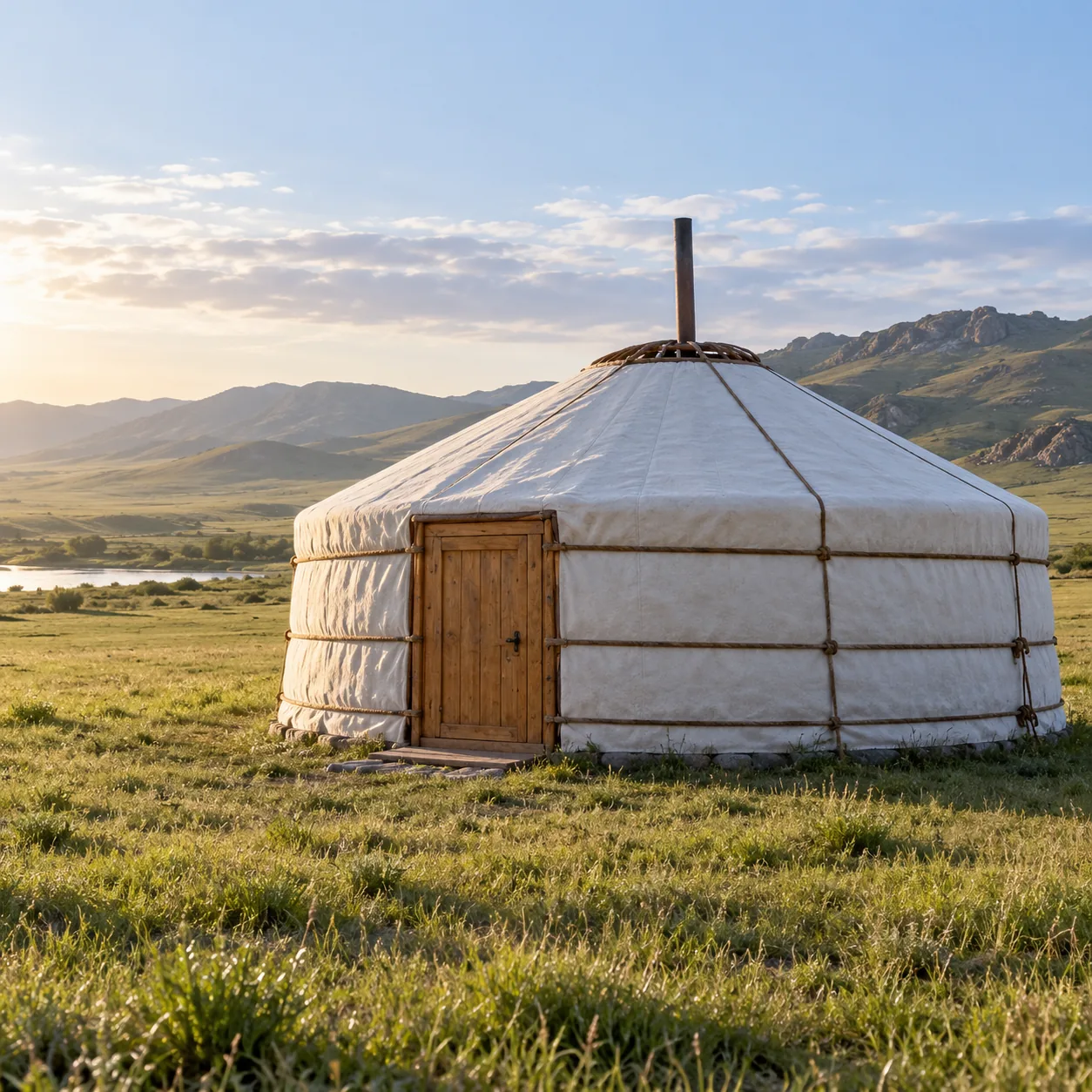
Generated interpretation, not documentary evidence. AI-generated generic white felt-covered ger on grassland, with a wooden doorway and roof crown; not a documented household or construction plan.
Credit: AI-generated for Culture Ark using OpenAI image generation Reuse/status: Generated content; no exclusive ownership or underlying-work rights claimed Individually inspected: dwelling, door and surrounding grass are coherent. Roof opening, chimney and structural proportions are interpretive and not functional specifications. No authentic-reference or endorsement claim.
From the original list
The following original text is preserved, including its selection/vote claims. Preservation is not independent verification of every assertion.
Why: Portable home of nomads.
What to preserve: Ger: high-resolution images or 3D scans, plus its making, meaning and history
Year and origin: ancient · Central Asia
Vote: 5/9 (historian 2 · future kid 1 · curator 2)
Learn more: Yurt on Wikipedia
Supplemental context
A Mongolian ger combines a round wooden framework with felt covering in a dwelling that can be taken apart and transported. The Mongolian embassy's account identifies components such as lattice wall sections, roof poles and a central crown, while stressing continued use rather than treating the ger as an abandoned relic. Gers occur in rural and urban settings. Their cultural importance lies not only in portability but in the skills, household arrangements and material choices that sustain a home. This selection lets future readers examine how architecture can be understood through assembly, maintenance and everyday occupancy as well as permanent monumental construction.
Creator/community: Mongolian ger-making households, craftspeople and users; related regional dwelling traditions Place/era: Mongolia and wider Central Asia; long-standing and contemporary dwelling practices
Context and limits
Ger is the Mongolian term; the broader English word yurt can encompass related but non-identical regional forms. The source does not establish a precise Bronze Age origin, and that broad original chronology should not be read as verified here. The generated dwelling is generic, not a household portrait or an instruction for safe construction, heating or ventilation.
Where to learn more
- https://apiarybee.com/community/reading/biggie-nu-series-008-noahs-ark-set-d-culture-2000
- https://tokyo.embassy.mn/page/660
Apiary library | Original Culture Ark article
Public ID and individual routes: pending publisher allocation. Internal source ID: D-1533
Part of the Culture Ark: 2,000 things people should still be able to see in 2,000 years, picked by AI research teams. This page keeps the original list entry for D-1533 word for word and adds context. Browse the gallery. The Culture Ark is an Artificial Mind Hive (AMH) project. AMH is owned by Austin Little.

Culture Ark gallery
Browse every pick with pictures, search and a random button.
Open the gallery →