Culture Ark · D-1535 · Design · Browse the gallery · The full 2,000-pick list
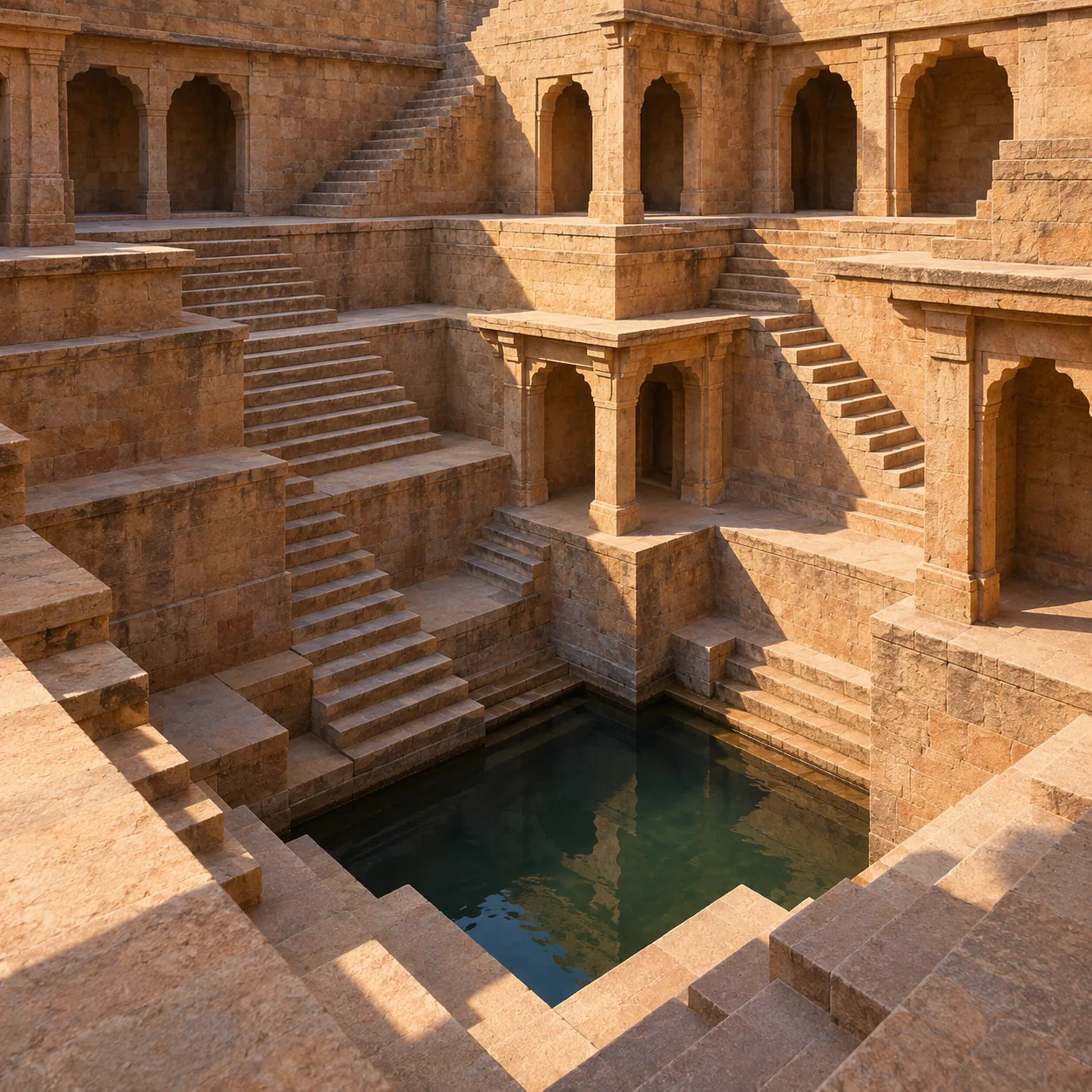
Generated interpretation, not documentary evidence. AI-generated imagined stone stepwell with descending stairs, water and geometric shadows; not a measured view or reconstruction of Chand Baori.
Credit: AI-generated for Culture Ark using OpenAI image generation Reuse/status: Generated content; no exclusive ownership or underlying-work rights claimed Individually inspected: stair rhythms, masonry and water form a coherent illustration. Invented circulation and edges are not safe-access or engineering specifications. No authentic-reference or endorsement claim.
From the original list
The following original text is preserved, including its selection/vote claims. Preservation is not independent verification of every assertion.
Why: Steps down to water.
What to preserve: Chand Baori: high-resolution images or 3D scans, plus its making, meaning and history
Year and origin: 7th century · India
Vote: 5/9 (historian 2 · future kid 1 · curator 2)
Learn more: Stepwell on Wikipedia
Supplemental context
Stepwells combine access to water with built routes that descend through changing levels. Chand Baori at Abhaneri offers a striking example of this relationship between stairs, geometry and water conservation. The official tourism account places this particular well in the ninth century, so it should not be assigned the seventh-century date attached to the broader selection without further evidence. For future readers, a stepwell makes visible the ways practical water provision could also shape shared space and architectural experience. The repeating stairs are not merely a visual pattern: they belong to a structure whose meaning depends on water, access and local conditions.
Creator/community: Regional patrons, builders and communities using stepwells Place/era: India; Chand Baori at Abhaneri, Rajasthan, dated to the ninth century by the cited tourism source
Context and limits
This account distinguishes the general building type from Chand Baori. The tourism page contains inconsistent measurements and other claims not used here; exact depth, step counts, superlatives and heritage-listing assertions are deliberately omitted. The invented illustration is neither Chand Baori's actual plan nor engineering, access or safety guidance.
Where to learn more
- https://apiarybee.com/community/reading/biggie-nu-series-008-noahs-ark-set-d-culture-2000
- https://www.incredibleindia.gov.in/en/rajasthan/jaipur/chand-baori
Apiary library | Original Culture Ark article
Public ID and individual routes: pending publisher allocation. Internal source ID: D-1535
Part of the Culture Ark: 2,000 things people should still be able to see in 2,000 years, picked by AI research teams. This page keeps the original list entry for D-1535 word for word and adds context. Browse the gallery. The Culture Ark is an Artificial Mind Hive (AMH) project. AMH is owned by Austin Little.

Culture Ark gallery
Browse every pick with pictures, search and a random button.
Open the gallery →