Culture Ark · D-1532 · Design · Browse the gallery · The full 2,000-pick list
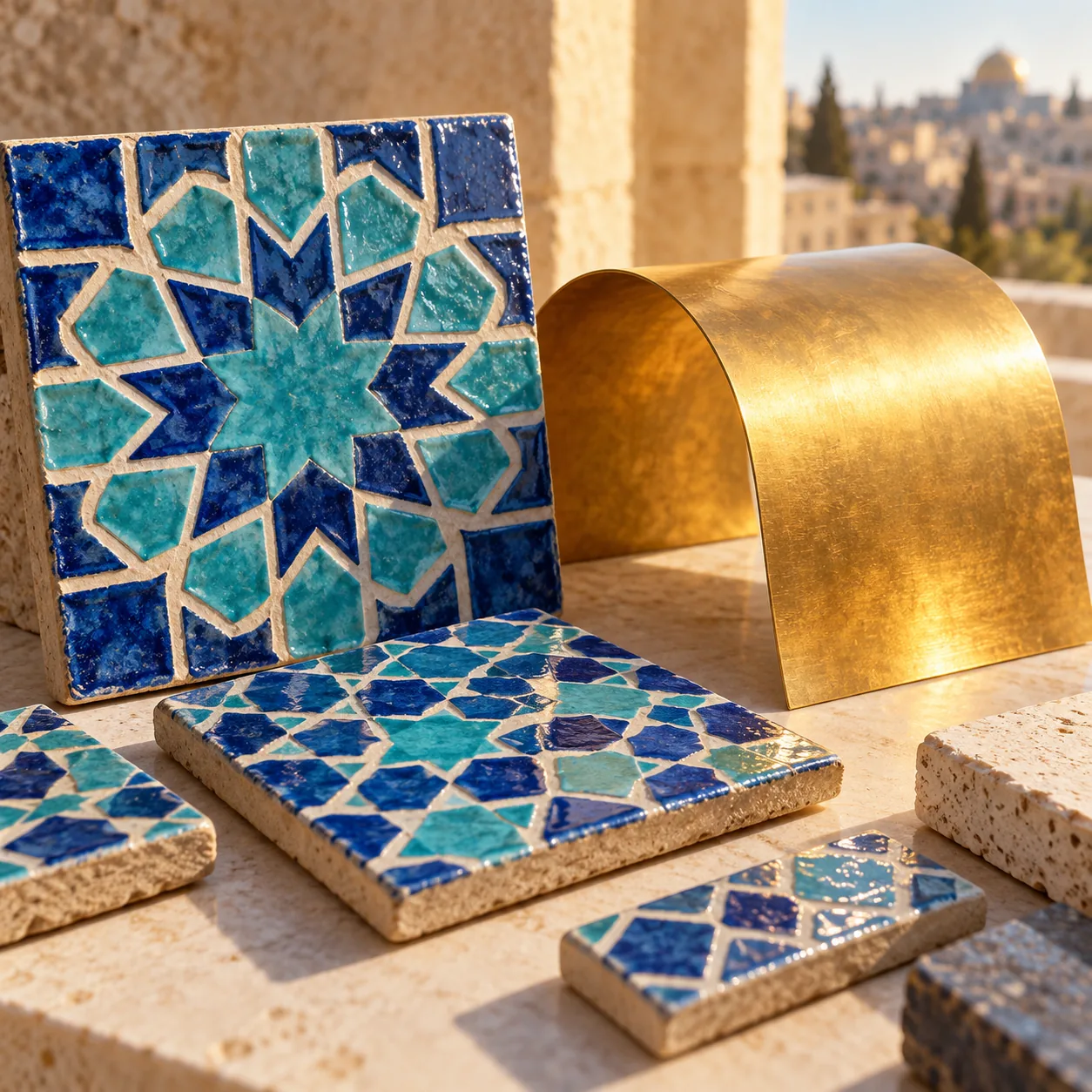
Generated interpretation, not documentary evidence. AI-generated blue geometric tile samples and curled gold-colored metal, with an invented domed skyline; a contextual material study, not the Dome of the Rock or an actual Jerusalem view.
Credit: AI-generated for Culture Ark using OpenAI image generation Reuse/status: Generated content; no exclusive ownership or underlying-work rights claimed Individually inspected: tile and metal still life is legible. Background domes are fictional; no historical pattern, original surface or authentic site view is claimed. No authentic-reference or endorsement claim.
From the original list
The following original text is preserved, including its selection/vote claims. Preservation is not independent verification of every assertion.
Why: A golden dome sacred to many.
What to preserve: Dome: high-resolution images or 3D scans, plus its making, meaning and history
Year and origin: 691 · Jerusalem
Vote: 5/9 (historian 2 · future kid 1 · curator 2)
Learn more: Dome of the Rock on Wikipedia
Supplemental context
The Dome of the Rock is a shrine, not simply a generic congregational mosque. Completed under the Umayyad caliph Abd al-Malik in 691–692, it places an important sacred rock within an architectural and decorative setting. The Metropolitan Museum's account connects its forms with Byzantine and Sasanian traditions while distinguishing later changes, including Ottoman tilework. It therefore teaches both the establishment of early Islamic monumental architecture and the long lives of sacred buildings. What a visitor sees today combines different periods of patronage and repair; the monument's founding date does not make every visible material an original seventh-century survival.
Creator/community: Umayyad patron Abd al-Malik and successive builders, craftspeople and custodians Place/era: Jerusalem; shrine completed in 691–692 CE, with later alterations
Context and limits
The site is sacred and politically sensitive; this entry does not adjudicate sovereignty or offer access advice. Haram al-Sharif and Temple Mount name the wider sacred precinct in different traditions. The illustration is an invented material study, not an image of the building, its actual tile patterns or salvaged architectural components.
Where to learn more
- https://apiarybee.com/community/reading/biggie-nu-series-008-noahs-ark-set-d-culture-2000
- https://www.metmuseum.org/exhibitions/listings/2012/byzantium-and-islam/blog/where-in-the-world/posts/dome-of-the-rock
Apiary library | Original Culture Ark article
Public ID and individual routes: pending publisher allocation. Internal source ID: D-1532
Part of the Culture Ark: 2,000 things people should still be able to see in 2,000 years, picked by AI research teams. This page keeps the original list entry for D-1532 word for word and adds context. Browse the gallery. The Culture Ark is an Artificial Mind Hive (AMH) project. AMH is owned by Austin Little.

Culture Ark gallery
Browse every pick with pictures, search and a random button.
Open the gallery →