Culture Ark · D-1536 · Design · Browse the gallery · The full 2,000-pick list
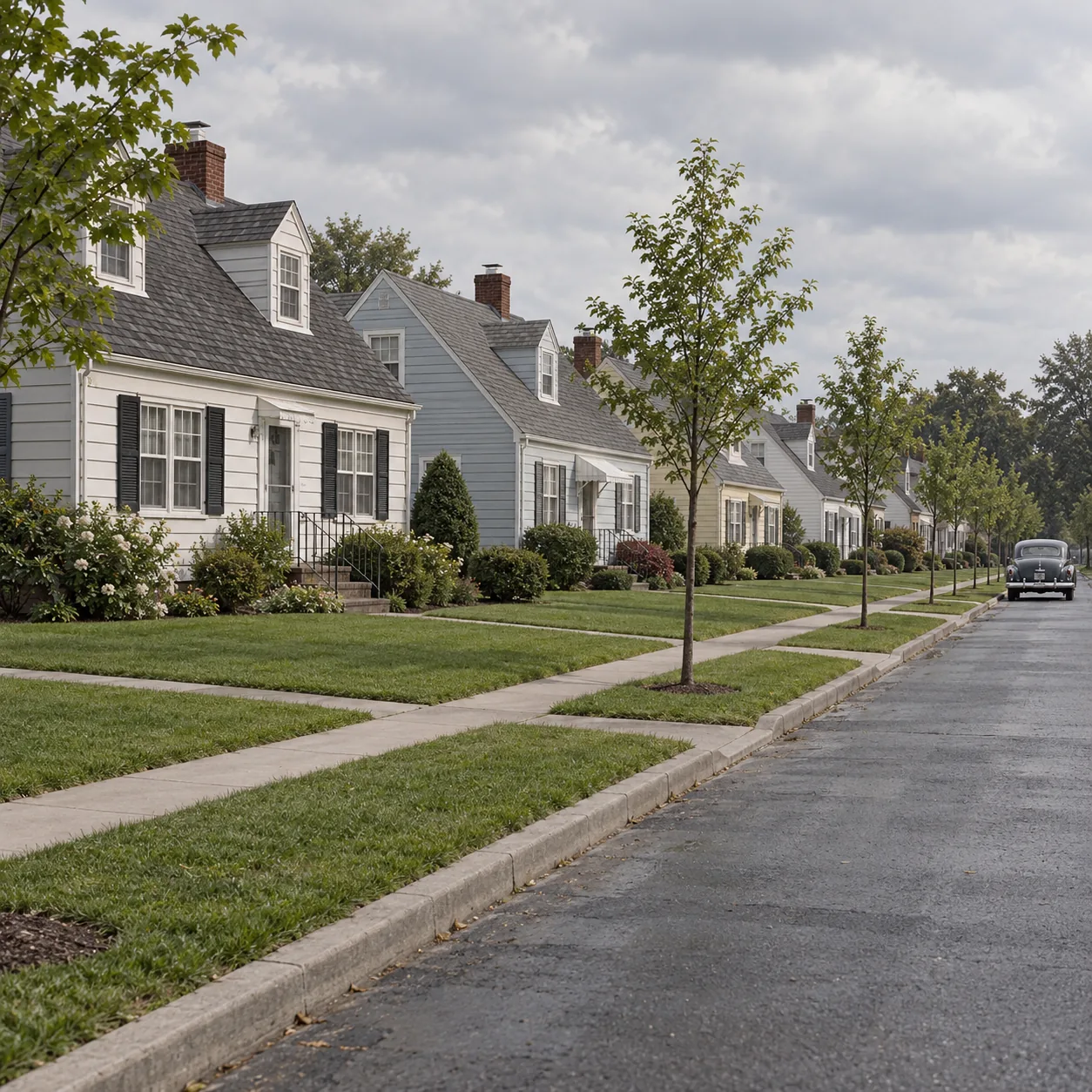
Generated interpretation, not documentary evidence. AI-generated imagined postwar American suburban street with repeated small houses and a period-inspired car; not an archival photograph of Levittown, New York.
Credit: AI-generated for Culture Ark using OpenAI image generation Reuse/status: Generated content; no exclusive ownership or underlying-work rights claimed Individually inspected: houses and street are visually coherent. Architecture and vehicle are invented; a quiet street image does not represent equal access or the full social history. No authentic-reference or endorsement claim.
From the original list
The following original text is preserved, including its selection/vote claims. Preservation is not independent verification of every assertion.
Why: The template of mass-produced suburbia.
What to preserve: Houses: high-resolution images or 3D scans, plus its making, meaning and history
Year and origin: 1947 · United States
Vote: 5/9 (historian 2 · future kid 1 · curator 2)
Learn more: Levittown, New York on Wikipedia
Supplemental context
Levittown, New York, became an important example of mass-produced postwar suburban housing. The National Park Service describes construction from 1947 to 1951 using limited house variations and an assembly-line approach in response to housing demand. Its significance is therefore both material and social: repeated designs helped organize building work and everyday domestic space. But the story is not one of equal access to a shared prosperity. Racial exclusion restricted who could participate, within a wider system of unequal housing opportunities and benefits. Preserving both dimensions allows future readers to study the suburb as a contested social arrangement, not simply a picturesque street of affordable homes.
Creator/community: Levitt & Sons, construction workers, residents and people excluded from access Place/era: Levittown, New York, United States; major postwar development beginning in 1947
Context and limits
This is the New York development, not another Levittown bearing the same name. Claims that it was the first planned suburb are not adopted. Restrictive covenants, lending discrimination and other exclusionary practices should not be collapsed into one interchangeable term. The illustration is a fictional streetscape, not evidence of actual houses, residents or a particular year.
Where to learn more
- https://apiarybee.com/community/reading/biggie-nu-series-008-noahs-ark-set-d-culture-2000
- https://home.nps.gov/articles/000/american-home-front-after-world-war-ii.htm
Apiary library | Original Culture Ark article
Public ID and individual routes: pending publisher allocation. Internal source ID: D-1536
Part of the Culture Ark: 2,000 things people should still be able to see in 2,000 years, picked by AI research teams. This page keeps the original list entry for D-1536 word for word and adds context. Browse the gallery. The Culture Ark is an Artificial Mind Hive (AMH) project. AMH is owned by Austin Little.

Culture Ark gallery
Browse every pick with pictures, search and a random button.
Open the gallery →