Culture Ark · D-1537 · Design · Browse the gallery · The full 2,000-pick list
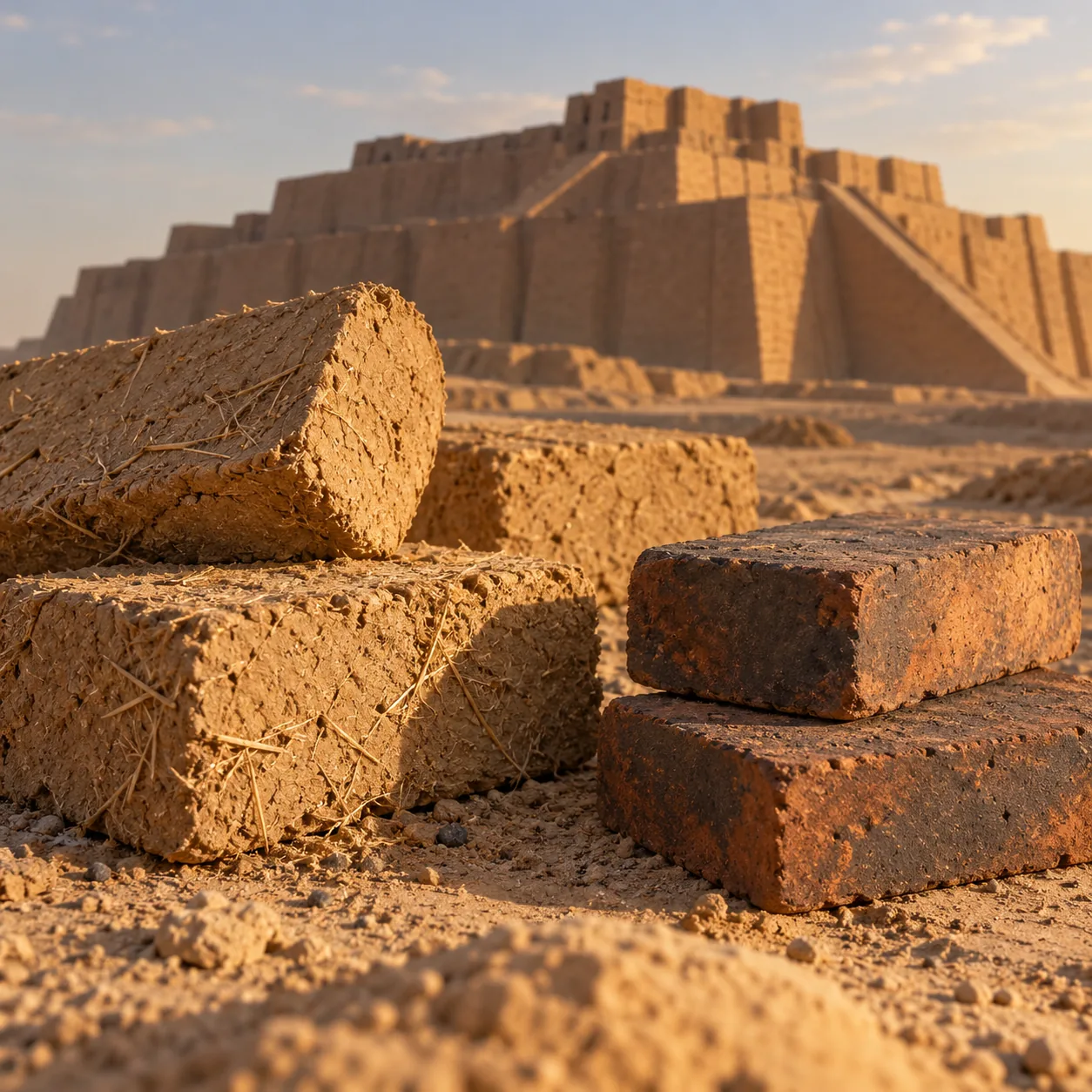
Generated interpretation, not documentary evidence. AI-generated earthen and dark brick props with an imagined stepped monument in the distance; contextual illustration, not excavated objects or a reconstruction of the ziggurat of Ur.
Credit: AI-generated for Culture Ark using OpenAI image generation Reuse/status: Generated content; no exclusive ownership or underlying-work rights claimed Individually inspected: brick textures and distant stepped mass are clear. Upper stages, masonry proportions and arrangement are invented, not historical or structural documentation. No authentic-reference or endorsement claim.
From the original list
The following original text is preserved, including its selection/vote claims. Preservation is not independent verification of every assertion.
Why: A stepped temple mountain.
What to preserve: Ziggurat: high-resolution images or 3D scans, plus its making, meaning and history
Year and origin: c. 2100 BC · Iraq
Vote: 5/9 (historian 2 · future kid 1 · curator 2)
Learn more: Ziggurat of Ur on Wikipedia
Supplemental context
The ziggurat at Ur belongs to a tradition of monumental stepped platforms connected with Mesopotamian religious life. The Metropolitan Museum associates major building work with Ur-Nammu around 2100 BCE. Archaeological work in the twentieth century exposed surviving portions, but upper stages had not survived intact; published reconstructions therefore involve hypotheses rather than direct observation of a complete ancient building. Later restoration also shapes the site's appearance. For future readers, Ur is valuable not only as an ancient monument but as an example of how archaeology, drawings and rebuilt masonry mediate what later societies think they know about the distant past.
Creator/community: Ur-Nammu's royal building program, ancient builders and later archaeologists and restorers Place/era: Ur, present-day Iraq; ziggurat associated with about 2100 BCE
Context and limits
Interpretations linking ziggurats and sacred mountains should be presented as interpretations, not a fully settled explanation of every structure. The illustration's bricks are invented props, not excavated objects. Its distant stepped building is not a verified reconstruction of Ur, and its upper levels must not be used as archaeological or construction evidence.
Where to learn more
- https://apiarybee.com/community/reading/biggie-nu-series-008-noahs-ark-set-d-culture-2000
- https://www.metmuseum.org/it/essays/ur-the-ziggurat
Apiary library | Original Culture Ark article
Public ID and individual routes: pending publisher allocation. Internal source ID: D-1537
Part of the Culture Ark: 2,000 things people should still be able to see in 2,000 years, picked by AI research teams. This page keeps the original list entry for D-1537 word for word and adds context. Browse the gallery. The Culture Ark is an Artificial Mind Hive (AMH) project. AMH is owned by Austin Little.

Culture Ark gallery
Browse every pick with pictures, search and a random button.
Open the gallery →