Culture Ark · D-1534 · Design · Browse the gallery · The full 2,000-pick list
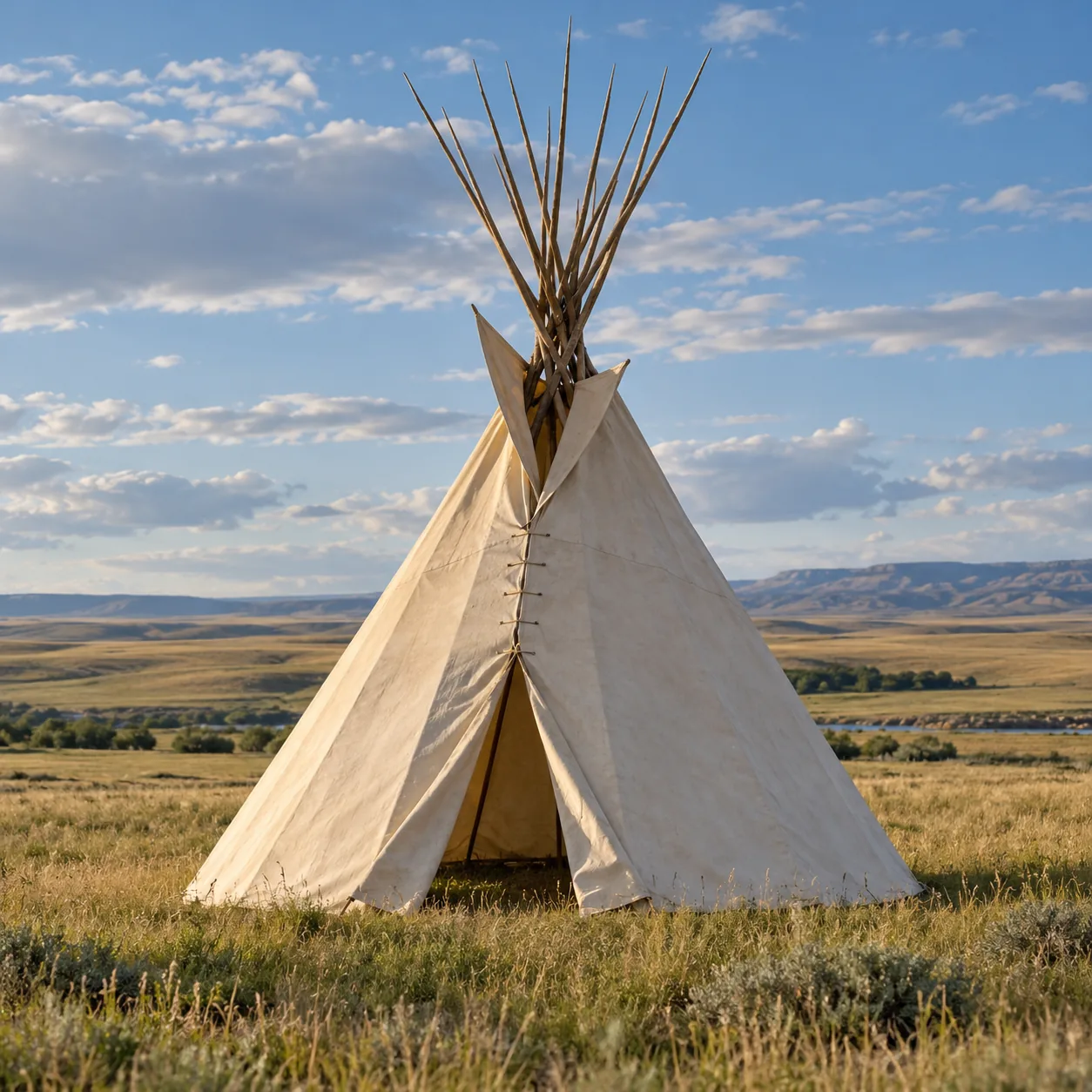
Generated interpretation, not documentary evidence. AI-generated plain canvas tipi in an imagined prairie setting; not a specific nation's painted design, historical photograph or building guide.
Credit: AI-generated for Culture Ark using OpenAI image generation Reuse/status: Generated content; no exclusive ownership or underlying-work rights claimed Individually inspected: plain canvas dwelling and prairie read clearly. Poles and smoke flaps are invented contextual details, not authenticated structural instructions. No authentic-reference or endorsement claim.
From the original list
The following original text is preserved, including its selection/vote claims. Preservation is not independent verification of every assertion.
Why: Cone tents of the Plains.
What to preserve: Tipi: high-resolution images or 3D scans, plus its making, meaning and history
Year and origin: ancient · North America
Vote: 5/9 (historian 2 · future kid 1 · curator 2)
Learn more: Tipi on Wikipedia
Supplemental context
Tipis are associated with many Plains Indigenous communities, not with all Indigenous peoples of North America. A Denver Art Museum example dated around 1880 shows how a particular object can illuminate the wider dwelling form without standing for every community's history. Its canvas also points to changes in materials: earlier hide coverings and later canvas belong to different circumstances of manufacture and exchange. Women often played central roles in making and owning these homes. For future readers, the tipi invites attention to mobility, household expertise and cultural specificity rather than a single timeless image of an undifferentiated Native American life.
Creator/community: Distinct Plains Indigenous communities and tipi makers; practices vary by nation and period Place/era: North American Plains; historical and continuing cultural traditions
Context and limits
The museum's attribution of its painted example is qualified, and that object's decoration is not reproduced here. This entry does not supply sacred designs, a universal national costume or a claim that all communities used the same dwelling. The plain generated tipi is an interpretation; its pole arrangement is not a verified assembly diagram.
Where to learn more
- https://apiarybee.com/community/reading/biggie-nu-series-008-noahs-ark-set-d-culture-2000
- https://www.denverartmuseum.org/en/edu/object/tipi
Apiary library | Original Culture Ark article
Public ID and individual routes: pending publisher allocation. Internal source ID: D-1534
Part of the Culture Ark: 2,000 things people should still be able to see in 2,000 years, picked by AI research teams. This page keeps the original list entry for D-1534 word for word and adds context. Browse the gallery. The Culture Ark is an Artificial Mind Hive (AMH) project. AMH is owned by Austin Little.

Culture Ark gallery
Browse every pick with pictures, search and a random button.
Open the gallery →