Culture Ark · D-1539 · Design · Browse the gallery · The full 2,000-pick list
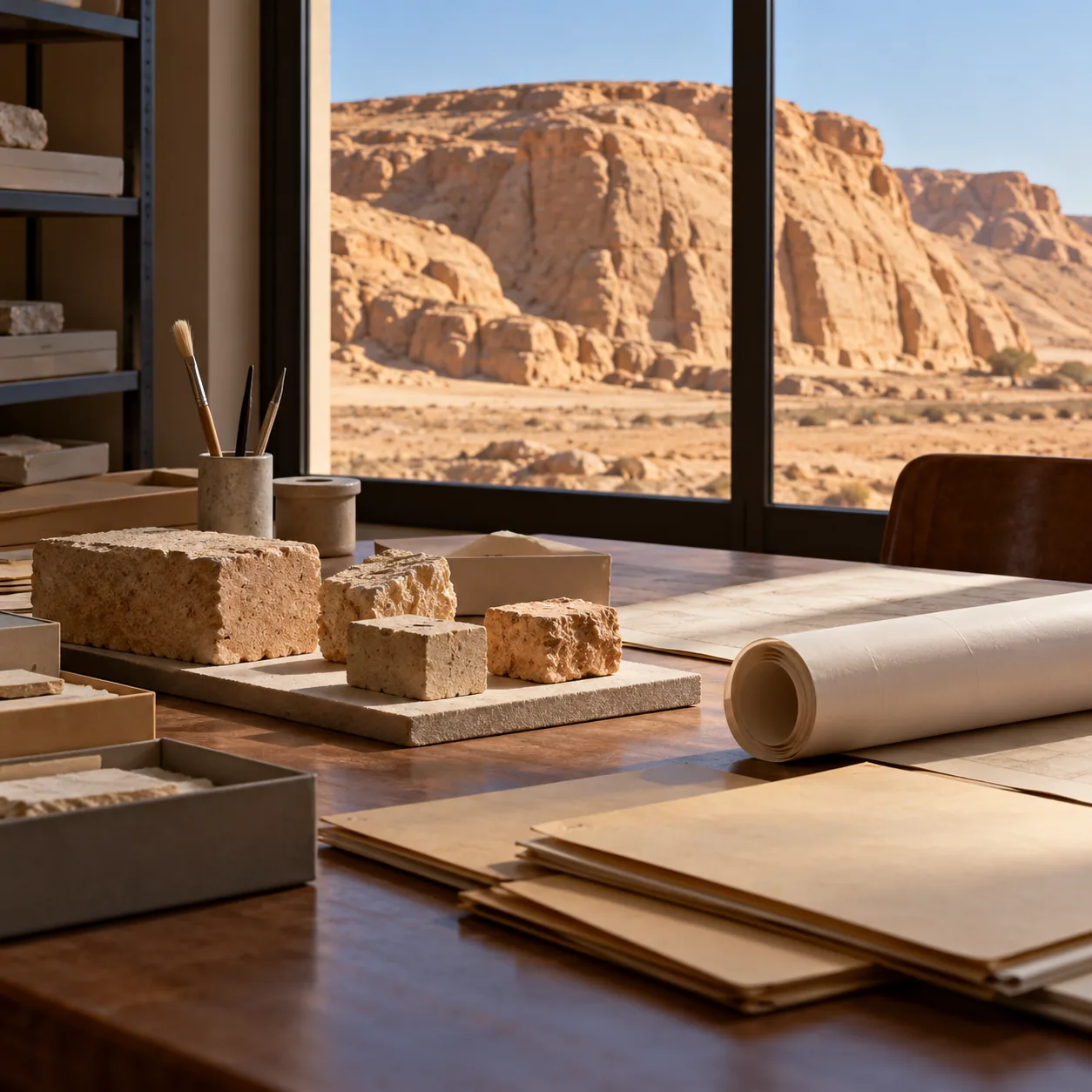
Generated interpretation, not documentary evidence. AI-generated sandstone blocks and blank paper on an imagined conservation desk overlooking a desert; contextual reflection on preservation, not Abu Simbel fragments or its relocation project.
Credit: AI-generated for Culture Ark using OpenAI image generation Reuse/status: Generated content; no exclusive ownership or underlying-work rights claimed Individually inspected: stone props and quiet workspace are coherent. All objects and setting are invented; no actual archaeological material or technical conservation procedure is claimed. No authentic-reference or endorsement claim.
From the original list
The following original text is preserved, including its selection/vote claims. Preservation is not independent verification of every assertion.
Why: Temples moved to save them.
What to preserve: Temples, 1960s relocation
Year and origin: c. 1264 BC · Egypt
Vote: 5/9 (historian 2 · future kid 1 · curator 2)
Learn more: Abu Simbel on Wikipedia
Supplemental context
Abu Simbel comprises two rock-cut temples associated with Ramesses II. The larger temple and the smaller sanctuary linked with Hathor and Nefertari connect royal representation with religious architecture. Their modern history is also central to the selection: relocation, completed in 1968, protected the monuments from inundation associated with the Aswan High Dam. This makes Abu Simbel an example of cultural preservation through major physical intervention, not simply an ancient place left untouched. Future readers can ask what is retained when a monument is moved—its carved material, visual relationships and public meaning—and what must be explained about its changed setting.
Creator/community: Ramesses II's builders and artists; modern Egyptian and international conservation teams Place/era: Abu Simbel, Egypt; New Kingdom temples, relocated in the twentieth century
Context and limits
The original approximate ancient date is not a date for every part of the complex or its present setting. The monuments are not still in their original rock-cut location. The conservation-themed image is wholly invented: no actual temple fragments, 1960s workroom or relocation procedure is depicted, and it provides no handling or engineering instructions.
Where to learn more
- https://apiarybee.com/community/reading/biggie-nu-series-008-noahs-ark-set-d-culture-2000
- https://egymonuments.gov.eg/archaeological-sites/abu-simbel/
Apiary library | Original Culture Ark article
Public ID and individual routes: pending publisher allocation. Internal source ID: D-1539
Part of the Culture Ark: 2,000 things people should still be able to see in 2,000 years, picked by AI research teams. This page keeps the original list entry for D-1539 word for word and adds context. Browse the gallery. The Culture Ark is an Artificial Mind Hive (AMH) project. AMH is owned by Austin Little.

Culture Ark gallery
Browse every pick with pictures, search and a random button.
Open the gallery →