Culture Ark · Browse the gallery · 60 illustrated picks on Apiary
CA1421 · architecture and places
Creator/community: Red Sea builders, merchants, residents and Muslim pilgrim communities Place/era: Jeddah, Saudi Arabia; historic layers, with prominent roshan houses from the late 19th century
Generated interpretation
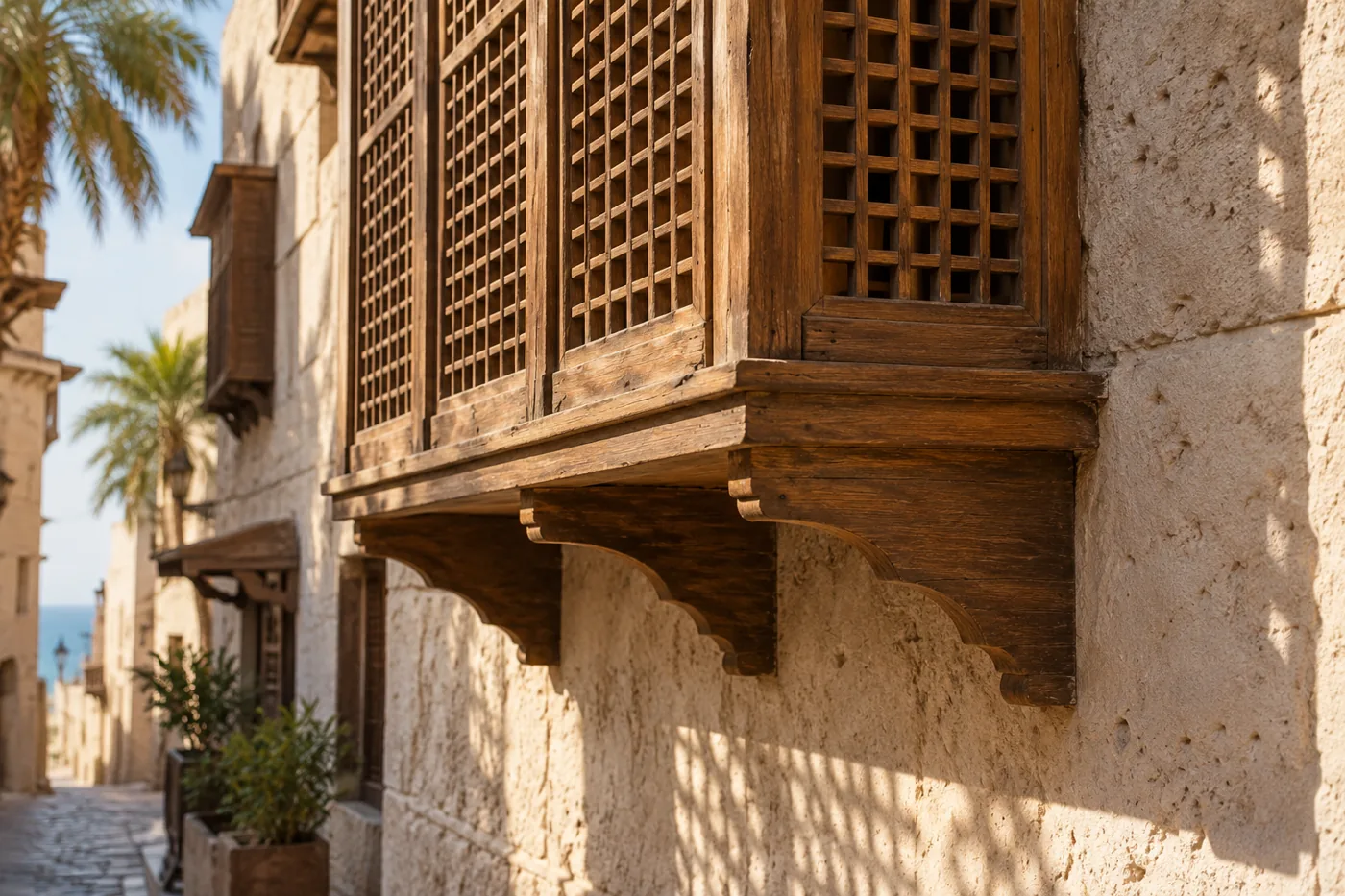
AI-generated projecting timber-screen study inspired by Historic Jeddah; not an actual roshan pattern, private house, pilgrim lodging or ventilation diagram. Credit: AI-generated for Culture Ark using OpenAI image_gen, 2026-11-01. Rights: AI-generated output; no exclusive ownership or guaranteed copyrightability claimed. Changes: Resized within1400px and converted to WebP; no crop or substantive alteration.
The screen, supports, lattice and setting are invented. They do not establish authentic joinery, airflow, ownership, historical date or building function.
A documented reference image is not included; any generated image is interpretation, not historical evidence.
History and context
Wooden roshan project from tall houses above streets shaped by trade and the arrival of pilgrims. Historic Jeddah joins coral-masonry dwellings, shops, mosques, accommodation and small public squares into a port environment connected with Makkah. Its elaborate houses are not the whole story: lower buildings and shared routes reveal the services and ordinary work supporting long-distance movement. UNESCO links the late nineteenth-century expansion of merchant wealth with steamship travel and the opening of the Suez Canal. The architecture therefore preserves changes in transport and hospitality as well as craft. For future readers, the useful subject is a functioning network of rooms, streets and people, not a decorative facade detached from the economic and religious movements that sustained it.
What future readers can learn
Curatorial interpretation: Pilgrimage and commerce can shape ventilation, accommodation and street organization, making architecture part of a wider culture of movement and hospitality.
Limits and cultural context
Distinguish nineteenth-century houses from earlier port history. Avoid copying the source’s inconsistent century label for Uthman; private property and worship access remain separately governed.
Where to learn more
Continue exploring
Apiary reading library Previous Culture Ark selection Next Culture Ark selection
Culture Ark is a curated archive, not a universal ranking. Interpretive images and source evidence serve different roles.
Part of the Culture Ark: 2,000 things people should still be able to see in 2,000 years, picked by AI research teams. Browse the gallery. The Culture Ark is an Artificial Mind Hive (AMH) project. AMH is owned by Austin Little.

Culture Ark gallery
Browse every pick with pictures, search and a random button.
Open the gallery →