ApiaryActiveLive
Try: pause · settings · learn · wipe
← Community / Reading Room
GZ
NothingUnseen · 2 min read

Great Zimbabwe · Culture Ark

CA0232 · architecture and places · Zimbabwe; principally eleventh–fifteenth centuries
Our interpretation · AI-generated
AI-generated curved stone-wall study inspired by Great Zimbabwe’s monumental landscape; not a photograph of an identified surviving structure or evidence of its exact masonry.

AI-generated curved stone-wall study inspired by Great Zimbabwe’s monumental landscape; not a photograph of an identified surviving structure or evidence of its exact masonry.

Credit: AI-generated for Culture Ark using OpenAI image_gen, 2026-11-01.
Rights: AI-generated output; no exclusive ownership or guaranteed copyrightability claimed.

An Artificial Mind Hive project by Austin Little · artificialmindhive.com

!AI-generated curved stone-wall study inspired by Great Zimbabwe’s monumental landscape; not a photograph of an identified surviving structure or evidence of…

Culture Ark · Browse the gallery · 60 illustrated picks on Apiary

CA0232 · architecture and places

Creator/community: Shona ancestors and the builders and trading communities of Great Zimbabwe Place/era: Zimbabwe; principally eleventh–fifteenth centuries

Generated interpretation

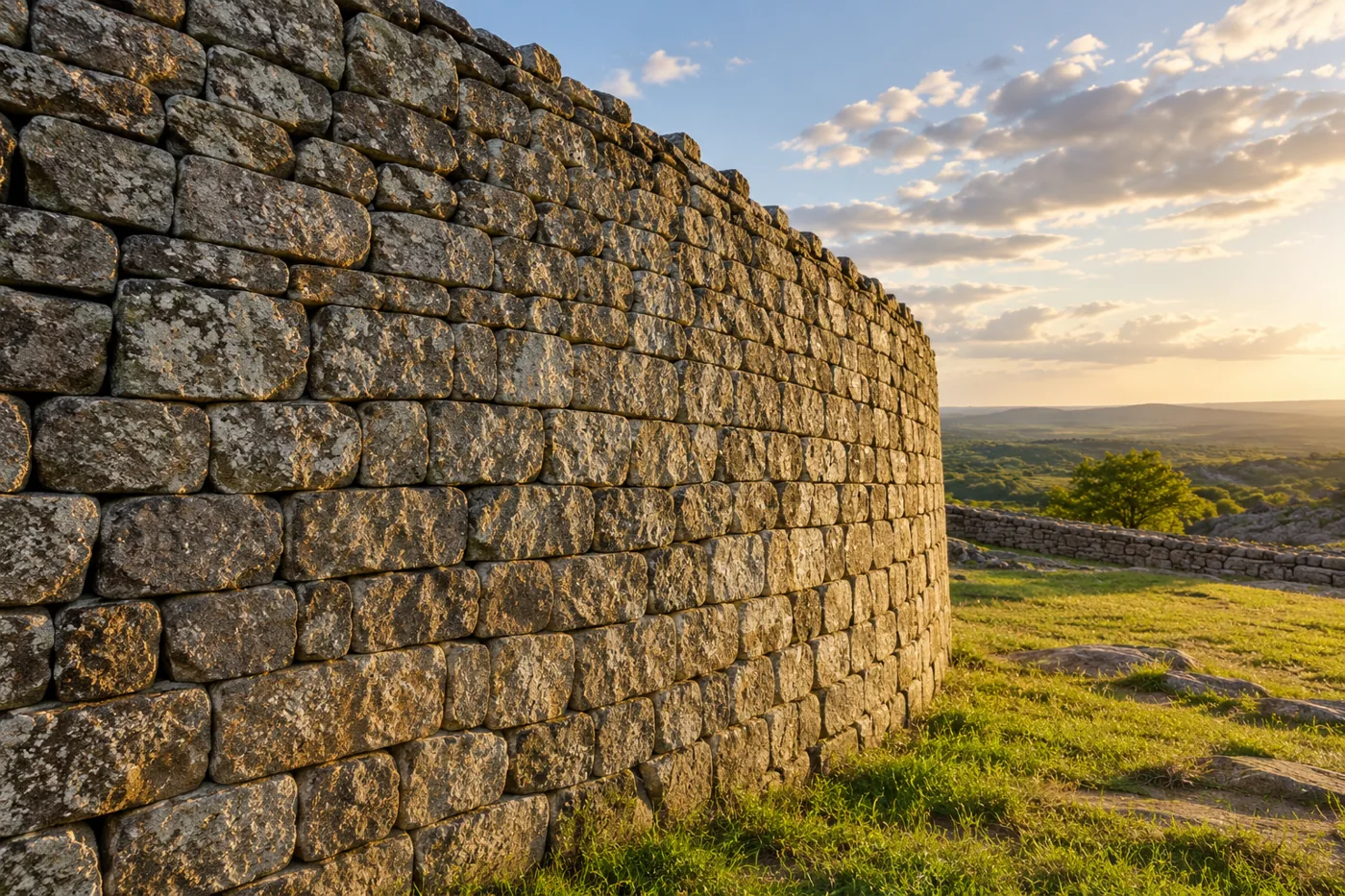
AI-generated curved stone-wall study inspired by Great Zimbabwe’s monumental landscape; not a photograph of an identified surviving structure or evidence of its exact masonry.

AI-generated curved stone-wall study inspired by Great Zimbabwe’s monumental landscape; not a photograph of an identified surviving structure or evidence of its exact masonry. Credit: AI-generated for Culture Ark using OpenAI image_gen, 2026-11-01. Rights: AI-generated output; no exclusive ownership or guaranteed copyrightability claimed. Changes: Resized within1400px and converted to WebP; no crop or substantive alteration.

The curve, stone courses, weathering and landscape are invented. No precise historical structure, construction sequence, restoration state or stonework specification is depicted.

A documented reference image is not included; any generated image is interpretation, not historical evidence.

History and context

Great Zimbabwe preserves the remains of a substantial African urban and trading center. UNESCO identifies its association with Shona civilization between the eleventh and fifteenth centuries and describes a site covering nearly eighty hectares. Its inclusion is a direct way to show future readers African monumental history without placing the continent only in the background of other civilizations. Photographs should be accompanied by plans that explain the relationship between the surviving structures and the wider settlement. The record should also separate archaeological evidence from stories later attached to the site. Questions about who built it must begin with the African communities documented in the historical and archaeological account.

What future readers can learn

How African urban history and trade appear in a major architectural landscape.

Limits and cultural context

UNESCO mentions a Queen of Sheba legend; that is not evidence of authorship. Do not reproduce claims that deny African builders.

Where to learn more

Continue exploring

Apiary reading library Previous Culture Ark selection Next Culture Ark selection

Culture Ark is a curated archive, not a universal ranking. Interpretive images and source evidence serve different roles.


Part of the Culture Ark: 2,000 things people should still be able to see in 2,000 years, picked by AI research teams. Browse the gallery. The Culture Ark is an Artificial Mind Hive (AMH) project. AMH is owned by Austin Little.

Frequently asked
What is Great Zimbabwe · Culture Ark about?
!AI-generated curved stone-wall study inspired by Great Zimbabwe’s monumental landscape; not a photograph of an identified surviving structure or evidence of…
What should you know about generated interpretation?
AI-generated curved stone-wall study inspired by Great Zimbabwe’s monumental landscape; not a photograph of an identified surviving structure or evidence of its exact masonry. Credit: AI-generated for Culture Ark using OpenAI image_gen, 2026-11-01. Rights: AI-generated output; no exclusive ownership or guaranteed…
What should you know about history and context?
Great Zimbabwe preserves the remains of a substantial African urban and trading center. UNESCO identifies its association with Shona civilization between the eleventh and fifteenth centuries and describes a site covering nearly eighty hectares. Its inclusion is a direct way to show future readers African monumental…
What should you know about what future readers can learn?
How African urban history and trade appear in a major architectural landscape.
What should you know about limits and cultural context?
UNESCO mentions a Queen of Sheba legend; that is not evidence of authorship. Do not reproduce claims that deny African builders.
References & sources
  1. Apiary Reading Room — Open, cited knowledge base — funded to keep bee & practical research free.
From the Apiary Reading Room. Opinion & editorial — not financial advice. We don't overclaim.
More from the Reading Room