Culture Ark · Browse the gallery · 60 illustrated picks on Apiary
CA0229 · architecture and places
Creator/community: Korean Buddhist patrons, artists, builders and custodians Place/era: Gyeongju, Republic of Korea; especially seventh–tenth-century heritage
Generated interpretation
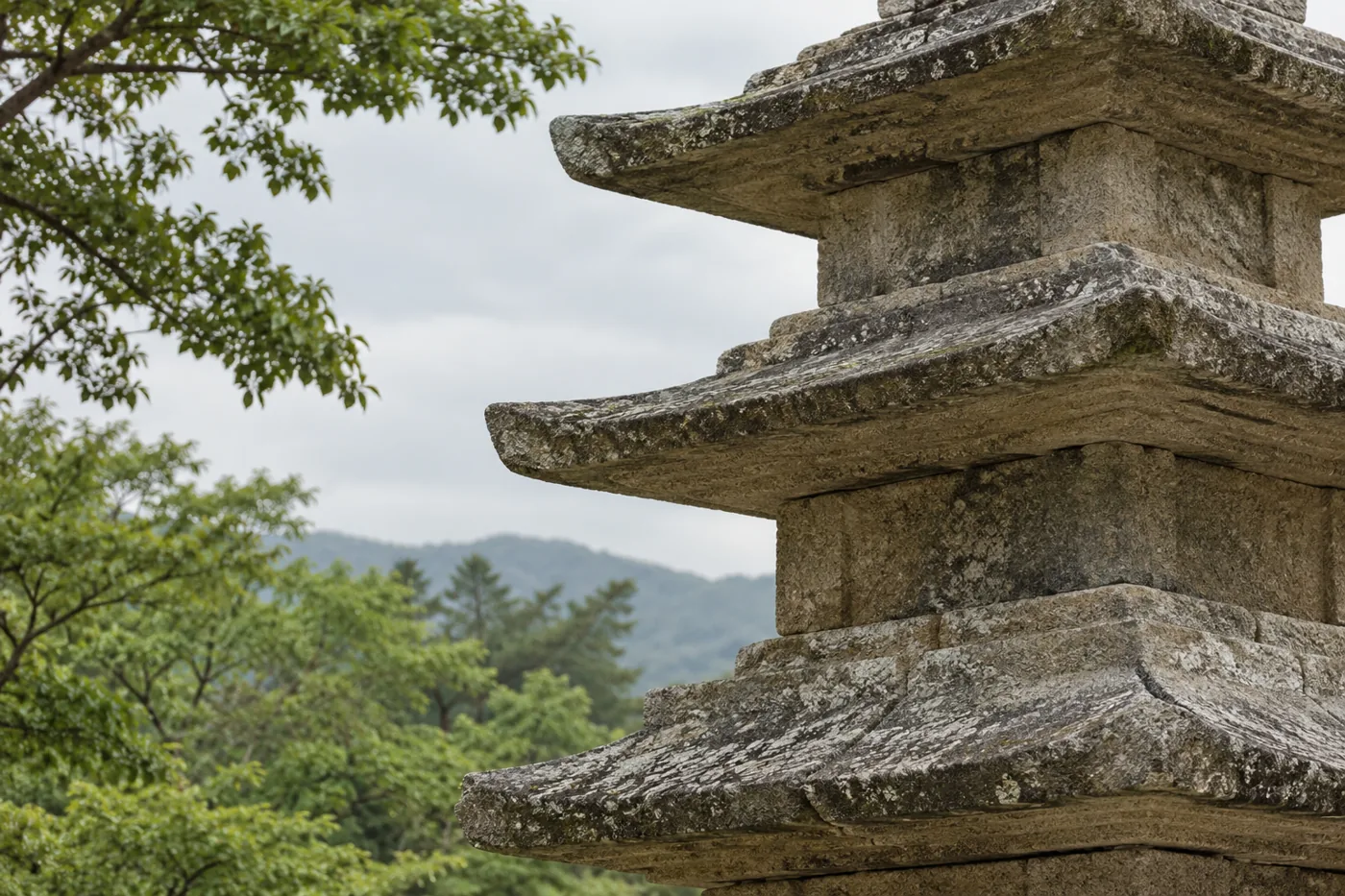
AI-generated tiered granite-form study inspired by Gyeongju’s Buddhist built heritage; not an identified pagoda, an authentic fragment or a restoration proposal. Credit: AI-generated for Culture Ark using OpenAI image_gen, 2026-11-01. Rights: AI-generated output; no exclusive ownership or guaranteed copyrightability claimed. Changes: Resized within1400px and converted to WebP; no crop or substantive alteration.
The tier proportions, masonry, weathering and landscape are invented. This is not a record of a particular Korean monument, its date, its condition or its repair needs.
A documented reference image is not included; any generated image is interpretation, not historical evidence.
History and context
Gyeongju preserves Buddhist heritage in several forms: sculpture, reliefs, pagodas, and remains of temples and palaces. UNESCO emphasizes the concentration of these works and their flowering particularly between the seventh and tenth centuries. The selection should therefore present an ensemble rather than elevate one photogenic object as the whole story. It offers future readers a way to compare religious imagery with the spaces where it stood and the political world around it. A record of a pagoda beside a site plan is more informative than an unlabeled stone structure. The archive should identify each chosen monument and avoid making the entire historic area appear contemporary with itself.
What future readers can learn
How Buddhist visual culture and built environments relate across a historic city.
Limits and cultural context
The property includes multiple areas and periods. Individual objects need specific dates and provenance rather than a blanket date.
Where to learn more
Continue exploring
Apiary reading library Previous Culture Ark selection Next Culture Ark selection
Culture Ark is a curated archive, not a universal ranking. Interpretive images and source evidence serve different roles.
Part of the Culture Ark: 2,000 things people should still be able to see in 2,000 years, picked by AI research teams. Browse the gallery. The Culture Ark is an Artificial Mind Hive (AMH) project. AMH is owned by Austin Little.

Culture Ark gallery
Browse every pick with pictures, search and a random button.
Open the gallery →