ApiaryActiveLive
Try: pause · settings · learn · wipe
← Community / Reading Room
TM
NothingUnseen · 2 min read

Taj Mahal · Culture Ark

CA0221 · architecture and places · Agra, India; 1631–1648
Our interpretation · AI-generated
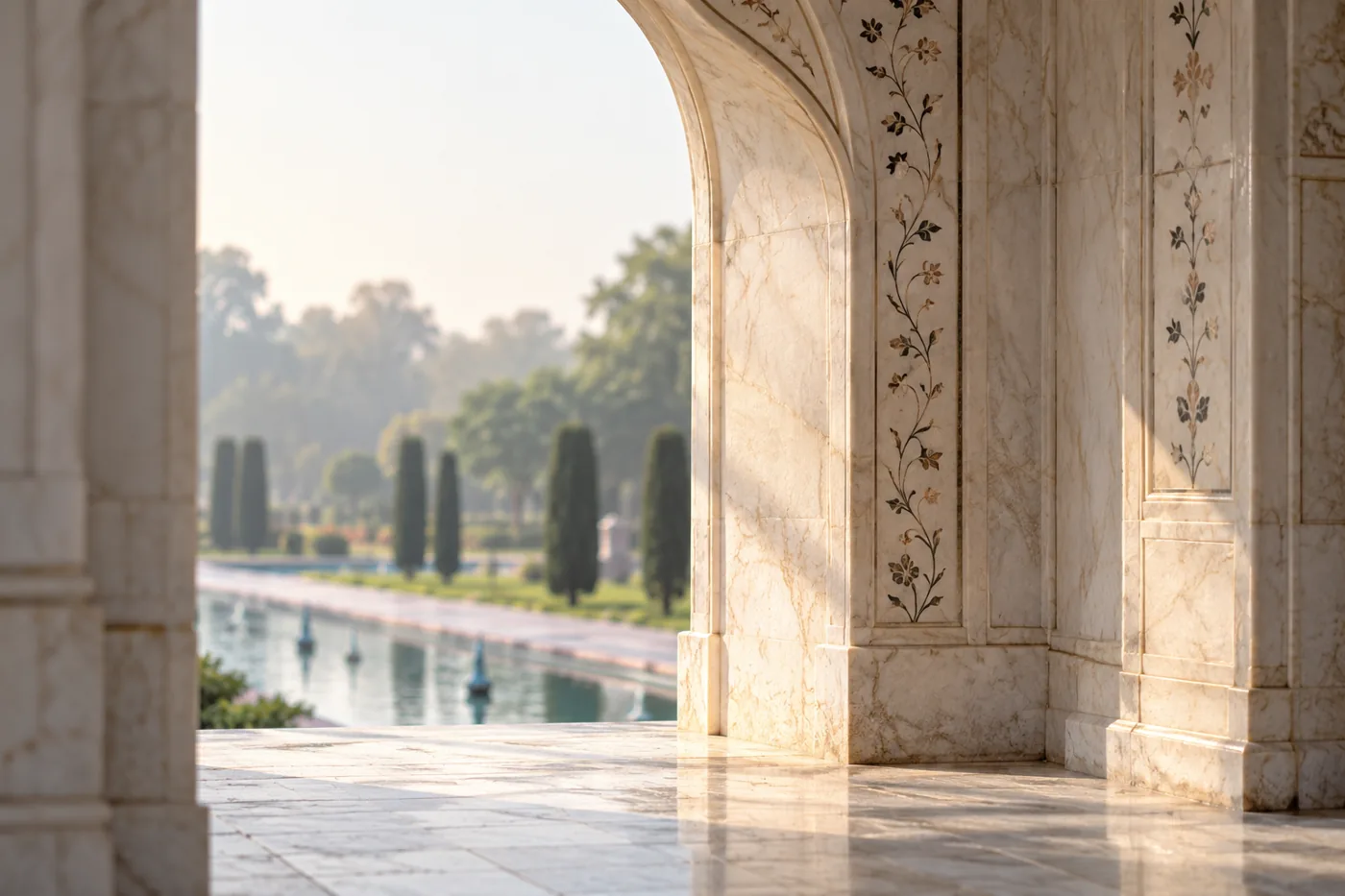
AI-generated white-marble threshold and garden study inspired by the Taj Mahal entry; not a photograph of an actual doorway, an exact inlay pattern or a reconstruction of the mausoleum.

AI-generated white-marble threshold and garden study inspired by the Taj Mahal entry; not a photograph of an actual doorway, an exact inlay pattern or a reconstruction of the mausoleum.

Credit: AI-generated for Culture Ark using OpenAI image_gen, 2026-11-01.
Rights: AI-generated output; no exclusive ownership or guaranteed copyrightability claimed.

An Artificial Mind Hive project by Austin Little · artificialmindhive.com

!AI-generated white-marble threshold and garden study inspired by the Taj Mahal entry; not a photograph of an actual doorway, an exact inlay pattern or a…

Culture Ark · Browse the gallery · 60 illustrated picks on Apiary

CA0221 · architecture and places

Creator/community: Mughal patron Shah Jahan and the builders and craftspeople of the mausoleum Place/era: Agra, India; 1631–1648

Generated interpretation

AI-generated white-marble threshold and garden study inspired by the Taj Mahal entry; not a photograph of an actual doorway, an exact inlay pattern or a reconstruction of the mausoleum.

AI-generated white-marble threshold and garden study inspired by the Taj Mahal entry; not a photograph of an actual doorway, an exact inlay pattern or a reconstruction of the mausoleum. Credit: AI-generated for Culture Ark using OpenAI image_gen, 2026-11-01. Rights: AI-generated output; no exclusive ownership or guaranteed copyrightability claimed. Changes: Resized within1400px and converted to WebP; no crop or substantive alteration.

The arch, ornament, garden arrangement and viewpoint are invented. They cannot establish the site’s exact geometry, workmanship, condition or original appearance.

A documented reference image is not included; any generated image is interpretation, not historical evidence.

History and context

The Taj Mahal is a white-marble mausoleum commissioned by the Mughal emperor Shah Jahan in memory of his wife. UNESCO dates its construction in Agra to 1631–1648. It belongs in a cultural collection as an encounter between mourning, imperial resources and architectural form, not just as a familiar tourist image. Its identity as a tomb matters: a future reader looking only at the exterior could mistake it for a palace. A useful record would pair a dated overall view with a plan and close descriptions of materials, keeping the people commemorated and the workers who made the complex visible alongside the famous patron.

What future readers can learn

How grief and political power can take monumental architectural form.

Limits and cultural context

Do not reduce Mughal architecture or Indian Muslim culture to this one monument. Patronage does not imply one person designed or built every element.

Where to learn more

Continue exploring

Apiary reading library Next Culture Ark selection

Culture Ark is a curated archive, not a universal ranking. Interpretive images and source evidence serve different roles.


Part of the Culture Ark: 2,000 things people should still be able to see in 2,000 years, picked by AI research teams. Browse the gallery. The Culture Ark is an Artificial Mind Hive (AMH) project. AMH is owned by Austin Little.

Frequently asked
What is Taj Mahal · Culture Ark about?
!AI-generated white-marble threshold and garden study inspired by the Taj Mahal entry; not a photograph of an actual doorway, an exact inlay pattern or a…
What should you know about generated interpretation?
AI-generated white-marble threshold and garden study inspired by the Taj Mahal entry; not a photograph of an actual doorway, an exact inlay pattern or a reconstruction of the mausoleum. Credit: AI-generated for Culture Ark using OpenAI image_gen, 2026-11-01. Rights: AI-generated output; no exclusive ownership or…
What should you know about history and context?
The Taj Mahal is a white-marble mausoleum commissioned by the Mughal emperor Shah Jahan in memory of his wife. UNESCO dates its construction in Agra to 1631–1648. It belongs in a cultural collection as an encounter between mourning, imperial resources and architectural form, not just as a familiar tourist image. Its…
What should you know about what future readers can learn?
How grief and political power can take monumental architectural form.
What should you know about limits and cultural context?
Do not reduce Mughal architecture or Indian Muslim culture to this one monument. Patronage does not imply one person designed or built every element.
References & sources
  1. Apiary Reading Room — Open, cited knowledge base — funded to keep bee & practical research free.
From the Apiary Reading Room. Opinion & editorial — not financial advice. We don't overclaim.
More from the Reading Room