Culture Ark · D-1597 · Design · Browse the gallery · The full 2,000-pick list
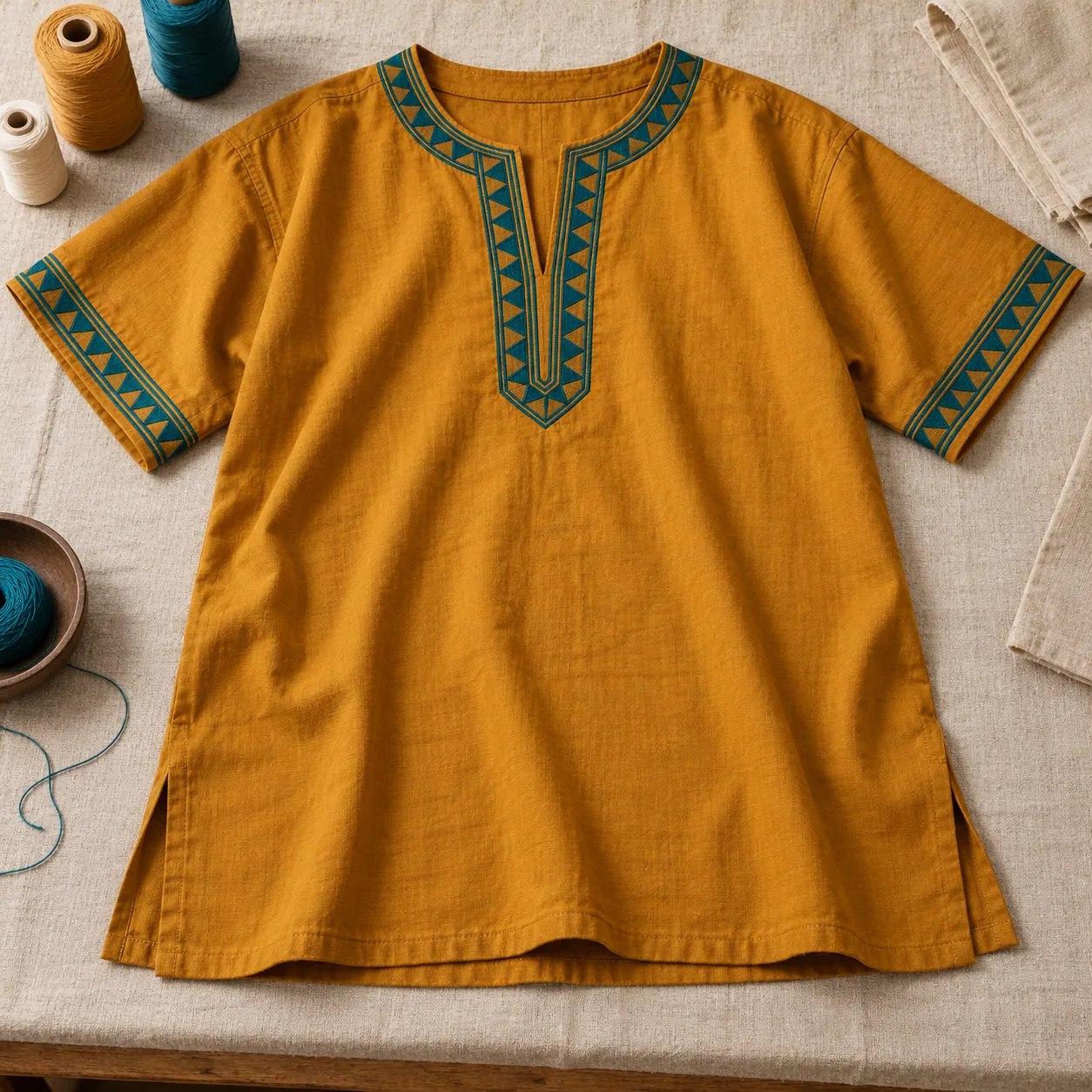
Generated interpretation, not documentary evidence. AI-generated invented ochre pullover tunic with simple teal geometric trim; a contemporary garment study, not an authenticated traditional design or Angelina print.
Credit: AI-generated for Culture Ark using OpenAI image generation Reuse/status: Generated content; no exclusive ownership or underlying-work rights claimed Individually inspected: loose tunic, slit neckline and cloth texture are legible. Geometric trim is invented and carries no asserted community-specific or sacred meaning. No authentic-reference or endorsement claim.
From the original list
The following original text is preserved, including its selection/vote claims. Preservation is not independent verification of every assertion.
Why: A colourful tunic that became a pan-African and civil rights statement.
What to preserve: Angelina print, Black Power era
Year and origin: 1960s · West Africa
Vote: 3/9 (historian 1 · future kid 1 · curator 1)
Learn more: Dashiki on Wikipedia
Supplemental context
The dashiki connects a loose pullover garment with histories of African heritage and diasporic self-expression. The Fashion Institute of Technology's Fashion History Timeline describes varied forms, including solid-color and printed fabrics, with decoration sometimes woven or embroidered and sometimes part of the fabric print. Its United States prominence in the 1960s was linked with Black pride and wider countercultural fashion. These relationships are not a single moment of invention in West Africa. For future readers, the garment illustrates how clothing can express chosen affiliations across distance while retaining practical variations in cut, material and making. A generic colorful tunic cannot explain every wearer's identity.
Creator/community: West African garment-making communities and African diasporic makers and wearers Place/era: West Africa and diaspora; prominent United States adoption in the 1960s
Context and limits
The original 1960s date fits a period of diasporic visibility, not the beginning of all West African tunic traditions. The garment category is not synonymous with one Angelina print. This illustration uses invented trim without named symbolism and does not reproduce a museum garment, certify cultural authenticity or represent all West African communities.
Where to learn more
- https://apiarybee.com/community/reading/biggie-nu-series-008-noahs-ark-set-d-culture-2000
- https://fashionhistory.fitnyc.edu/dashiki/
Apiary library | Original Culture Ark article
Public ID and individual routes: pending publisher allocation. Internal source ID: D-1597
Part of the Culture Ark: 2,000 things people should still be able to see in 2,000 years, picked by AI research teams. This page keeps the original list entry for D-1597 word for word and adds context. Browse the gallery. The Culture Ark is an Artificial Mind Hive (AMH) project. AMH is owned by Austin Little.

Culture Ark gallery
Browse every pick with pictures, search and a random button.
Open the gallery →