Culture Ark · D-1593 · Design · Browse the gallery · The full 2,000-pick list
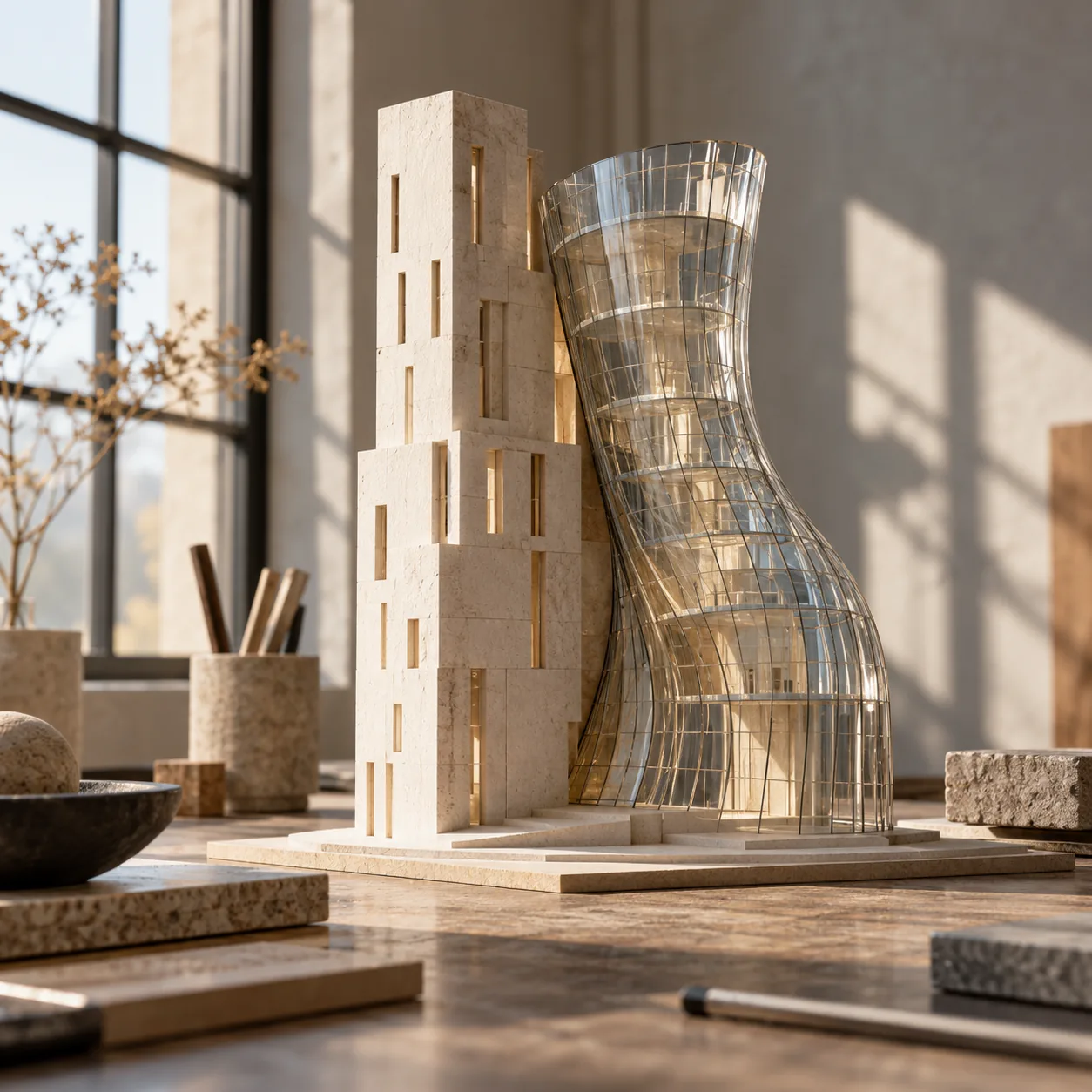
Generated interpretation, not documentary evidence. AI-generated tabletop study pairing an invented solid tower with a curving transparent form; an architectural metaphor inspired by the Dancing House, not a model of the actual building.
Credit: AI-generated for Culture Ark using OpenAI image generation Reuse/status: Generated content; no exclusive ownership or underlying-work rights claimed Individually inspected: contrasting forms, tabletop and lighting are coherent. Openings, frames and proportions are fictional, with no functional engineering claim. No authentic-reference or endorsement claim.
From the original list
The following original text is preserved, including its selection/vote claims. Preservation is not independent verification of every assertion.
Why: Fred and Ginger.
What to preserve: Building: high-resolution images or 3D scans, plus its making, meaning and history
Year and origin: 1996 · Czech Republic
Vote: 3/9 (historian 0 · future kid 2 · curator 1)
Learn more: Dancing House on Wikipedia
Supplemental context
The Dancing House gave a new architectural expression to Prague's riverfront in the 1990s. Prague City Tourism identifies Vlado Milunić and Frank Gehry as its collaborating architects and explains the familiar Fred and Ginger comparison through the contrasting solid and glass towers. The metaphor links architecture to movement and to cinema's celebrated dance partnership, without turning the building into a literal portrait. The site had previously held a house destroyed in the 1945 bombing of Prague. For future readers, the project illustrates how a contemporary building can enter an inherited streetscape while acquiring a public identity through an easily remembered nickname.
Creator/community: Vlado Milunić and Frank Gehry; Eva Jiřičná contributed to interiors Place/era: Prague, Czech Republic; building completed in 1996
Context and limits
Fred and Ginger is an architectural metaphor, not a claim that the dancers designed or occupied the building. The card shows invented tabletop forms exploring contrast and movement; it is not the actual Dancing House, an authorized architectural model, a facade record or a structural plan. Visitor services and access are not documented here.
Where to learn more
- https://apiarybee.com/community/reading/biggie-nu-series-008-noahs-ark-set-d-culture-2000
- https://prague.eu/en/objevujte/dancing-house-tancici-dum
Apiary library | Original Culture Ark article
Public ID and individual routes: pending publisher allocation. Internal source ID: D-1593
Part of the Culture Ark: 2,000 things people should still be able to see in 2,000 years, picked by AI research teams. This page keeps the original list entry for D-1593 word for word and adds context. Browse the gallery. The Culture Ark is an Artificial Mind Hive (AMH) project. AMH is owned by Austin Little.

Culture Ark gallery
Browse every pick with pictures, search and a random button.
Open the gallery →