Culture Ark · D-1592 · Design · Browse the gallery · The full 2,000-pick list
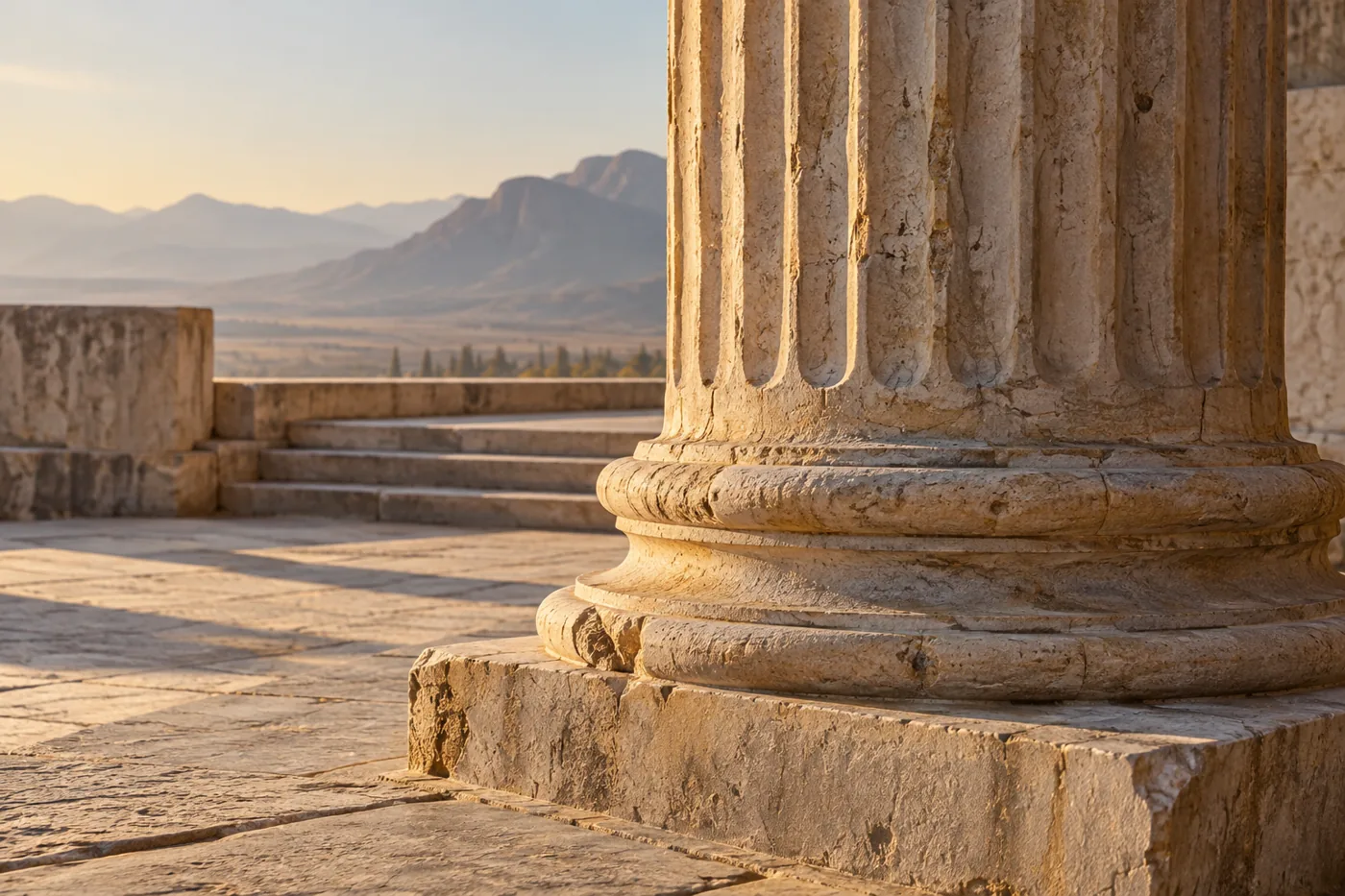
Generated interpretation, not documentary evidence. AI-generated column-base and terrace study inspired by Persepolis' courtly scale; not an identified surviving column, actual relief or exact palace reconstruction.
Credit: AI-generated for Culture Ark using OpenAI image generation Reuse/status: Generated content; no exclusive ownership or underlying-work rights claimed Reused CA0238 after individual visual inspection: fluted column base, terrace and distant landscape are coherent. Stone form and setting are invented rather than archaeological evidence. No authentic-reference or endorsement claim.
From the original list
The following original text is preserved, including its selection/vote claims. Preservation is not independent verification of every assertion.
Why: Ceremonial capital of the Persian Empire.
What to preserve: Reliefs: high-resolution images or 3D scans, plus its making, meaning and history
Year and origin: 518 BC · Iran
Vote: 3/9 (historian 2 · future kid 0 · curator 1)
Learn more: Persepolis on Wikipedia
Supplemental context
Persepolis was a major ceremonial capital of the Achaemenid Empire, begun under Darius I and expanded by successors. Its columned halls and sculpted stairways organized a highly visible language of royal power. A Metropolitan Museum limestone relief from the site depicts a Median figure in a procession and belongs to a later building phase, associated with Artaxerxes II rather than the site's initial foundation. This distinction matters for future readers: a monument's first date does not date every surviving fragment. The site offers a way to study how architecture, dress, repeated figures and movement through space helped make an imperial order visible.
Creator/community: Achaemenid royal patrons, builders and sculptors, beginning under Darius I Place/era: Persepolis, Fars, Iran; construction and expansion across successive Achaemenid reigns
Context and limits
The original 518 BCE date is retained as a broad foundation marker, not assigned to all reliefs. A museum fragment has its own provenance and chronology; it cannot represent an intact original stairway by itself. The reused illustration is an imagined column-base and terrace study, not a record of actual reliefs or an archaeological reconstruction.
Where to learn more
- https://apiarybee.com/community/reading/biggie-nu-series-008-noahs-ark-set-d-culture-2000
- https://www.metmuseum.org/art/collection/search/323723
Apiary library | Original Culture Ark article
Public ID and individual routes: pending publisher allocation. Internal source ID: D-1592
Part of the Culture Ark: 2,000 things people should still be able to see in 2,000 years, picked by AI research teams. This page keeps the original list entry for D-1592 word for word and adds context. Browse the gallery. The Culture Ark is an Artificial Mind Hive (AMH) project. AMH is owned by Austin Little.

Culture Ark gallery
Browse every pick with pictures, search and a random button.
Open the gallery →