Culture Ark · D-1594 · Design · Browse the gallery · The full 2,000-pick list
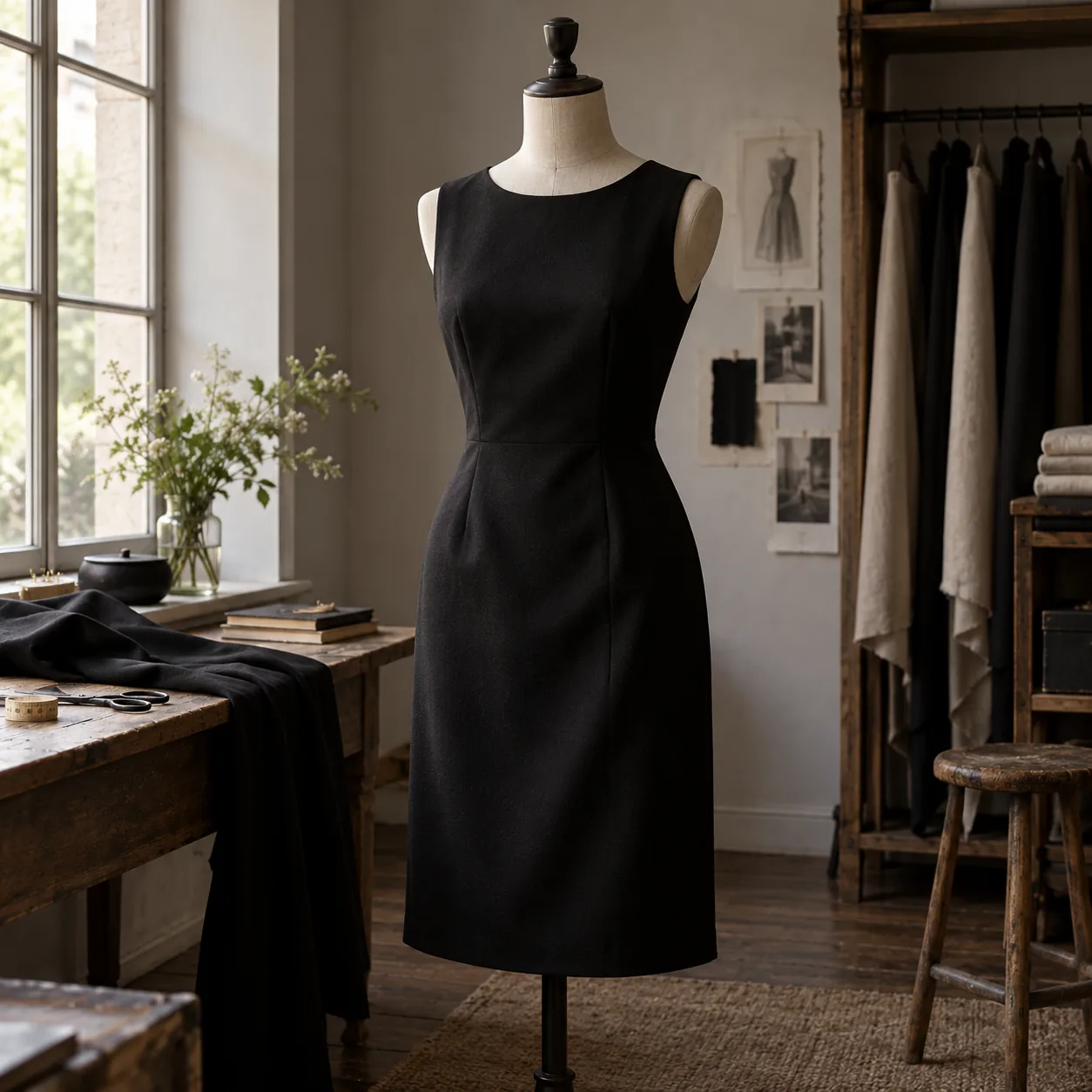
Generated interpretation, not documentary evidence. AI-generated invented plain black dress on a dressmaker's mannequin in a fictional workroom; not a Chanel, Givenchy or Audrey Hepburn costume reproduction.
Credit: AI-generated for Culture Ark using OpenAI image generation Reuse/status: Generated content; no exclusive ownership or underlying-work rights claimed Individually inspected: black fabric, seams and silhouette remain readable. Background sketches and workroom are fictional, not archival fashion evidence. No authentic-reference or endorsement claim.
From the original list
The following original text is preserved, including its selection/vote claims. Preservation is not independent verification of every assertion.
Why: Chanel's simple dress that every wardrobe was told to own.
What to preserve: Vogue 1926 'Ford' drawing, Audrey Hepburn's Givenchy dress
Year and origin: 1926 · France
Vote: 3/9 (historian 1 · future kid 1 · curator 1)
Learn more: Little black dress on Wikipedia
Supplemental context
The little black dress is best understood as an evolving fashion category rather than one unchanging garment. The Metropolitan Museum's account notes that black clothing already served formal and semi-formal occasions before Chanel's 1926 version. Her restrained silhouette became associated with a versatile modern wardrobe, while later designers changed materials and shapes to suit different decades. The museum's own example is a Karl Lagerfeld design for Chanel from autumn/winter 1987–88, not the original 1926 dress. For future readers, this distinction reveals how a design idea can become a social expectation while remaining open to reinterpretation through accessories, fabric and changing conventions.
Creator/community: Gabrielle Chanel and many subsequent designers, manufacturers and wearers Place/era: France and international fashion; Chanel's 1926 presentation and later reinterpretations
Context and limits
The original Vogue drawing and Audrey Hepburn's Givenchy dress are separate works, not interchangeable evidence of one design. The claim that every wardrobe should contain such a dress expresses a fashion prescription, not a universal need or actual practice. This invented garment copies neither a Chanel object nor a film costume.
Where to learn more
- https://apiarybee.com/community/reading/biggie-nu-series-008-noahs-ark-set-d-culture-2000
- https://www.metmuseum.org/art/collection/search/83616
Apiary library | Original Culture Ark article
Public ID and individual routes: pending publisher allocation. Internal source ID: D-1594
Part of the Culture Ark: 2,000 things people should still be able to see in 2,000 years, picked by AI research teams. This page keeps the original list entry for D-1594 word for word and adds context. Browse the gallery. The Culture Ark is an Artificial Mind Hive (AMH) project. AMH is owned by Austin Little.

Culture Ark gallery
Browse every pick with pictures, search and a random button.
Open the gallery →