Culture Ark · D-1589 · Design · Browse the gallery · The full 2,000-pick list
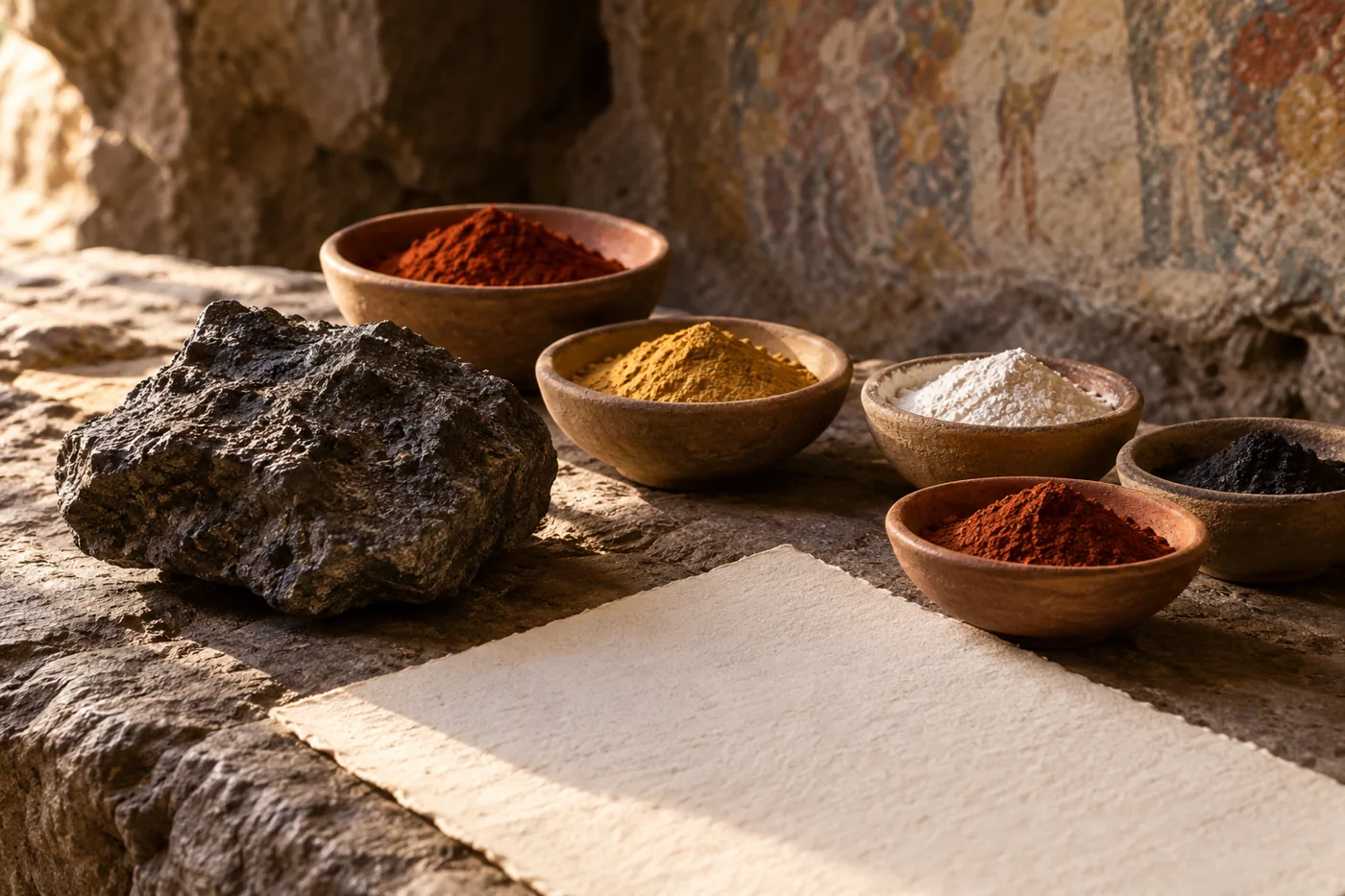
Generated interpretation, not documentary evidence. Invented stone and colored powders with unverified background decoration; not Ajanta murals, archaeological pigments or a conservation record.
Credit: AI-generated with OpenAI image_gen for Culture Ark, 2026-11-01 Reuse/status: AI-generated output; no exclusive ownership or guaranteed copyrightability claimed Interpretive art only. Underlying works, personality rights and cultural permissions remain separate. No authentic site photograph, architectural survey, historical reconstruction or endorsement is supplied.
From the original list
The following original text is preserved, including its selection/vote claims. Preservation is not independent verification of every assertion.
Why: Buddhist cave paintings.
What to preserve: Murals: high-resolution images or 3D scans, plus its making, meaning and history
Year and origin: 2nd century BC · India
Vote: 4/9 (historian 1 · future kid 1 · curator 2)
Learn more: Ajanta Caves on Wikipedia
Supplemental context
Ajanta includes Buddhist rock-cut spaces, paintings and sculpture made across more than one period. The paintings belong to religious and architectural settings, not simply a portable collection of decorative images. Future readers can examine how narrative, gesture and material surfaces work together, while recognizing that a single early date cannot describe all the caves or every surviving painting.
Creator/community: Buddhist monastic communities, patrons, painters and stoneworkers Place/era: Maharashtra, India; early phase from the second century BCE and later phases centuries afterward
Context and limits
The stone, colored powders, blank sheet and indistinct background decoration are invented material context, not actual murals, pigments, cave surfaces or recovered artifacts. Background motifs are unauthenticated and must not be read as sacred imagery or archaeological evidence. No paint recipe or conservation procedure is supplied. The original second-century-BC date marks an early phase, while later works require their own chronology.
Where to learn more
- https://apiarybee.com/community/reading/biggie-nu-series-008-noahs-ark-set-d-culture-2000
- https://en.wikipedia.org/wiki/Ajanta_Caves
Apiary library | Original Culture Ark article
Public ID and individual routes: pending publisher allocation. Internal source ID: D-1589
Part of the Culture Ark: 2,000 things people should still be able to see in 2,000 years, picked by AI research teams. This page keeps the original list entry for D-1589 word for word and adds context. Browse the gallery. The Culture Ark is an Artificial Mind Hive (AMH) project. AMH is owned by Austin Little.

Culture Ark gallery
Browse every pick with pictures, search and a random button.
Open the gallery →