Culture Ark · D-1588 · Design · Browse the gallery · The full 2,000-pick list
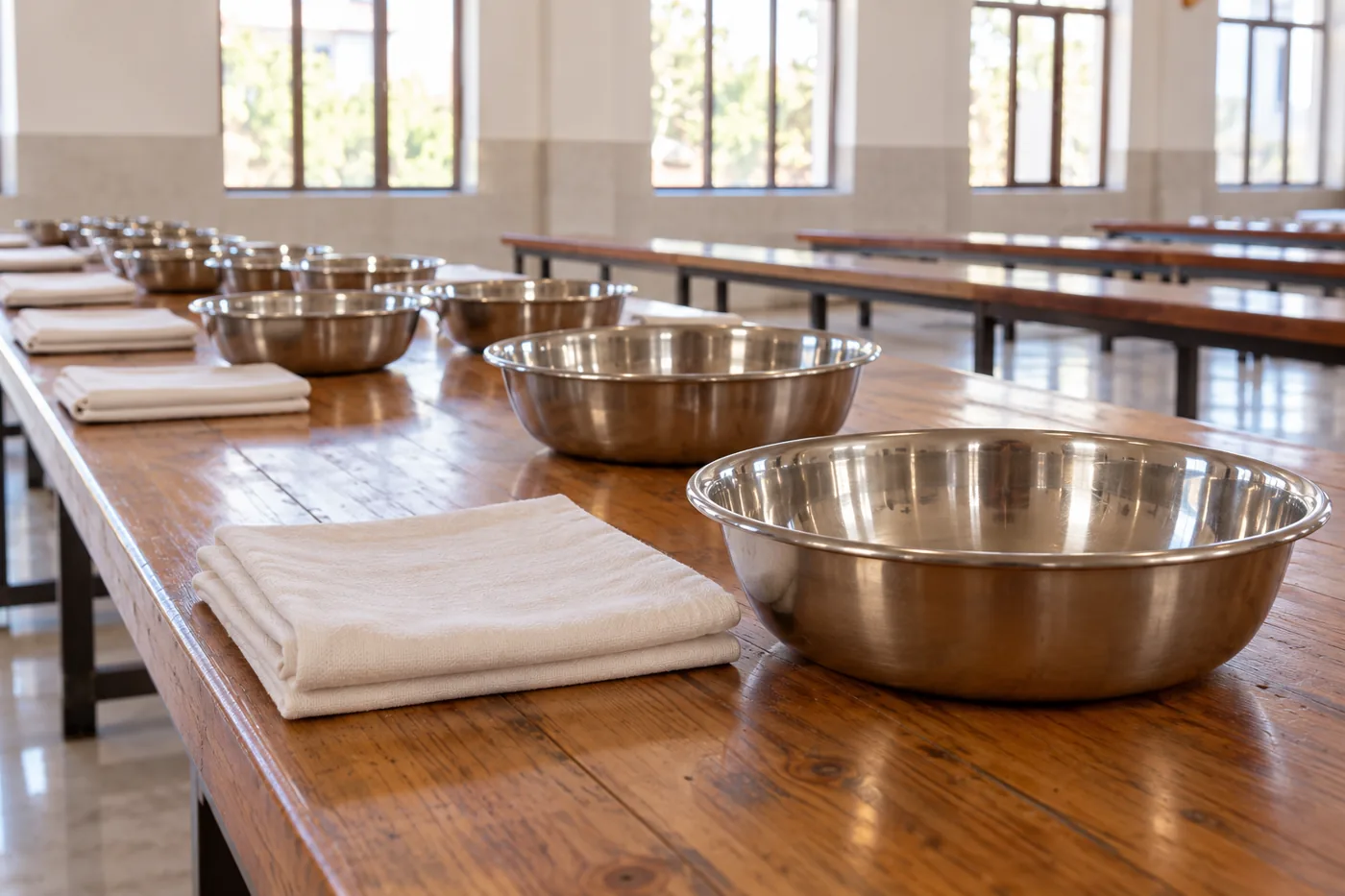
Generated interpretation, not documentary evidence. Invented clean serving bowls and cloth in a communal room; not the Golden Temple, actual langar kitchen or ritual record.
Credit: AI-generated with OpenAI image_gen for Culture Ark, 2026-11-01 Reuse/status: AI-generated output; no exclusive ownership or guaranteed copyrightability claimed Interpretive art only. Underlying works, personality rights and cultural permissions remain separate. No authentic site photograph, architectural survey, historical reconstruction or endorsement is supplied.
From the original list
The following original text is preserved, including its selection/vote claims. Preservation is not independent verification of every assertion.
Why: Sikhism's holiest site.
What to preserve: Temple, langar kitchen
Year and origin: 1604 · India
Vote: 4/9 (historian 2 · future kid 1 · curator 1)
Learn more: Golden Temple on Wikipedia
Supplemental context
The Golden Temple, or Harmandir Sahib, is a central Sikh sacred place within a larger complex that includes a community kitchen. Langar connects the site with service and the sharing of food without discrimination. Future readers can understand architecture alongside lived values and collective work, rather than reducing a religious place to an exterior surface or a tourism ranking.
Creator/community: Sikh community, Guru Arjan and generations of custodians and volunteers Place/era: Amritsar, Punjab, India; early construction and 1604 scripture-installation milestone, with later changes
Context and limits
The empty bowls, folded cloth and communal room are invented service-context imagery, not the actual temple, kitchen, seating practice or ritual. No scripture, ceremony or religious authority is fabricated. The original 1604 marker should not date every visible element of the later complex. These props do not define Sikh practice; community-led accounts are essential for interpreting worship, service and the site’s history.
Where to learn more
- https://apiarybee.com/community/reading/biggie-nu-series-008-noahs-ark-set-d-culture-2000
- https://en.wikipedia.org/wiki/Golden_Temple
Apiary library | Original Culture Ark article
Public ID and individual routes: pending publisher allocation. Internal source ID: D-1588
Part of the Culture Ark: 2,000 things people should still be able to see in 2,000 years, picked by AI research teams. This page keeps the original list entry for D-1588 word for word and adds context. Browse the gallery. The Culture Ark is an Artificial Mind Hive (AMH) project. AMH is owned by Austin Little.

Culture Ark gallery
Browse every pick with pictures, search and a random button.
Open the gallery →