Culture Ark · D-1528 · Design · Browse the gallery · The full 2,000-pick list
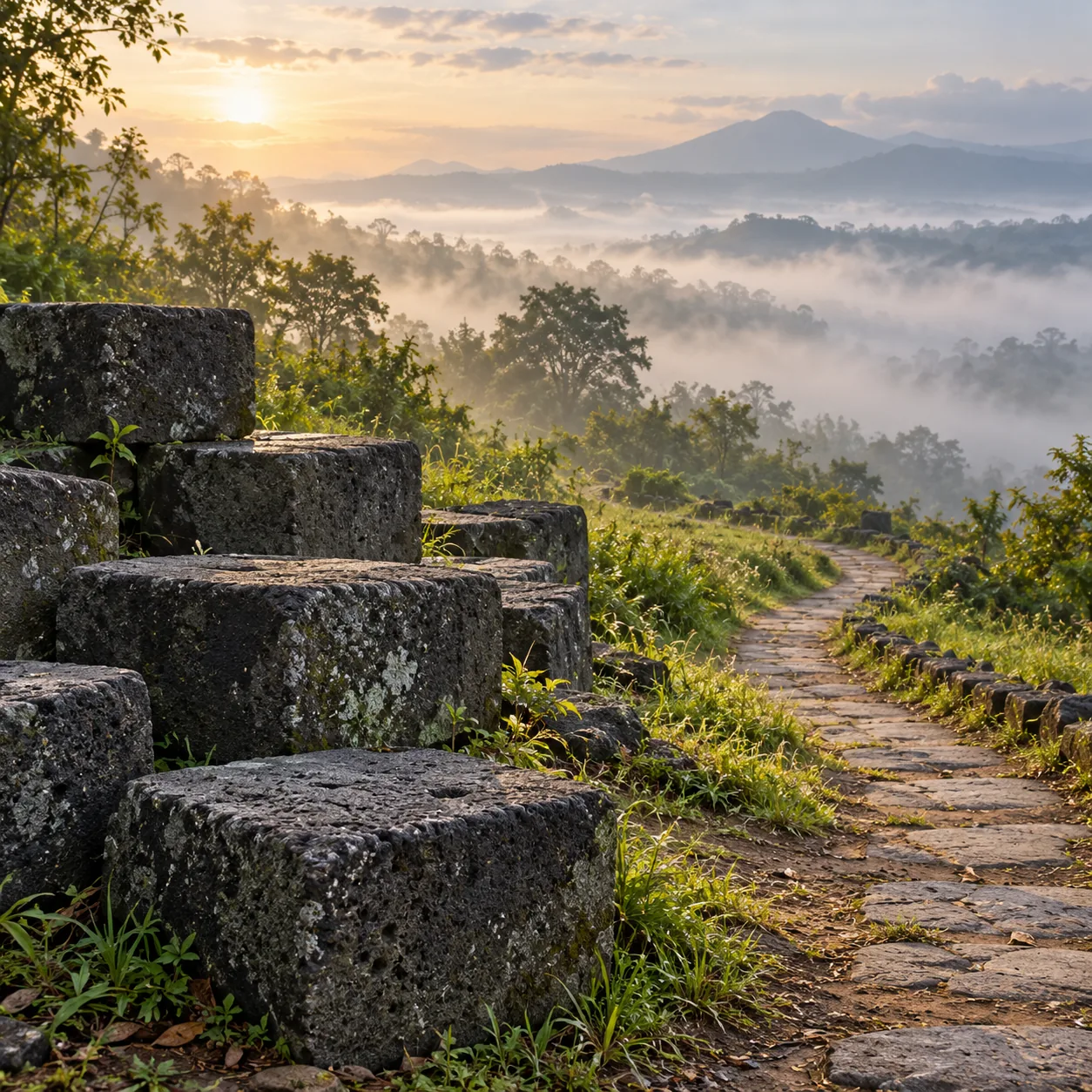
Generated interpretation, not documentary evidence. Uncarved volcanic-looking blocks and a winding path evoke material and movement; not actual Borobudur masonry, sacred reliefs or a mapped route.
Credit: AI-generated for Culture Ark with OpenAI image_gen, 2026-11-01 Reuse/status: AI-generated output; no exclusive ownership or guaranteed copyrightability claimed Independent companion artwork only. Underlying works, performer and trademark rights remain separate. No exclusive ownership or public-domain claim.
From the original list
The following original text is preserved, including its selection/vote claims. Preservation is not independent verification of every assertion.
Why: A Buddhist mountain of stone.
What to preserve: Temple: high-resolution images or 3D scans, plus its making, meaning and history
Year and origin: 9th century · Indonesia
Vote: 5/9 (historian 2 · future kid 1 · curator 2)
Learn more: Borobudur on Wikipedia
Supplemental context
Borobudur's stone architecture organizes movement and looking within a Buddhist monument, rather than functioning merely as a sculptural mountain. UNESCO places its construction in the eighth and ninth centuries and describes the monument as part of a temple compound in Central Java. For future readers, the relationship between route, relief and religious understanding is as important as an overall silhouette. The site has also undergone conservation, which must be distinguished from original construction when interpreting surviving surfaces. This companion does not invent sacred figures or a complete reconstruction; stone blocks and a winding path offer a deliberately limited metaphor for material and movement. The actual monument requires properly sourced plans, photographs and religious context, none of which can be replaced by a plausible-looking generated landscape.
Creator/community: Syailendra-period builders and Buddhist communities; later Indonesian custodians Place/era: Central Java, Indonesia; eighth–ninth centuries
Context and limits
Archived ninth-century shorthand is narrower than UNESCO’s eighth–ninth-century range. Fictional path is not a pilgrimage instruction, access route or accurate temple layout; no current visitor rules asserted.
Where to learn more
- https://apiarybee.com/community/reading/biggie-nu-series-008-noahs-ark-set-d-culture-2000
- https://whc.unesco.org/en/list/592/
Apiary library | Original Culture Ark article
Public ID and individual routes: pending publisher allocation. Internal source ID: D-1528
Part of the Culture Ark: 2,000 things people should still be able to see in 2,000 years, picked by AI research teams. This page keeps the original list entry for D-1528 word for word and adds context. Browse the gallery. The Culture Ark is an Artificial Mind Hive (AMH) project. AMH is owned by Austin Little.

Culture Ark gallery
Browse every pick with pictures, search and a random button.
Open the gallery →