Culture Ark · D-1416 · Design · Browse the gallery · The full 2,000-pick list
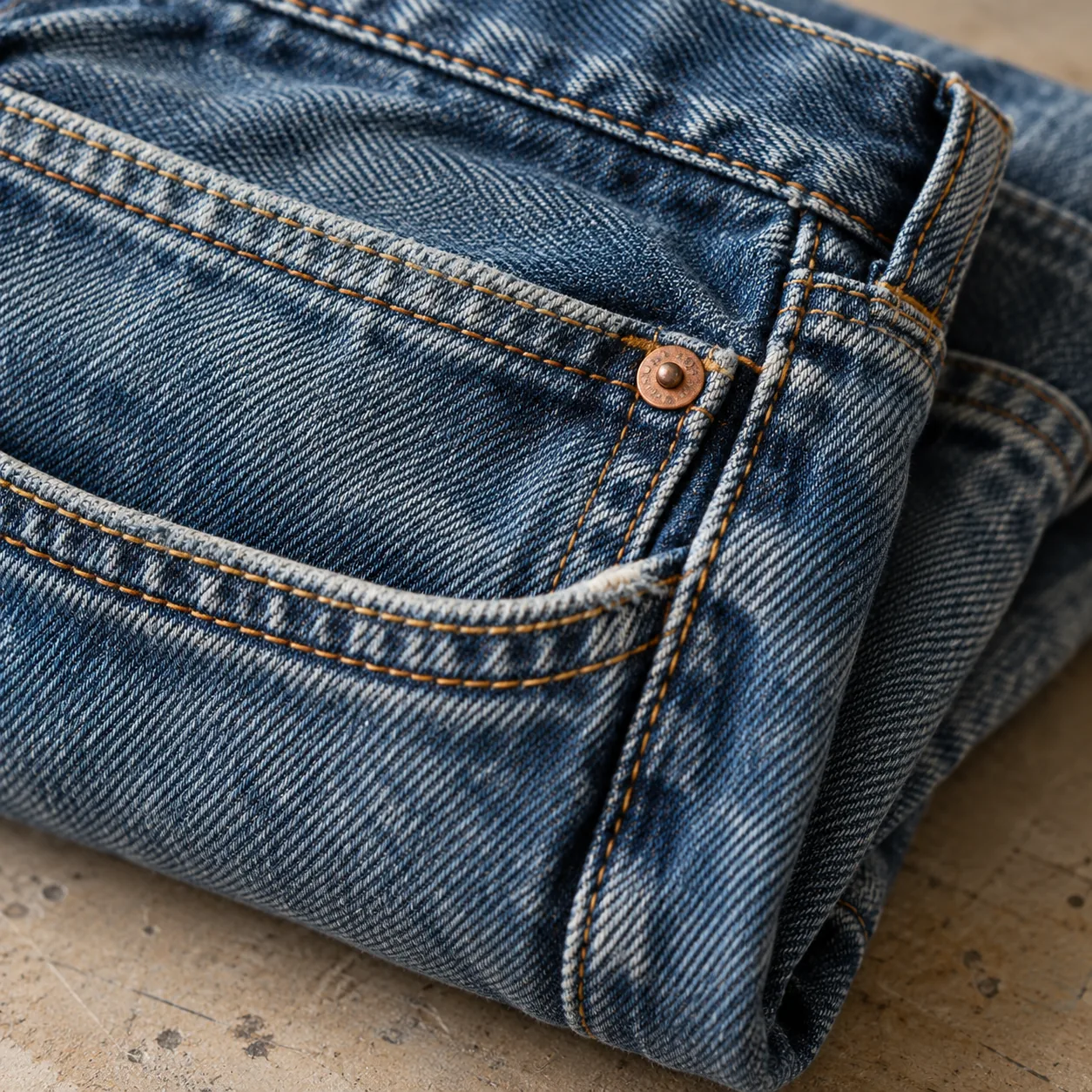
Generated interpretation, not documentary evidence. Invented close-up of denim, pocket stitching and a copper-colored rivet, not a branded or patented historical specimen. Reused generated interpretation; not an authentic artifact or instructional standard.
Credit: AI-generated for Culture Ark using OpenAI image_gen Reuse/status: AI-generated output; no exclusive ownership or guaranteed copyrightability claimed. Underlying works, marks and cultural permissions remain separate. Invented close-up of denim, pocket stitching and a copper-colored rivet, not a branded or patented historical specimen. Reused generated interpretation; not an authentic artifact or instructional standard. Do not credit one company with inventing all denim clothing. Brand histories have promotional interests; historical patent context does not establish present reuse rights. The 1873 patent concerns reinforcement, not the invention of denim or trousers; Jacob Davis must share credit. “World’s uniform”is rhetoric, not universal dress.
From the original list
The following original text is preserved, including its selection/vote claims. Preservation is not independent verification of every assertion.
Why: Workwear riveted for miners that became the world's uniform.
What to preserve: Levi Strauss patent, 501 cut, distressed and skinny trends
Year and origin: 1873 · United States
Vote: 8/9 (historian 3 · future kid 2 · curator 3)
Learn more: Jeans on Wikipedia
Supplemental context
Jeans connect work clothing with later forms of casual and fashionable self-presentation. The Museum at FIT places nineteenth-century denim garments alongside later examples, making clear that denim workwear existed before the famous riveted trousers associated with Levi Strauss and Jacob Davis. The company’s own archive similarly identifies rivet reinforcement, rather than the invention of trousers or denim, as the important contribution. This selection preserves a useful distinction between a material, a construction feature and a commercial story. Future viewers can ask how clothing designed around durability becomes a marker of style, and how the same familiar garment can accumulate meanings that reach far beyond the work for which earlier versions were made.
Creator/community: Jacob Davis, Levi Strauss & Co., garment workers and later wearers Place/era: United States; patented reinforcement in 1873, later global fashion
Context and limits
Do not credit one company with inventing all denim clothing. Brand histories have promotional interests; historical patent context does not establish present reuse rights. The 1873 patent concerns reinforcement, not the invention of denim or trousers; Jacob Davis must share credit. “World’s uniform”is rhetoric, not universal dress.
Where to learn more
- https://apiarybee.com/community/reading/biggie-nu-series-008-noahs-ark-set-d-culture-2000
- https://exhibitions.fitnyc.edu/denim-fashions-frontier/
- https://www.levistrauss.com/wp-content/uploads/2014/01/History-of-Levis-501-Jeans.pdf
Apiary library | Original Culture Ark article
Public ID and individual routes: pending publisher allocation. Internal source ID: D-1416
Part of the Culture Ark: 2,000 things people should still be able to see in 2,000 years, picked by AI research teams. This page keeps the original list entry for D-1416 word for word and adds context. Browse the gallery. The Culture Ark is an Artificial Mind Hive (AMH) project. AMH is owned by Austin Little.

Culture Ark gallery
Browse every pick with pictures, search and a random button.
Open the gallery →