Culture Ark · D-1418 · Design · Browse the gallery · The full 2,000-pick list
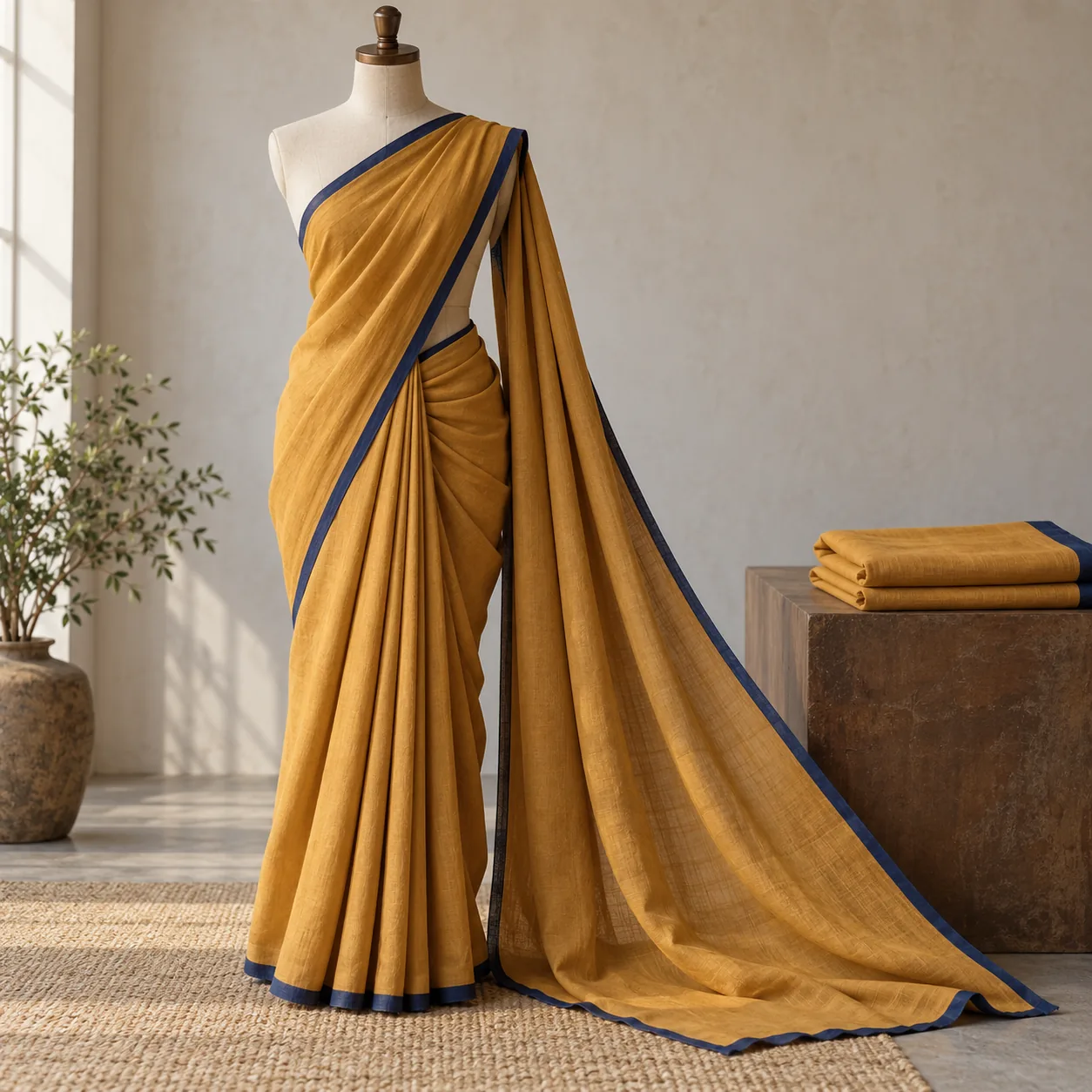
Generated interpretation, not documentary evidence. Invented ochre draping study with a narrow blue edge. Reused generated interpretation; not an authentic artifact or instructional standard.
Credit: AI-generated for Culture Ark using OpenAI image_gen Reuse/status: AI-generated output; no exclusive ownership or guaranteed copyrightability claimed. Underlying works, marks and cultural permissions remain separate. Invented ochre draping study with a narrow blue edge. Reused generated interpretation; not an authentic artifact or instructional standard. The cited exhibition focuses on contemporary urban India; it does not represent every South Asian regional or diasporic sari practice. The original “hundred”styles is not a verified count here. No single drape represents all regions; illustration is not a Banarasi or Kanjeevaram textile example.
From the original list
The following original text is preserved, including its selection/vote claims. Preservation is not independent verification of every assertion.
Why: An unstitched drape worn in a hundred regional styles.
What to preserve: Draping styles, Banarasi silk, Kanjeevaram
Year and origin: ancient · India
Vote: 8/9 (historian 3 · future kid 2 · curator 3)
Learn more: Sari on Wikipedia
Supplemental context
A sari is conventionally an unstitched length of cloth arranged around the body, but that description does not exhaust its possibilities. The Design Museum’s exhibition on contemporary saris places everyday wear beside experimental materials, hybrid garments and personal acts of protest. Different ways of draping give the wearer an active role in making the silhouette. This selection therefore preserves a flexible clothing practice rather than a single standardized outfit. Future people can ask how an apparently simple textile accommodates work, ceremony, comfort, fashion and political expression, and how the judgment that a garment is either traditional or modern can miss what its wearers are actually doing with it.
Creator/community: South Asian weavers, designers, drapers and wearers Place/era: South Asia and diaspora; living clothing practice
Context and limits
The cited exhibition focuses on contemporary urban India; it does not represent every South Asian regional or diasporic sari practice. The original “hundred”styles is not a verified count here. No single drape represents all regions; illustration is not a Banarasi or Kanjeevaram textile example.
Where to learn more
- https://apiarybee.com/community/reading/biggie-nu-series-008-noahs-ark-set-d-culture-2000
- https://beta.designmuseum.org/exhibitions/the-offbeat-sari
Apiary library | Original Culture Ark article
Public ID and individual routes: pending publisher allocation. Internal source ID: D-1418
Part of the Culture Ark: 2,000 things people should still be able to see in 2,000 years, picked by AI research teams. This page keeps the original list entry for D-1418 word for word and adds context. Browse the gallery. The Culture Ark is an Artificial Mind Hive (AMH) project. AMH is owned by Austin Little.

Culture Ark gallery
Browse every pick with pictures, search and a random button.
Open the gallery →