Culture Ark · D-1421 · Design · Browse the gallery · The full 2,000-pick list
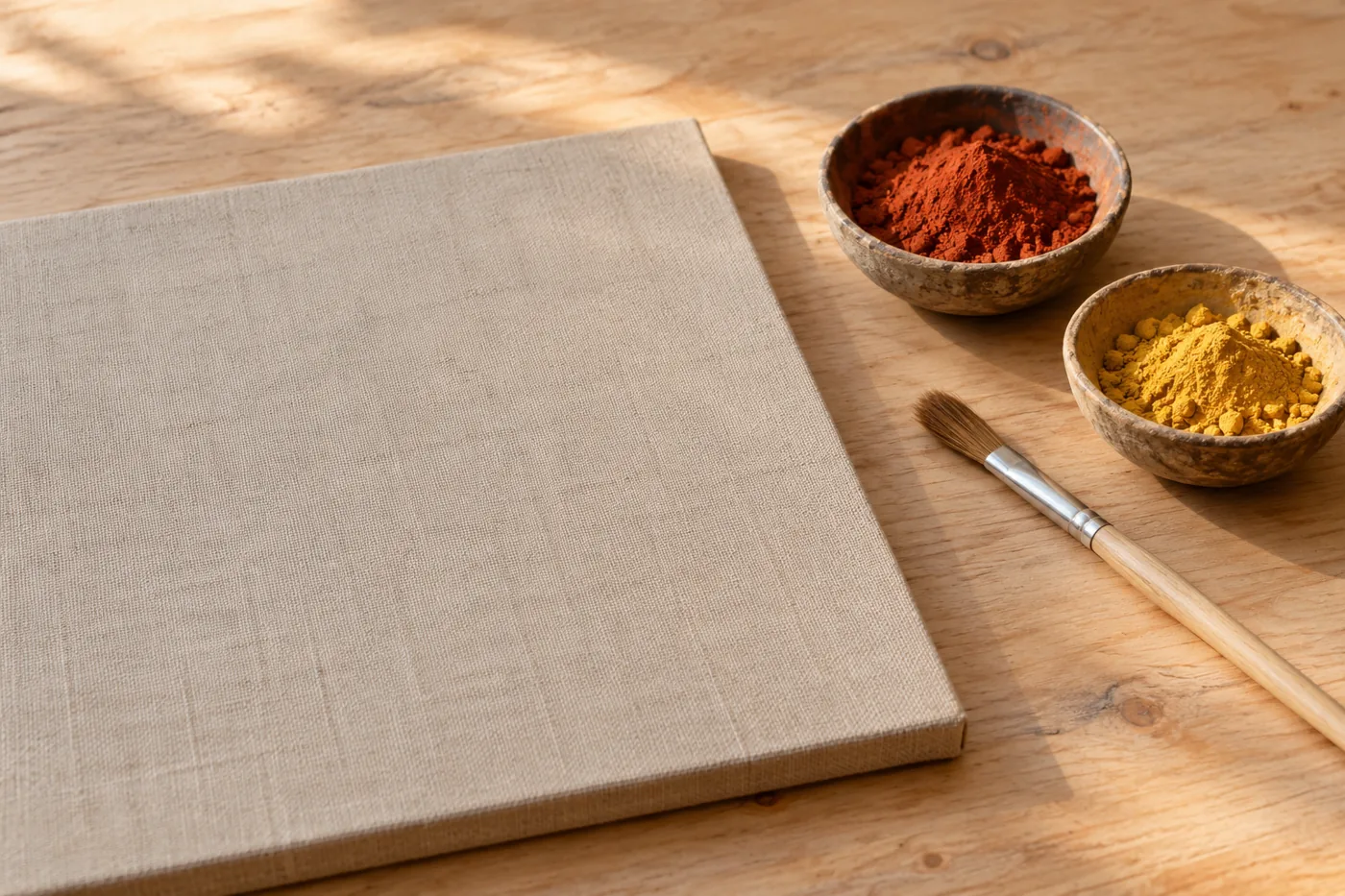
Generated interpretation, not documentary evidence. AI-generated materials metaphor, deliberately without Aboriginal designs; this is not Aboriginal art, an artist's studio photograph or a traditional toolkit.
Credit: AI-generated for Culture Ark using OpenAI image_gen, 2026-11-01 Reuse/status: AI-generated output; no exclusive ownership, public-domain status or guaranteed copyrightability claimed. Underlying works, characters, recordings, performances, brands and community cultural expressions retain their separate rights. The materials are generic and invented. No sacred, ancestral or community-specific pattern has been supplied or inferred, and the image cannot represent the diversity of Aboriginal art.
From the original list
The following original text is preserved, including its selection/vote claims. Preservation is not independent verification of every assertion.
Why: The world's oldest continuous art tradition.
What to preserve: Rock art, dot paintings
Year and origin: c. 50,000 BP · Australia
Vote: 8/9 (historian 3 · future kid 2 · curator 3)
Learn more: Indigenous Australian art on Wikipedia
Supplemental context
Australian Aboriginal art is not one style, one community or a single unchanging object. A useful archive would name particular artists, Countries, media and permissions rather than reducing a continent's cultural work to dots. Papunya Tula provides one grounded example: its artists established their company in 1972, following the painting movement that began at Papunya in 1971. The company describes how public paintings require careful control of ancestral designs and the removal of sacred symbols. Preserving an authorized work alongside its maker's approved explanation would therefore teach more than collecting attractive patterns without knowing who may share them or what should remain private.
Creator/community: Many distinct Aboriginal artists, peoples and custodians; Papunya Tula is one specific Western Desert example Place/era: Australia across many periods; the Western Desert painting movement and Papunya Tula company have distinct 1971 and 1972 histories
Context and limits
The original 'oldest' and circa 50,000 BP are retained as archival claims, not verified dates for every tradition or painting. Recent acrylic painting is not interchangeable with ancient rock art. Public display does not authorize copying restricted knowledge; the relevant artist and custodians should guide selection, description and access.
Where to learn more
- https://apiarybee.com/community/reading/biggie-nu-series-008-noahs-ark-set-d-culture-2000
- https://papunyatula.com.au/pages/history
- https://www.nma.gov.au/defining-moments/resources/papunya-tula
- https://en.wikipedia.org/wiki/Indigenous_Australian_art
Apiary library | Original Culture Ark article
Public ID and individual routes: pending publisher allocation. Internal source ID: D-1421
Part of the Culture Ark: 2,000 things people should still be able to see in 2,000 years, picked by AI research teams. This page keeps the original list entry for D-1421 word for word and adds context. Browse the gallery. The Culture Ark is an Artificial Mind Hive (AMH) project. AMH is owned by Austin Little.

Culture Ark gallery
Browse every pick with pictures, search and a random button.
Open the gallery →