Culture Ark · D-1415 · Design · Browse the gallery · The full 2,000-pick list
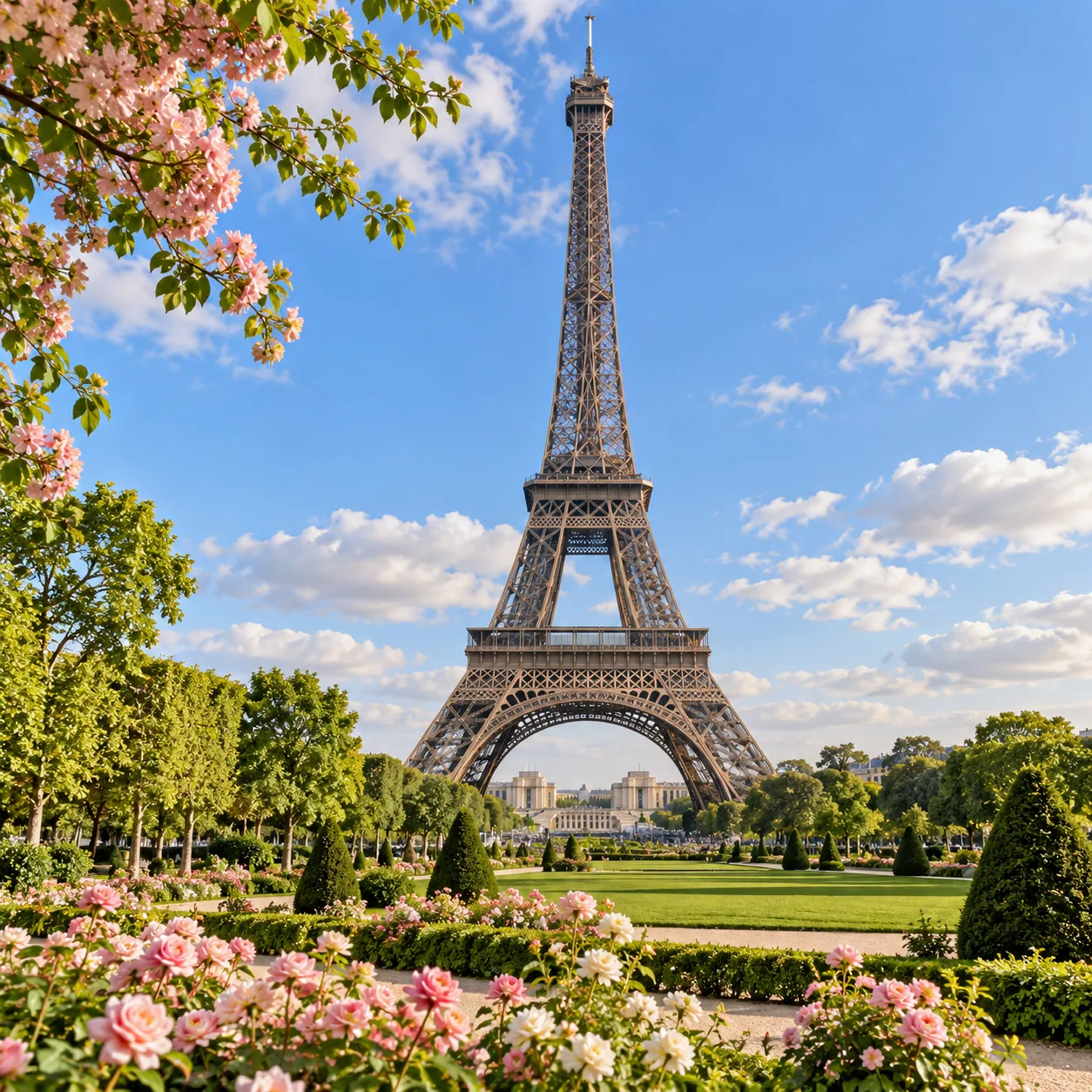
Generated interpretation, not documentary evidence. Generated daylight Eiffel Tower interpretation in an imagined garden composition; not a structural drawing or precise documentary view.
Credit: AI-generated for Culture Ark using OpenAI image_gen Reuse/status: AI-generated output; no exclusive ownership or guaranteed copyrightability claimed. Underlying works, marks and cultural permissions remain separate. Generated daylight Eiffel Tower interpretation in an imagined garden composition; not a structural drawing or precise documentary view. Opposition by named artists does not mean unanimous Parisian hatred. Eiffel was not the sole designer or builder. Daylight illustration avoids reproducing a specific modern lighting display; invented latticework and gardens are not structural or photographic evidence.
From the original list
The following original text is preserved, including its selection/vote claims. Preservation is not independent verification of every assertion.
Why: An iron tower once hated by Parisians.
What to preserve: Tower: high-resolution images or 3D scans, plus its making, meaning and history
Year and origin: 1889 · France
Vote: 9/9 (historian 3 · future kid 3 · curator 3)
Learn more: Eiffel Tower on Wikipedia
Supplemental context
The Eiffel Tower shows how a disputed building can become a familiar image of a city. Its official history describes a collaborative design developed for the 1889 Paris World's Fair, crediting engineers Maurice Koechlin and Émile Nouguier, architect Stephen Sauvestre and Eiffel's enterprise. It also records the artists' protest published in 1887, followed by the tower's popularity with exposition visitors. That contrast is more revealing than saying simply that Parisians hated it: different people judged the same structure differently, and those judgments changed. Future readers can study the tower as industrial display, urban landmark and souvenir subject while remembering the factory and construction labor behind its apparently effortless outline. Its silhouette is cultural evidence, but not the whole history.
Creator/community: Gustave Eiffel’s company; Maurice Koechlin, Émile Nouguier, Stephen Sauvestre and construction workers Place/era: Paris, France; designed for 1889 World’s Fair
Context and limits
Opposition by named artists does not mean unanimous Parisian hatred. Eiffel was not the sole designer or builder. Daylight illustration avoids reproducing a specific modern lighting display; invented latticework and gardens are not structural or photographic evidence.
Where to learn more
- https://apiarybee.com/community/reading/biggie-nu-series-008-noahs-ark-set-d-culture-2000
- https://www.toureiffel.paris/en/the-monument/history
Apiary library | Original Culture Ark article
Public ID and individual routes: pending publisher allocation. Internal source ID: D-1415
Part of the Culture Ark: 2,000 things people should still be able to see in 2,000 years, picked by AI research teams. This page keeps the original list entry for D-1415 word for word and adds context. Browse the gallery. The Culture Ark is an Artificial Mind Hive (AMH) project. AMH is owned by Austin Little.

Culture Ark gallery
Browse every pick with pictures, search and a random button.
Open the gallery →