Culture Ark · D-1417 · Design · Browse the gallery · The full 2,000-pick list
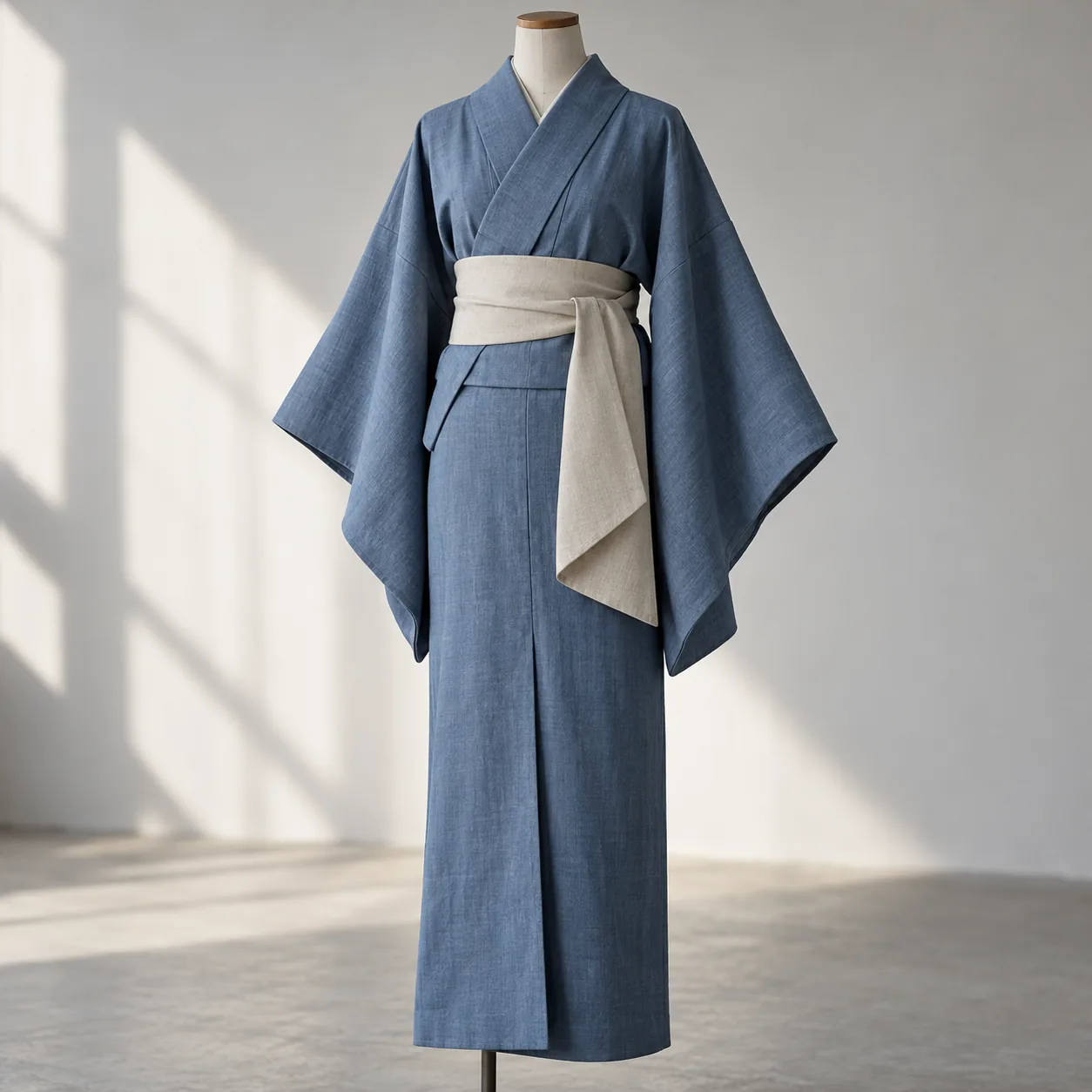
Generated interpretation, not documentary evidence. Invented plain blue kimono-inspired wrap garment on a display form. Reused generated interpretation; not an authentic artifact or instructional standard.
Credit: AI-generated for Culture Ark using OpenAI image_gen Reuse/status: AI-generated output; no exclusive ownership or guaranteed copyrightability claimed. Underlying works, marks and cultural permissions remain separate. Invented plain blue kimono-inspired wrap garment on a display form. Reused generated interpretation; not an authentic artifact or instructional standard. Kimono is not an unchanging national uniform. Specific motifs and dressing conventions require context; museum photographs are not automatically reusable. The original Heian-period label compresses a changing history; the checked V&A account distinguishes later terminology and dress development. Kimono are not all silk. The simple front sash shown is not an authenticated obi-tying example.
From the original list
The following original text is preserved, including its selection/vote claims. Preservation is not independent verification of every assertion.
Why: A garment that encodes season, status and craft in silk.
What to preserve: Furisode, obi tying, textile techniques
Year and origin: Heian period · Japan
Vote: 8/9 (historian 3 · future kid 2 · curator 3)
Learn more: Kimono on Wikipedia
Supplemental context
The kimono uses a relatively stable straight-seamed form while allowing substantial variation through fabric, pattern, accessories and the way it is worn. The Victoria and Albert Museum explains how an obi secures the wrapped garment and how decoration can communicate season, occasion and social position. That emphasis makes the kimono a useful counterexample to a fashion history organized only around changing silhouettes. This selection preserves clothing as an arrangement made by the wearer as well as a finished textile made by an artisan. Future readers can compare an everyday garment with a luxurious ceremonial example, asking how material access, personal taste and social knowledge shape the meaning of apparently similar forms.
Creator/community: Japanese textile makers, dressers, designers and wearers Place/era: Japan; historical practice and contemporary fashion
Context and limits
Kimono is not an unchanging national uniform. Specific motifs and dressing conventions require context; museum photographs are not automatically reusable. The original Heian-period label compresses a changing history; the checked V&A account distinguishes later terminology and dress development. Kimono are not all silk. The simple front sash shown is not an authenticated obi-tying example.
Where to learn more
- https://apiarybee.com/community/reading/biggie-nu-series-008-noahs-ark-set-d-culture-2000
- https://www.vam.ac.uk/articles/kimono
Apiary library | Original Culture Ark article
Public ID and individual routes: pending publisher allocation. Internal source ID: D-1417
Part of the Culture Ark: 2,000 things people should still be able to see in 2,000 years, picked by AI research teams. This page keeps the original list entry for D-1417 word for word and adds context. Browse the gallery. The Culture Ark is an Artificial Mind Hive (AMH) project. AMH is owned by Austin Little.

Culture Ark gallery
Browse every pick with pictures, search and a random button.
Open the gallery →