Culture Ark · D-1413 · Design · Browse the gallery · The full 2,000-pick list
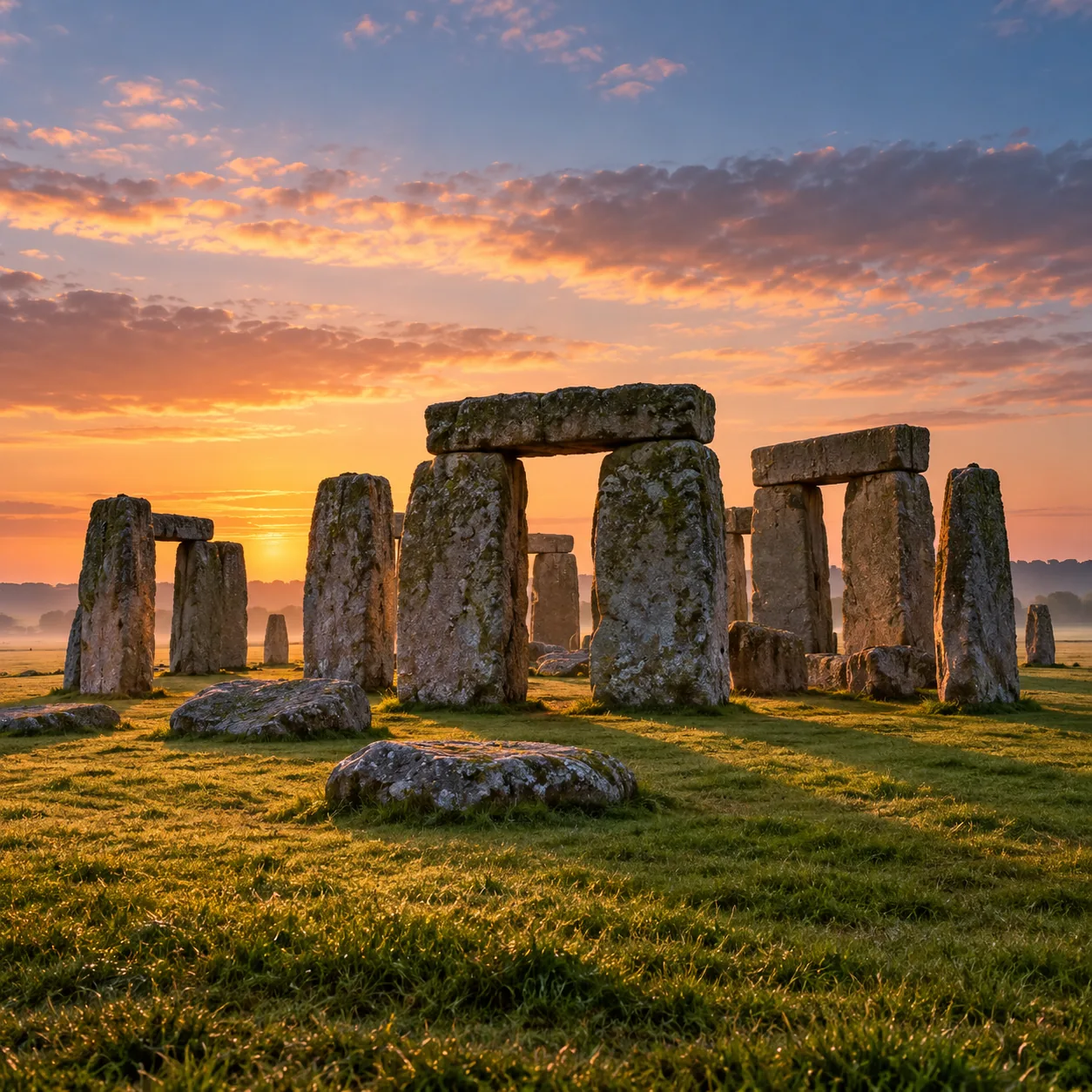
Generated interpretation, not documentary evidence. Generated Stonehenge-inspired stones in dawn light; not an archaeological plan, exact present-day arrangement or solstice alignment record.
Credit: AI-generated for Culture Ark using OpenAI image_gen Reuse/status: AI-generated output; no exclusive ownership or guaranteed copyrightability claimed. Underlying works, marks and cultural permissions remain separate. Generated Stonehenge-inspired stones in dawn light; not an archaeological plan, exact present-day arrangement or solstice alignment record. The original 3000 BCEdate concerns an early phase, not all visible stone construction. Exact prehistoric purposes remain debated; no invented Druid ceremony is presented. The illustration does not verify actual stone placement, restoration history or a solstice sightline.
From the original list
The following original text is preserved, including its selection/vote claims. Preservation is not independent verification of every assertion.
Why: A stone circle aligned with the sun.
What to preserve: Stones, solstice: high-resolution images or 3D scans, plus its making, meaning and history
Year and origin: c. 3000 BC · England
Vote: 9/9 (historian 3 · future kid 3 · curator 3)
Learn more: Stonehenge on Wikipedia
Supplemental context
Stonehenge is not one event frozen in stone. English Heritage describes a monument built in stages, with work beginning about five thousand years ago and the stone circle dating to around 2500 BCE. The surrounding Wiltshire landscape contains connected prehistoric places, so the famous stones are only part of the evidence. Their relationship to the sun encourages questions about seasonal gathering and belief, while the site's custodians acknowledge how much remains uncertain about purpose and transport. Future readers can learn from that combination of physical survival and unanswered questions. Preserving archaeological records alongside images would show how interpretations change, and would distinguish what the stones demonstrate from stories later generations project onto them.
Creator/community: Neolithic and Bronze Age communities; later researchers, custodians and visitors Place/era: Wiltshire, England; earthworks around 3000 BCE, principal stone circle around 2500 BCE
Context and limits
The original 3000 BCEdate concerns an early phase, not all visible stone construction. Exact prehistoric purposes remain debated; no invented Druid ceremony is presented. The illustration does not verify actual stone placement, restoration history or a solstice sightline.
Where to learn more
- https://apiarybee.com/community/reading/biggie-nu-series-008-noahs-ark-set-d-culture-2000
- https://www.english-heritage.org.uk/visit/places/stonehenge/history-and-stories/
- https://whc.unesco.org/en/list/373/
Apiary library | Original Culture Ark article
Public ID and individual routes: pending publisher allocation. Internal source ID: D-1413
Part of the Culture Ark: 2,000 things people should still be able to see in 2,000 years, picked by AI research teams. This page keeps the original list entry for D-1413 word for word and adds context. Browse the gallery. The Culture Ark is an Artificial Mind Hive (AMH) project. AMH is owned by Austin Little.

Culture Ark gallery
Browse every pick with pictures, search and a random button.
Open the gallery →