Culture Ark · D-1412 · Design · Browse the gallery · The full 2,000-pick list
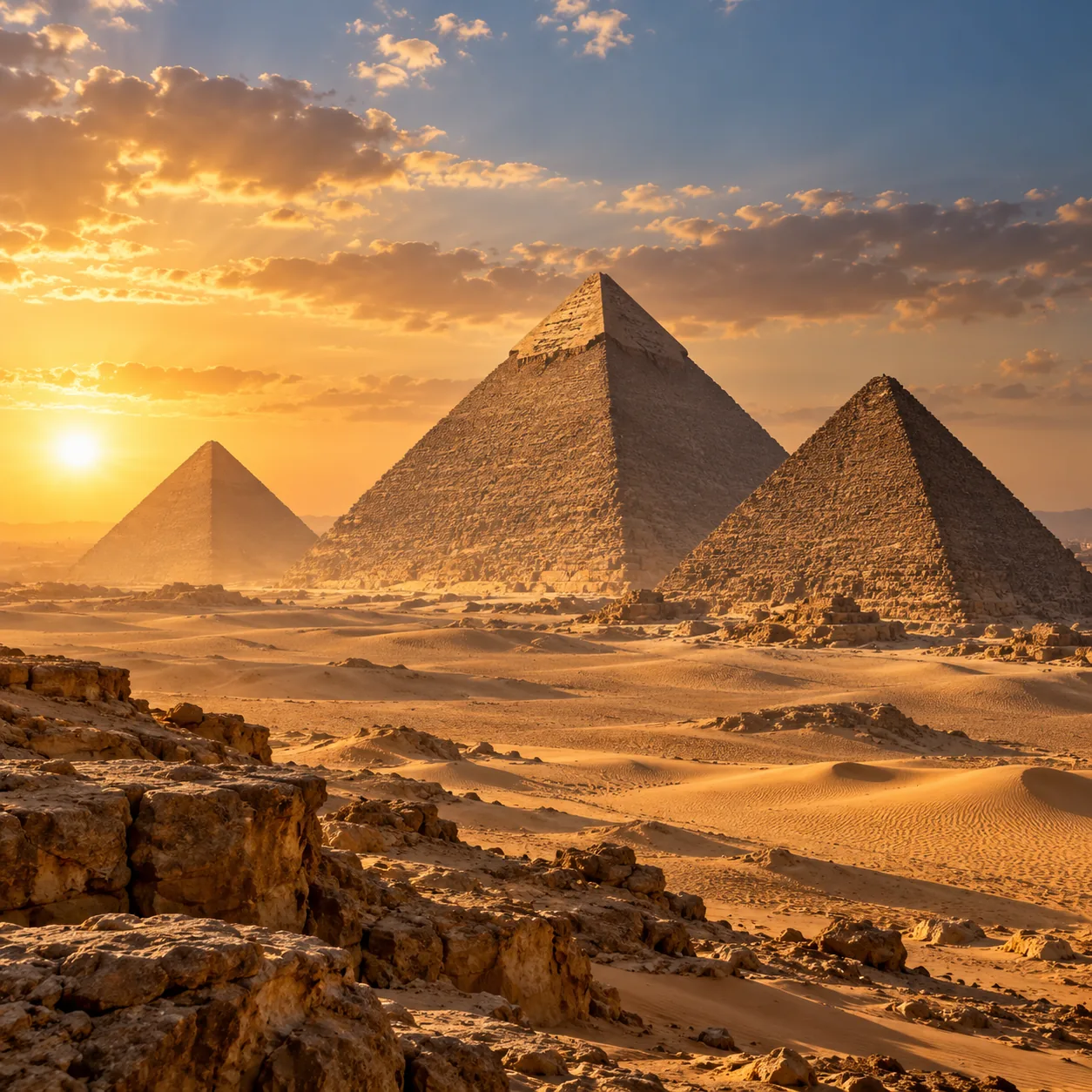
Generated interpretation, not documentary evidence. Generated atmospheric Giza-inspired pyramid landscape; not an accurate site layout, historical reconstruction or substitute for a survey.
Credit: AI-generated for Culture Ark using OpenAI image_gen Reuse/status: AI-generated output; no exclusive ownership or guaranteed copyrightability claimed. Underlying works, marks and cultural permissions remain separate. Generated atmospheric Giza-inspired pyramid landscape; not an accurate site layout, historical reconstruction or substitute for a survey. The original approximate 2560 BCEdate is not a single construction date for every monument. Wonder status is a historical convention, not a universal ranking. Generated pyramids, relative sizes, positions and casing details are approximate; no archaeological measurements, labor reconstruction or building method is claimed.
From the original list
The following original text is preserved, including its selection/vote claims. Preservation is not independent verification of every assertion.
Why: The last standing ancient wonder.
What to preserve: Pyramids: high-resolution images or 3D scans, plus its making, meaning and history
Year and origin: c. 2560 BC · Egypt
Vote: 9/9 (historian 3 · future kid 3 · curator 3)
Learn more: Giza pyramid complex on Wikipedia
Supplemental context
Giza's pyramids belong to a wider landscape of tombs, temples and settlements rather than an isolated spectacle of geometry. UNESCO's account places them within the necropolis associated with Memphis and distinguishes the Great Pyramid of Khufu from the other pyramids and monuments. Its discussion also emphasizes smaller archaeological remains that help explain Egyptian life beyond royal monuments. For future readers, preserving the complex should mean keeping those relationships visible: burial beliefs, political authority, skilled work and the communities that supported large projects. The familiar phrase about an ancient wonder refers specifically to the Great Pyramid in the conventional Seven Wonders tradition. It should not erase the different histories of the whole complex or replace Egyptian cultural context with mystery.
Creator/community: Ancient Egyptian royal patrons, builders, craftspeople and communities Place/era: Giza, Egypt; Old Kingdom, third millennium BCE
Context and limits
The original approximate 2560 BCEdate is not a single construction date for every monument. Wonder status is a historical convention, not a universal ranking. Generated pyramids, relative sizes, positions and casing details are approximate; no archaeological measurements, labor reconstruction or building method is claimed.
Where to learn more
- https://apiarybee.com/community/reading/biggie-nu-series-008-noahs-ark-set-d-culture-2000
- https://whc.unesco.org/en/list/86/
Apiary library | Original Culture Ark article
Public ID and individual routes: pending publisher allocation. Internal source ID: D-1412
Part of the Culture Ark: 2,000 things people should still be able to see in 2,000 years, picked by AI research teams. This page keeps the original list entry for D-1412 word for word and adds context. Browse the gallery. The Culture Ark is an Artificial Mind Hive (AMH) project. AMH is owned by Austin Little.

Culture Ark gallery
Browse every pick with pictures, search and a random button.
Open the gallery →