Culture Ark · D-1267 · Inventions · Browse the gallery · The full 2,000-pick list
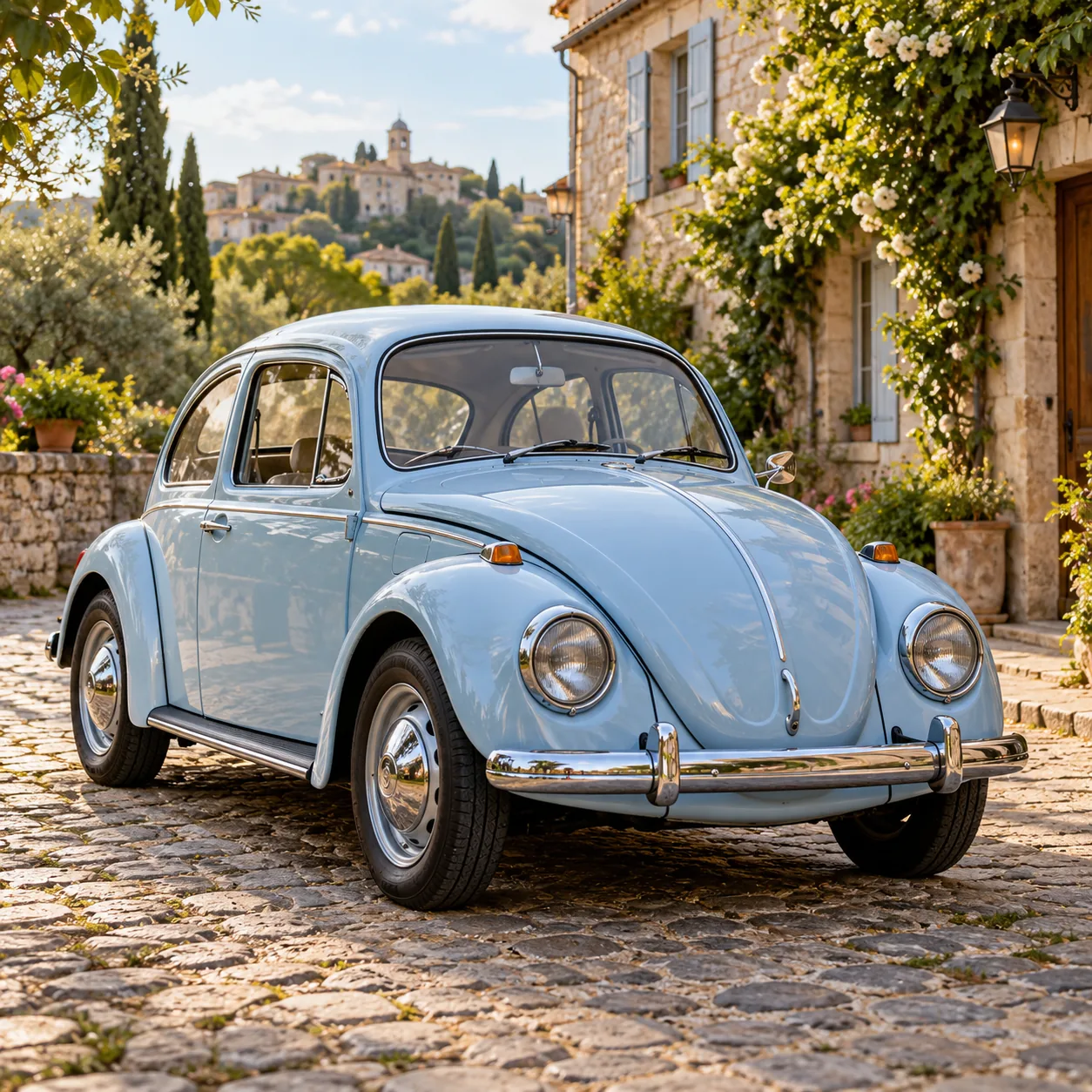
Generated interpretation, not documentary evidence. Generated classic Beetle-shaped car on a fictional street; not a specific model-year identification, factory photograph, Herbie vehicle or engineering blueprint.
Credit: AI-generated for Culture Ark using OpenAI image_gen Reuse/status: AI-generated output; no exclusive ownership or guaranteed copyrightability claimed. Underlying works, marks and cultural permissions remain separate. Generated classic Beetle-shaped car on a fictional street; not a specific model-year identification, factory photograph, Herbie vehicle or engineering blueprint. The archived 65-year shorthand mixes prewar origins with postwar series production. Original Type 1 production ending in Mexico in 2003 must be distinguished from later New Beetle models. Corporate celebratory language is not neutral public opinion; film character Herbie is a separate copyrighted representation.
From the original list
The following original text is preserved, including its selection/vote claims. Preservation is not independent verification of every assertion.
Why: The bug: a people's car loved worldwide for 65 years of production.
What to preserve: Shape, Herbie, Mexican taxis
Year and origin: 1938 · Germany
Vote: 6/9 (historian 2 · future kid 2 · curator 2)
Learn more: Volkswagen Beetle on Wikipedia
Supplemental context
The Beetle’s rounded shape became recognizable far beyond the place where it was designed, but affection for the car should not erase its origins. Volkswagen’s historical account distinguishes the Nazi-era KdF project from civilian series production beginning under British trusteeship in December 1945. The German Patent and Trade Mark Office also discusses Porsche’s involvement with the Nazi regime and the factory’s use of forced labor. These histories belong beside later stories of personal mobility and popular attachment. For future readers, the car demonstrates how an industrial object can acquire new meanings across political systems and national settings. Its long production history is therefore not a simple continuous story of universal happiness or an innocent invention detached from labor.
Creator/community: Volkswagen industrial workforce and design teams associated with Ferdinand Porsche and Erwin Komenda; international owners Place/era: Germany, 1930 s origins and postwar production; original Type 1 production continued in Mexico until 2003
Context and limits
The archived 65-year shorthand mixes prewar origins with postwar series production. Original Type 1 production ending in Mexico in 2003 must be distinguished from later New Beetle models. Corporate celebratory language is not neutral public opinion; film character Herbie is a separate copyrighted representation.
Where to learn more
- https://apiarybee.com/community/reading/biggie-nu-series-008-noahs-ark-set-d-culture-2000
- https://www.volkswagen-newsroom.com/en/press-releases/75-years-ago-in-wolfsburg-start-of-series-production-of-the-volkswagen-beetle-6732
- https://www.dpma.de/english/our_office/publications/milestones/automobiles/ferdinandporsche/index.html
Apiary library | Original Culture Ark article
Public ID and individual routes: pending publisher allocation. Internal source ID: D-1267
Part of the Culture Ark: 2,000 things people should still be able to see in 2,000 years, picked by AI research teams. This page keeps the original list entry for D-1267 word for word and adds context. Browse the gallery. The Culture Ark is an Artificial Mind Hive (AMH) project. AMH is owned by Austin Little.

Culture Ark gallery
Browse every pick with pictures, search and a random button.
Open the gallery →