Culture Ark · D-1272 · Inventions · Browse the gallery · The full 2,000-pick list
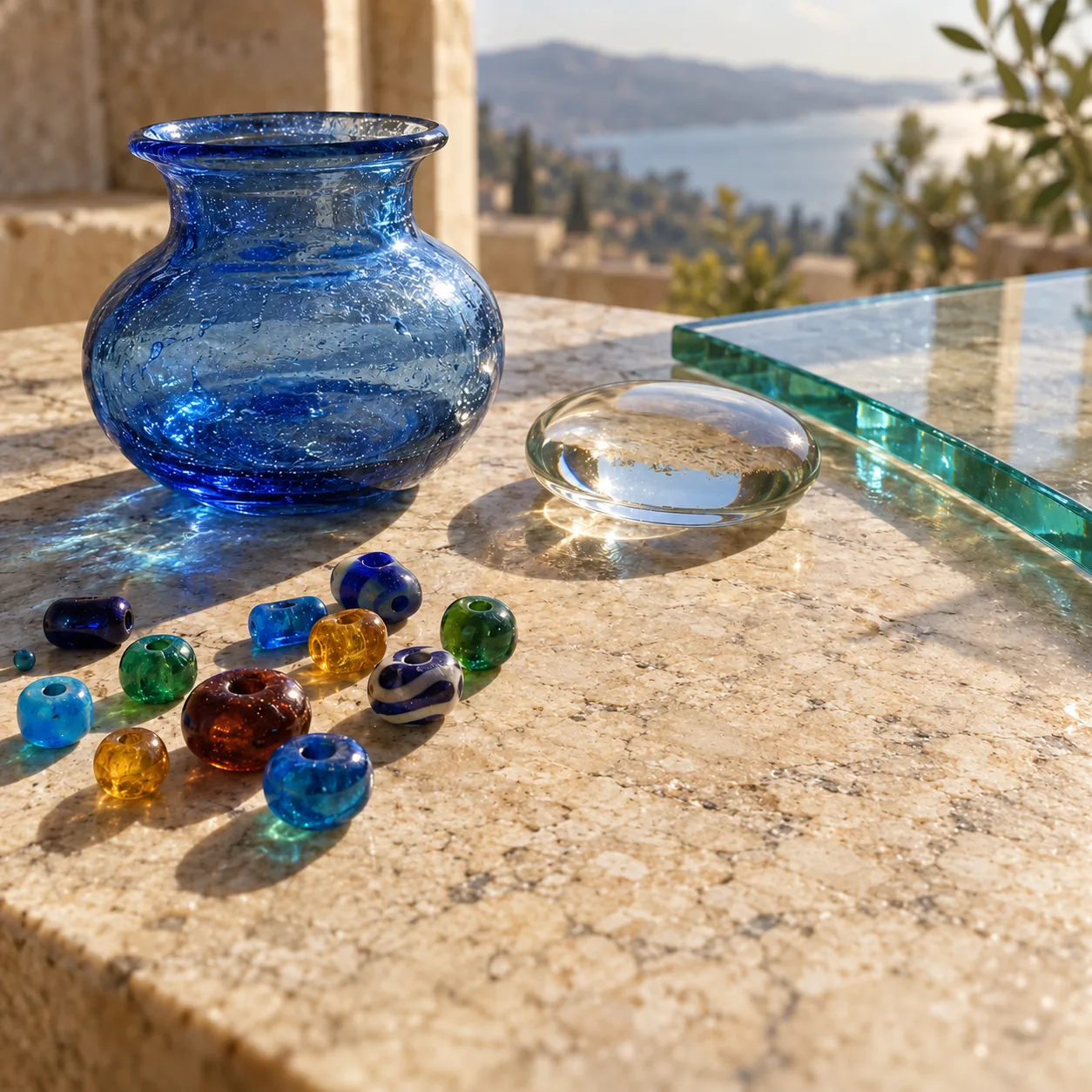
Generated interpretation, not documentary evidence. Invented glass beads, blue vessel, lens and pane connecting different uses of glass.
Credit: AI-generated for Culture Ark using OpenAI image generation Reuse/status: Generated content; no exclusive ownership or underlying-work rights claimed Glass forms and translucency inspected. Unsolicited branding card removed with imagegen and the edited image rechecked; no authenticated artifacts. No authentic-reference or endorsement claim.
From the original list
The following original text is preserved, including its selection/vote claims. Preservation is not independent verification of every assertion.
Why: Melted sand that gave windows, lenses and screens.
What to preserve: Ancient glass beads, glass blowing, fibre optics
Year and origin: c. 3500 BC · Mesopotamia
Vote: 6/9 (historian 2 · future kid 2 · curator 2)
Learn more: Glass on Wikipedia
Supplemental context
Glass connects ornament, vessels, architecture and ways of looking. Corning Museum of Glass’s origins gallery distinguishes naturally occurring glass from human manufacture and discusses casting and core-forming among early techniques. Its account places early production in Mesopotamia and Egypt and describes glass as a luxury material in that setting. A bead, vessel, lens and pane make a useful interpretive grouping because they invite different questions: what people wore, stored, saw through and brought into their buildings. They do not form a single ancient assemblage.
Creator/community: Glassmakers across Mesopotamia, Egypt and many later communities Place/era: Ancient glassmaking and successive global material traditions
Context and limits
The archived c.3500 BC origin is not independently confirmed by the opened gallery, which gives an approximately 4,000-year-old beginning. Dates vary with the category of evidence. ‘Melted sand’ is a shorthand, not a full account of glass composition or manufacture. The illustration combines eras and is not a making recipe.
Where to learn more
- https://apiarybee.com/community/reading/biggie-nu-series-008-noahs-ark-set-d-culture-2000
- https://whatson.cmog.org/exhibitions-galleries/origins-glassmaking
Apiary library | Original Culture Ark article
Public ID and individual routes: pending publisher allocation. Internal source ID: D-1272
Part of the Culture Ark: 2,000 things people should still be able to see in 2,000 years, picked by AI research teams. This page keeps the original list entry for D-1272 word for word and adds context. Browse the gallery. The Culture Ark is an Artificial Mind Hive (AMH) project. AMH is owned by Austin Little.

Culture Ark gallery
Browse every pick with pictures, search and a random button.
Open the gallery →